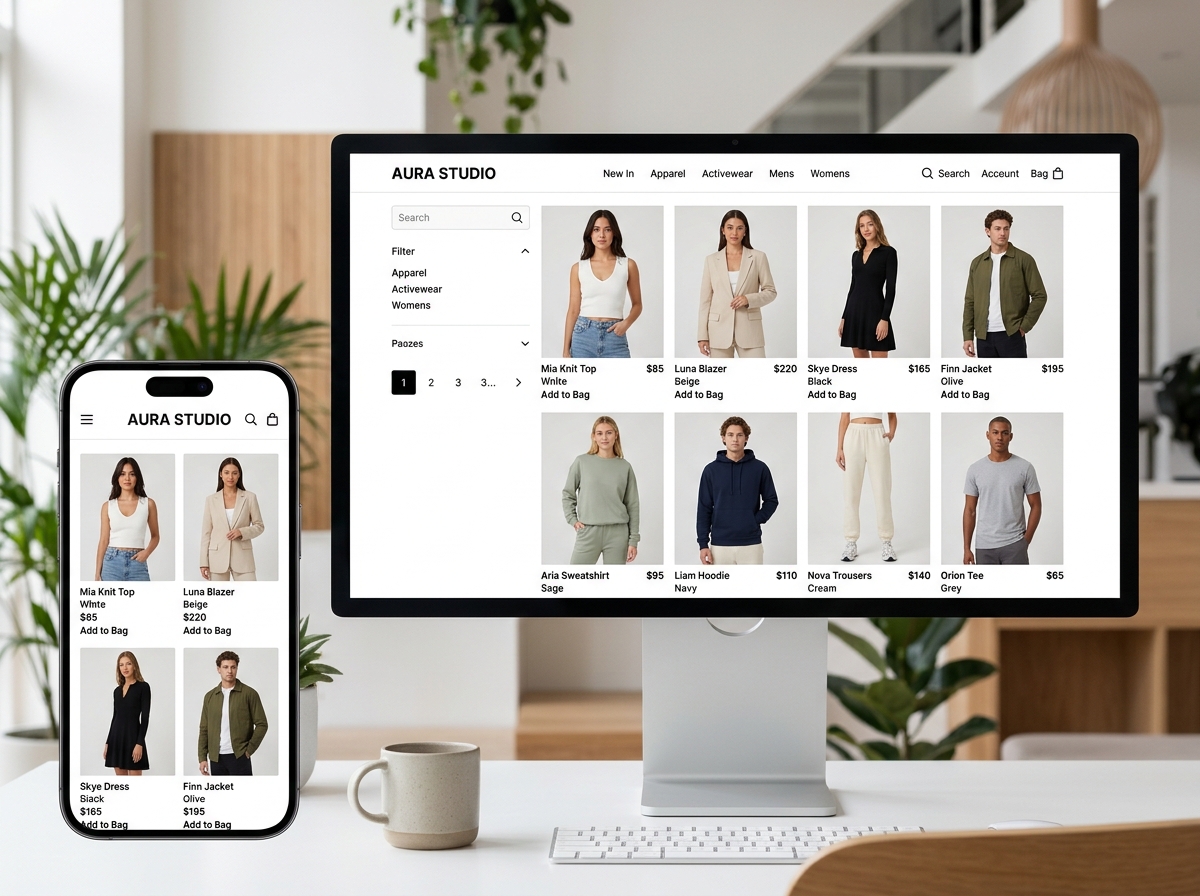
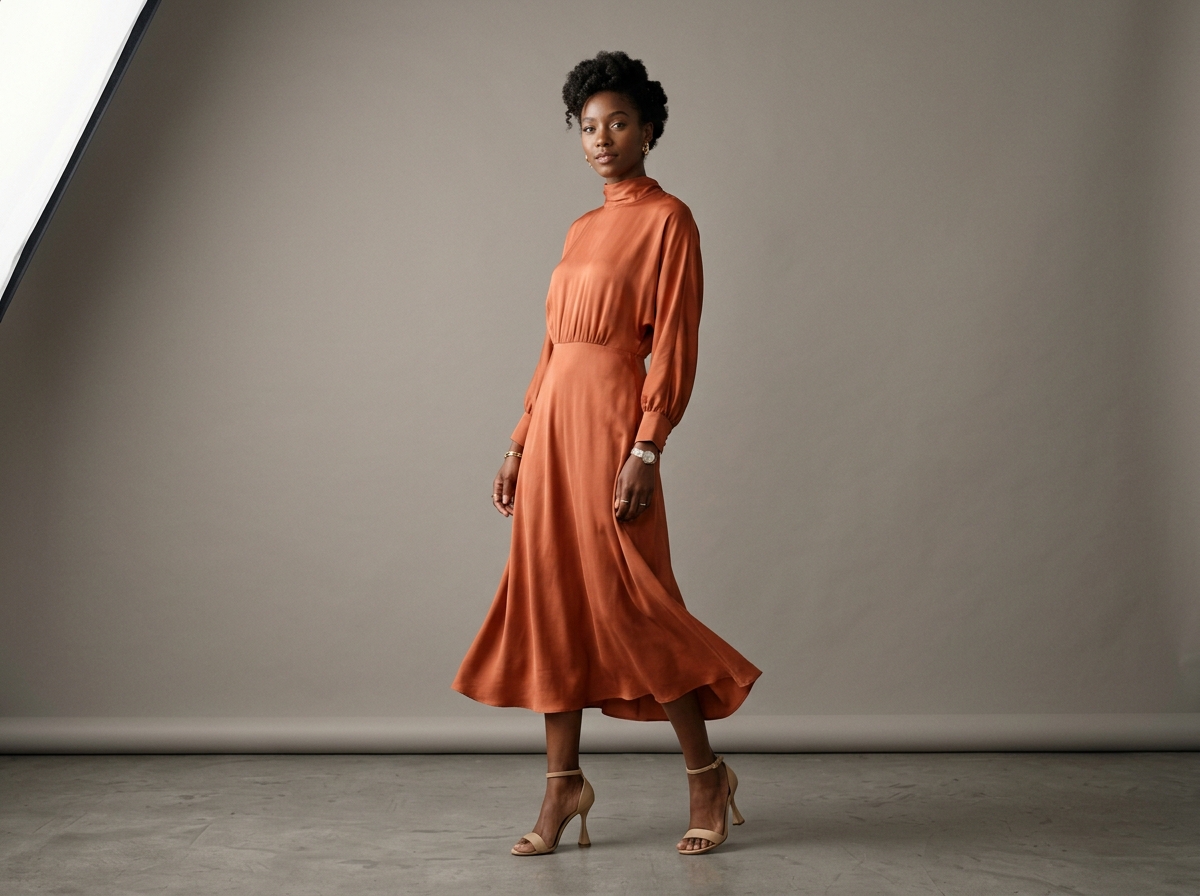
- Why vertical 3:4 and 4:5 ratios preserve mobile drape and silhouette for apparel D2C.
- How major sales channels—Shopify, Amazon, Myntra, and TikTok Shop—enforce conflicting crop mandates.
- The risks of destructive center-cropping and white letterboxing on catalog consistency.
- How AI production pipelines generate multi-channel aspect ratios from a single master photo.
Choosing the correct fashion product image aspect ratio is one of the most persistent operational challenges for ecommerce teams managing omni-channel inventory. While direct-to-consumer (D2C) brand sites on Shopify thrive on vertical 3:4 or 4:5 portrait framing to showcase full garment drape and styling on mobile screens, third-party marketplaces like Amazon demand strict 1:1 square primary assets. For catalog managers and studio operations leads, this discrepancy forces a difficult choice between costly secondary photoshoots, manual photo editing bottlenecks, or destructive cropping that cuts off critical garment details like hemlines and footwear. As detailed in FlixStock Catalog Guide, establishing standardized master visual pipelines is vital for operational efficiency.
Why does fashion apparel benefits from vertical 3:4 or 4:5 framing over square 1:1 grids on mobile screens?
Over 80% of fashion ecommerce traffic originates on mobile devices, making vertical screen real estate a primary driver of conversion rate optimization. Vertical 3:4 vs 1:1 fashion product image aspect ratios dictate how much of the garment's silhouette a shopper can evaluate without scrolling. In a 3:4 portrait frame, a full-body look—including maxi dresses, pleated trousers, and structured outerwear—maintains its natural proportions and drape.
Square 1:1 grids, originally standardized for desktop display and legacy catalog grids, compress vertical height by up to 25%. This compression forces models into awkward crouching stances or requires aggressive camera angle adjustments that distort garment length and fit perception. By contrast, 3:4 framing respects human posture and textile physics, allowing shoppers to assess true garment flow.
How do you manage aspect ratio requirements across Shopify, Amazon India, Myntra, and TikTok Shop?
Omnichannel distribution requires operating across platforms with conflicting technical specifications. Standardizing your master visual assets prevents endless rework:
- Shopify & D2C Stores: Prefer 3:4 portrait (e.g., 1200x1600px) or 4:5 for immersive mobile browsing and consistent collection grids.
- Amazon: Strictly mandates 1:1 square (e.g., 2000x2000px) pure white background primary images, rejecting non-square main tiles.
- Myntra & Flipkart: Highly favor 3:4 vertical framing to align with their mobile-first app catalog standards and regional consumer expectations.
- TikTok Shop & Instagram Shopping: Optimized for 9:16 or 4:5 vertical video and image formats, where square crops feel boxy and uninspired.
Maintaining separate physical studios for each channel is financially unsustainable. Modern fashion brands rely on centralized digital asset management paired with automated AI generation to output channel-compliant aspect ratios instantly from a single master photo input, leveraging Marketplace Adaptation Guide.
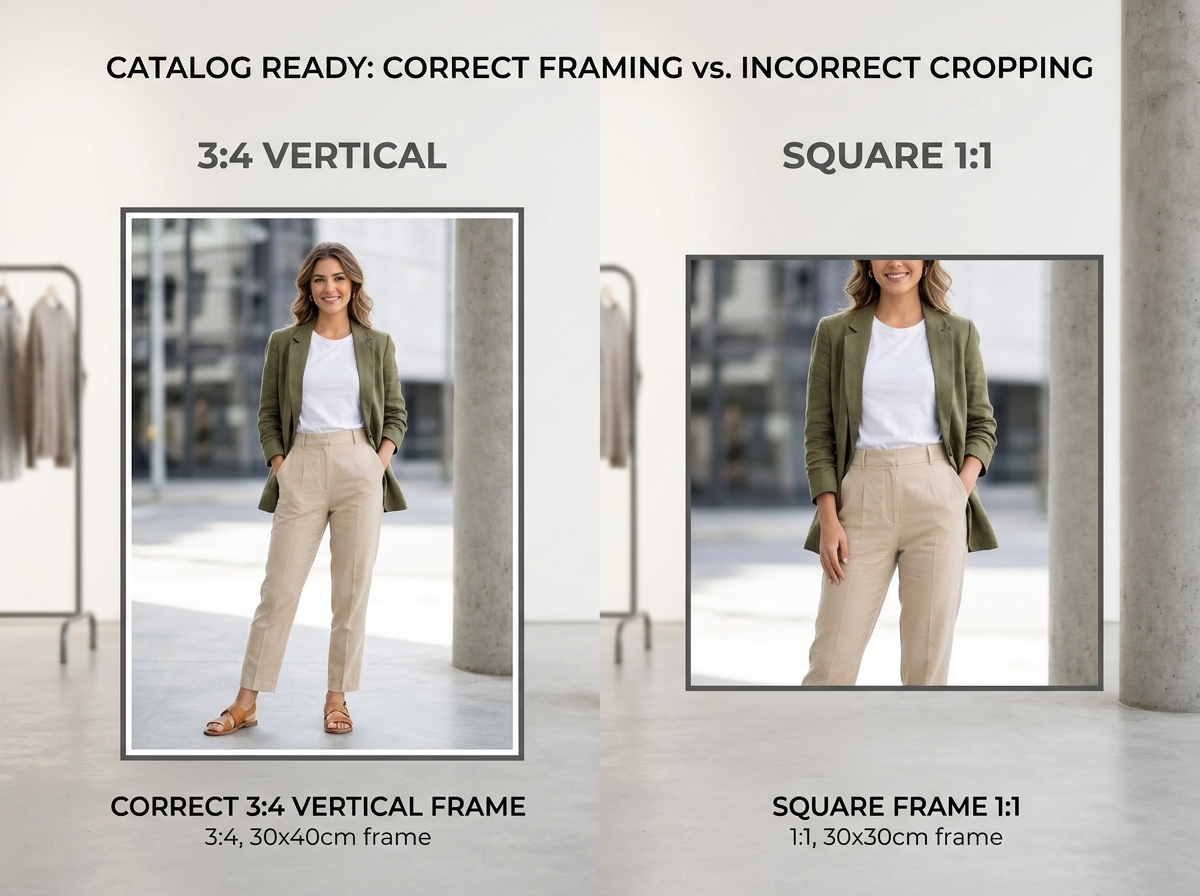
Understanding garment silhouette and drape when center-cropping 3:4 images into 1:1 tiles
When catalog teams attempt a shortcut by center-cropping a 3:4 vertical photo into a 1:1 square tile for marketplace compliance, the results are frequently disastrous. Center-cropping lops off the top of the model's head and the bottom third of the outfit—eliminating shoes, ankle cuffs, and lower garment details like asymmetric hemlines or pleated flares.
Alternatively, adding wide white letterbox side bars to force a 3:4 image into a square container creates an unappealing pillarbox effect. On mobile collection pages, letterboxed images shrink the visual weight of the garment by 30%, making thumbnails difficult to inspect and degrading mobile bounce rates. Preserving the integrity of the garment requires intelligent background expansion or reframing rather than blunt-force cropping.
| Channel / Platform | Required Aspect Ratio | Primary Background | Mobile Impact |
|---|---|---|---|
| Shopify / D2C Store | 3:4 Portrait (1200x1600px) | Styled / Minimalist | High engagement; full drape visibility |
| Amazon / Global Marketplaces | 1:1 Square (2000x2000px) | Pure White (#FFFFFF) | Uniform grid; requires careful padding |
| Myntra / Flipkart | 3:4 Portrait | Brand Studio / Neutral | Optimized for app catalog browsing |
| TikTok Shop / Instagram | 9:16 Vertical / 4:5 Portrait | Lifestyle / Studio | Immersive fullscreen experience |
Generating multi-channel aspect ratios from a single master photo input
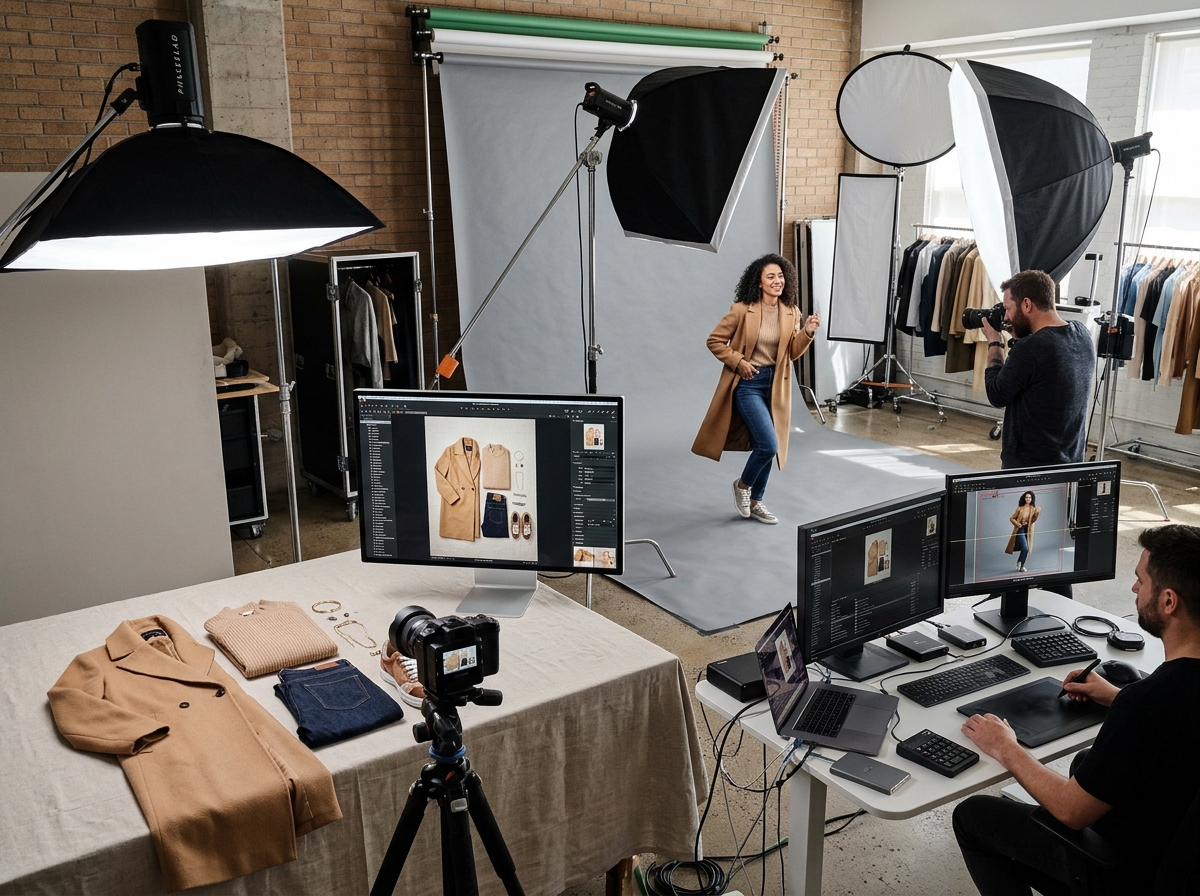
Scaling catalog production across diverse aspect ratio mandates without booking duplicate studio sessions requires intelligent visual AI tools. By ingesting a high-resolution master photo or technical package, automated systems analyze the subject boundaries, garment seams, and focal points.
Instead of destructive cropping, advanced outpainting and generative background expansion extend the canvas contextually. If an image must shift from 3:4 portrait to 1:1 square for marketplace submission, the AI seamlessly fills the left and right background margins while keeping the model and garment completely unwarped. Conversely, horizontal banner crops are generated by expanding negative space intelligently around the central styled look.
Preventing common pitfalls in e-commerce catalog aspect ratio standardization
Many fashion brands encounter severe operational friction due to inconsistent asset handling. Avoiding these mistakes protects both brand aesthetics and channel compliance:
- Inconsistent Grid Thumbnails: Mixing 1:1 and 3:4 images in a Shopify collection page creates a jagged, unprofessional masonry layout that frustrates shoppers.
- Ignoring Marketplace Rejection Rules: Submitting non-square images to Amazon results in automated listing suppression during peak sales events.
- Manual Photoshop Bottlenecks: Relying on retouchers to manually mask and pad thousands of SKUs drains creative budgets and delays go-live dates.
Establishing a single source of truth master asset strategy ensures that every sales channel receives native, compliant aspect ratios without sacrificing garment fidelity.