

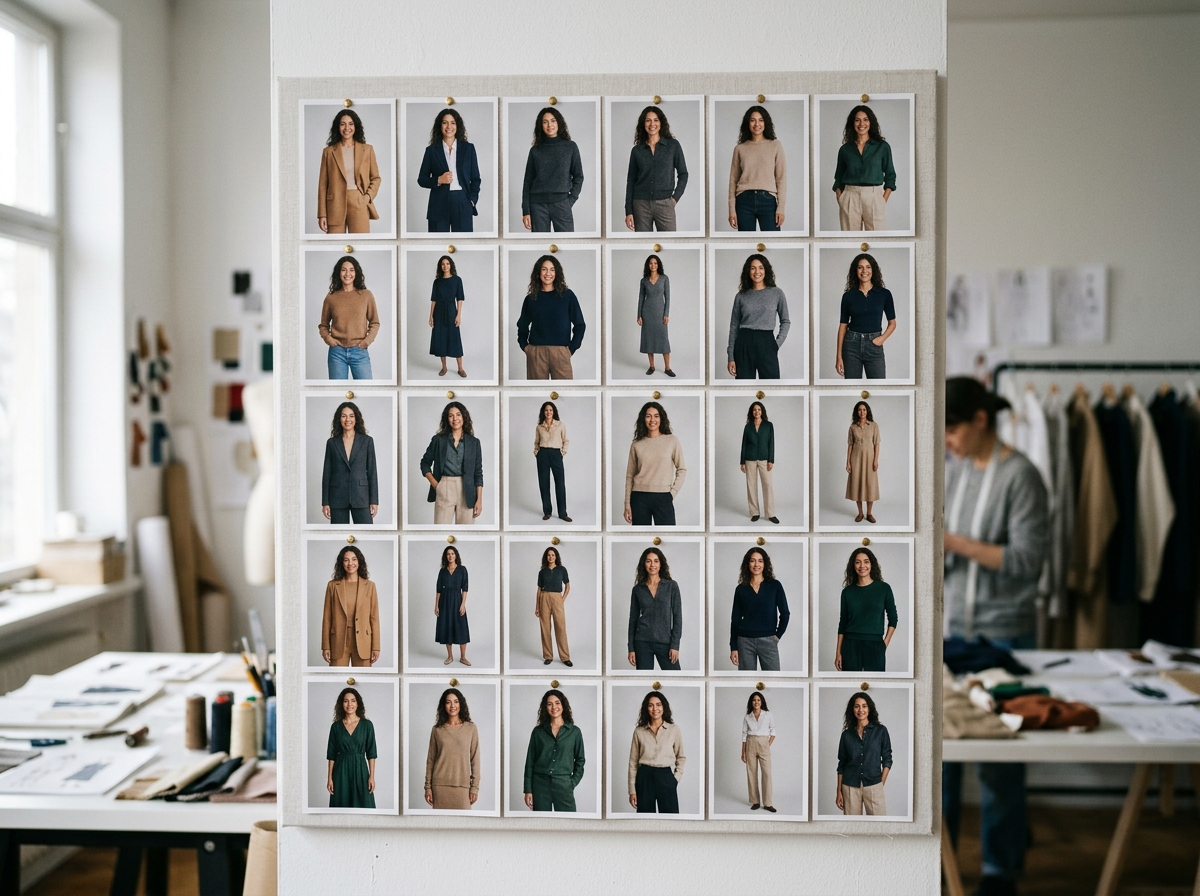
This article details how fashion brands can solve visual inconsistency across their product catalogs using AI. It is for ecommerce, catalog, and content leads looking to standardize imagery at scale. After reading, you will have a framework for defining and automating your brand's visual identity.
- Understand the core elements of visual consistency in fashion ecommerce.
- Learn how AI automates the application of brand standards across all SKUs.
- Get a step-by-step process for building a consistent visual system.
- Explore how to overcome common challenges in maintaining brand identity.
Maintaining a consistent visual identity is a defining challenge for fashion brands that manage vast product catalogs. Inconsistent imagery doesn't just look unprofessional; it actively erodes the brand trust that turns browsers into buyers. The solution lies in a systematic approach where brand standards are not just documented, but programmatically applied to every product image using AI.
Why Inconsistent Fashion Imagery Hurts Your Brand
When a customer browses an online store, they are looking for more than just a product; they are looking for a coherent brand story. Inconsistent imagery disrupts that story. According to McKinsey, great product photography and clear visual copy are critical foundations for online fashion success. When lighting, model poses, or backgrounds shift randomly from one product to the next, it creates a jarring, low-quality experience that can make a premium brand feel like a disorganized marketplace.
This inconsistency has a direct financial impact. It can increase customer hesitation and contribute to higher return rates. Research from Coresight Research highlights that sizing and fit issues account for 53% of apparel returns, a problem exacerbated when inconsistent model photography makes it difficult for shoppers to gauge how a garment will actually look on them. A visually unified catalog, on the other hand, builds shopper confidence, clarifies product details, and strengthens brand recall.
What Visual Elements Define a Consistent Catalog?
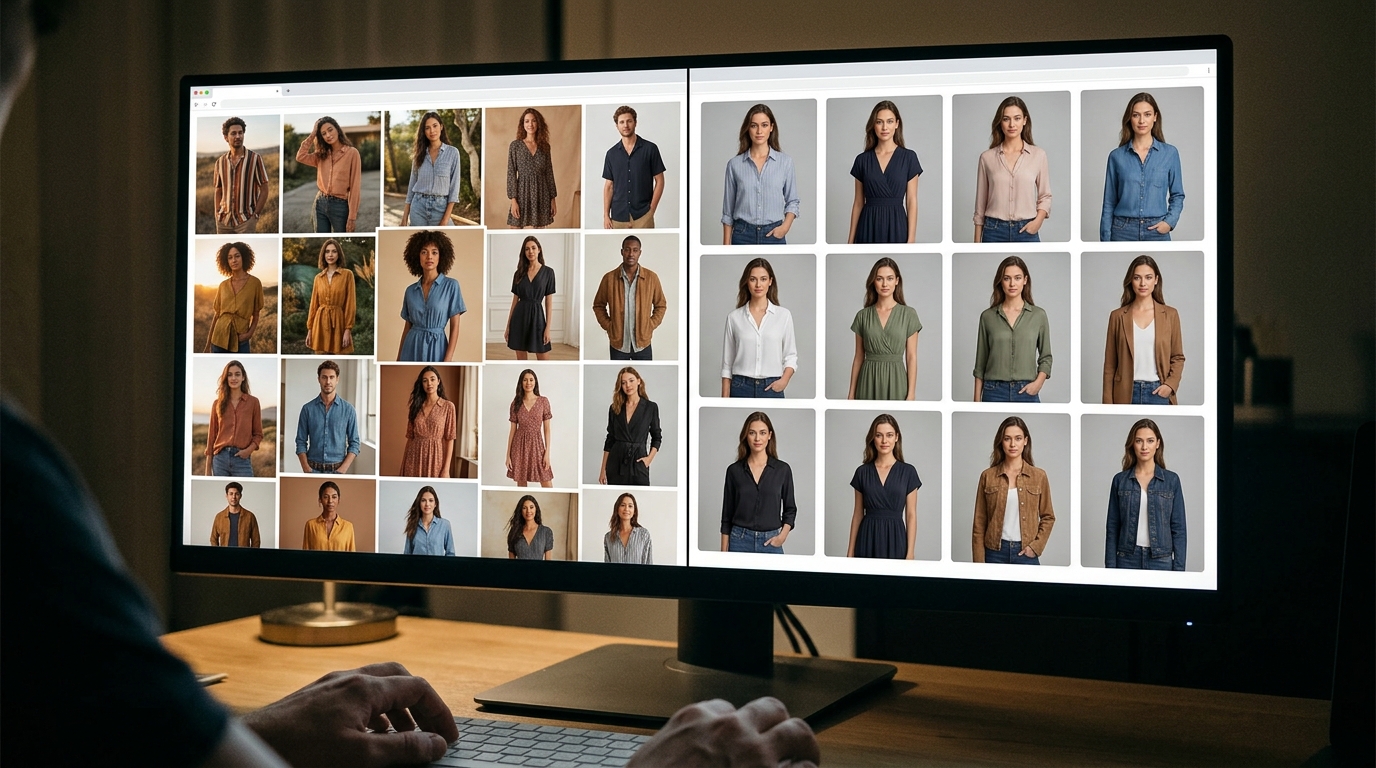
Achieving visual consistency is about controlling a specific set of variables across every image. It's not about making every photo identical, but ensuring they all adhere to the same visual system. The core elements include:
- Models: Using the same or a small, curated set of models (human or AI-generated) with consistent appearance, poses, and expressions. This creates a recognizable human element associated with the brand.
- Styling: Applying a uniform approach to how garments are presented, including consistent folds, drapes, and pairings with accessories. The styling should reflect the brand's target aesthetic (e.g., minimalist, bohemian, classic).
- Lighting: Maintaining consistent lighting temperature, direction, and hardness. Whether it’s soft, diffused light for a luxury feel or bright, high-key light for a clean, modern look, it must be the same for every product.
- Backgrounds: Using a consistent background, whether it’s a specific solid color, a subtle texture, or a branded environment. This is one of the most powerful and immediate signals of a cohesive catalog.
- Composition and Crop: Adhering to strict guidelines for how products are framed and cropped. Consistent placement of the product within the frame ensures a clean, organized look on category pages.
How Can AI Ensure Product Image Consistency at Scale?
For catalogs with thousands of SKUs, manually maintaining consistency is operationally impossible. This is where AI-driven visual production becomes essential. Instead of correcting inconsistencies in post-production, AI applies a brand's visual standards from the start, ensuring every image is generated in compliance with the defined system.
A platform like FlixStock allows a brand to upload a single source image of a garment. The AI then generates a complete set of on-model and product shots based on a pre-defined brand profile. This profile acts as a digital style guide, containing the approved models, backgrounds, lighting setups, and styling rules. Because the rules are applied programmatically, the output is consistent by default, whether generating ten images or ten thousand. This approach, as noted by McKinsey (2023), helps brands boost productivity and dramatically accelerate their time-to-market.
Manual vs. AI-Powered Consistency: A Comparison
| Factor | Traditional Photoshoots | AI-Powered Generation |
|---|---|---|
| Scalability | Low; requires new shoots for each product/model. | High; generates thousands of images from a single source. |
| Consistency | Difficult to maintain across different shoots. | Guaranteed through programmatic application of brand rules. |
| Speed | Slow; involves logistics, shooting, and post-production. | Fast; generates images in minutes. |
| Cost | High; includes model fees, studio rental, and photographer costs. | Low; significantly reduces the cost per image. |
Step-by-Step: Building a Consistent Visual System
Creating a scalable system for visual consistency involves a clear, four-step process that moves from strategy to execution.
- Define Your Visual Standards: The first step is to create a comprehensive visual style guide. This document should codify all the key elements: model archetypes, signature poses, lighting diagrams, background color codes (HEX, RGB), and cropping ratios for every channel (e.g., PDP, marketplace, social media).
- Configure Your AI Production Environment: Translate your style guide into a machine-readable format. Within a platform like FlixStock, this means setting up your brand profile. You select or create your consistent AI models, upload your approved backgrounds, and define the lighting and composition rules that the AI will use for all future image generation.
- Generate a Test Batch: Before rolling out the system across the entire catalog, process a small batch of representative SKUs. This allows you to review the output and fine-tune the AI settings. Test different garment types (dresses, shirts, trousers) to ensure the system handles your product range correctly.
- Automate and Integrate: Once you've validated the output, integrate the AI image production into your workflow. As new products arrive, their source images are fed into the system, and consistent, on-brand visuals are automatically generated and delivered to your PIM or DAM, ready for publishing.

Understanding FlixStock's Role in Solving Consistency Challenges
FlixStock is engineered to solve the problem of catalog-wide visual consistency at scale. It acts as a central visual content engine that ingests a single product input and produces a full spectrum of on-brand assets. By building their visual standards directly into the platform, brands ensure that every image—from on-model PDP shots to ghost mannequin views—adheres to the same identity.
This eliminates the manual effort and cost associated with traditional photoshoots, where recreating the exact same setup is nearly impossible. According to Razor Creative Labs, a model's day rate alone can range from $500 to $2,000. With FlixStock, that cost is removed, and perfect consistency is achieved not through meticulous repetition, but through automated, rules-based generation.