
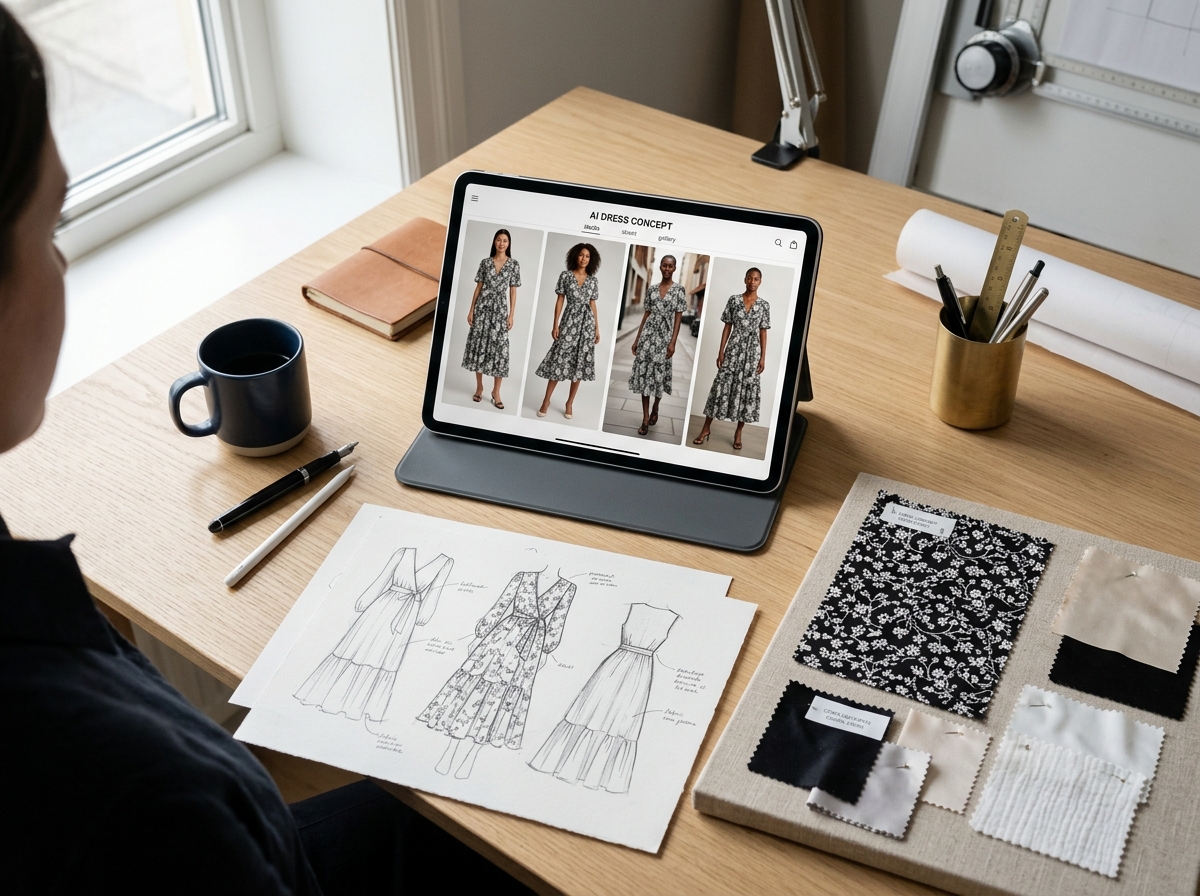
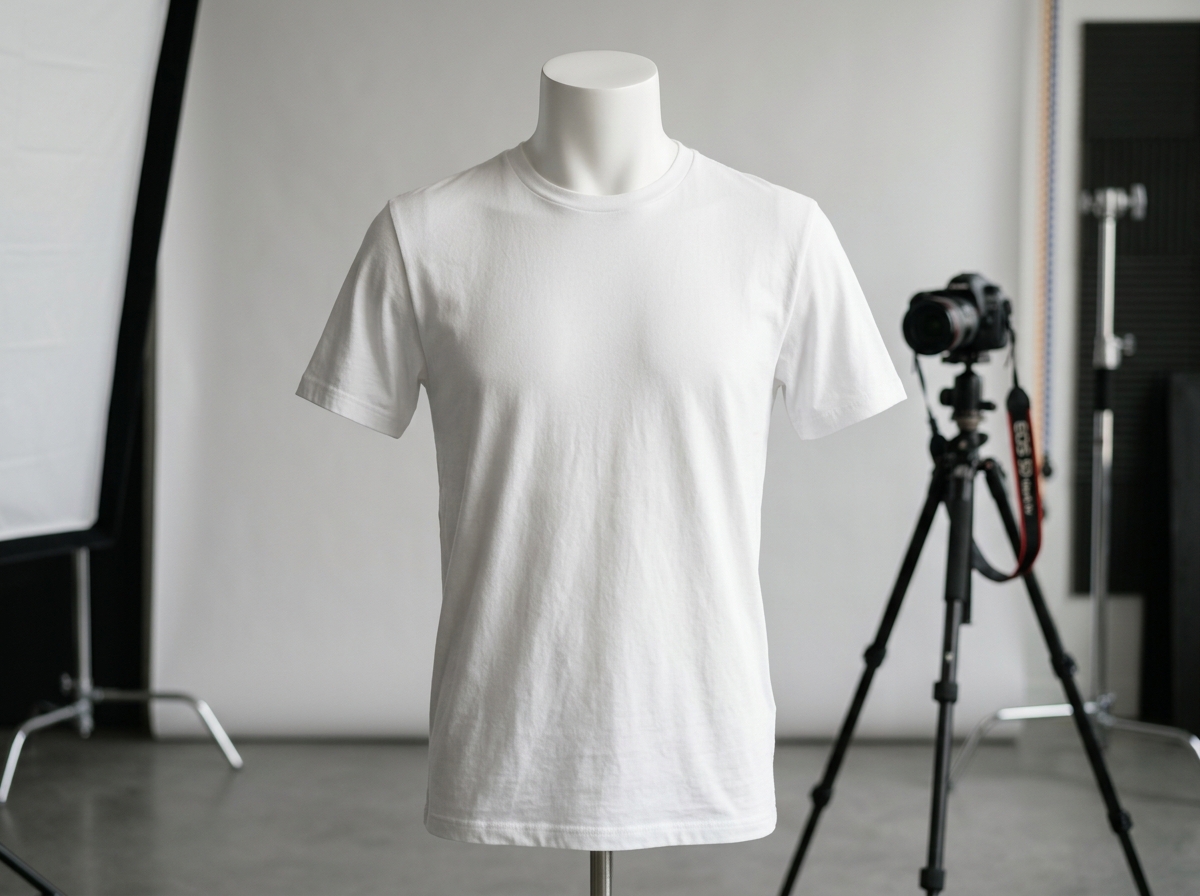
This guide explains the essential product image types every fashion e-commerce store needs and how AI production can generate the entire set from a single source. It's for catalog managers and studio leads who need to create a high-volume, channel-compliant visual library without endless photoshoots.
- Identify the core product shots for PDP, social, and marketplaces.
- Understand the role each image type plays in the customer journey.
- Learn how an AI production process creates every required image from one input.
- See how to build a scalable visual supply chain.
A complete product page is more than one great photo. It’s a visual conversation that answers every question a shopper has about fit, fabric, and styling. Producing that full set of images for thousands of SKUs, each needing specific shots for the PDP, social channels, and marketplaces, has traditionally been a major bottleneck for fashion brands. The cost and complexity of coordinating shoots often leave catalogs with incomplete or inconsistent imagery, directly impacting sales and customer trust.
What defines the essential fashion product images for online stores?
An effective fashion product page requires a strategic mix of images that work together to present the garment completely and compellingly. Each type serves a distinct purpose, guiding a potential customer from initial interest to confident purchase. Leading e-commerce platforms like Shopify consistently emphasize that a rich variety of high-quality images is one of the most critical factors for reducing returns and increasing conversion rates. It's about anticipating and answering a customer's questions visually before they have to ask.
The essential set for any fashion product includes several key shots, each playing a critical role in the digital showroom:
- On-Model Hero Shots: This is the cornerstone of your product imagery. It features a model wearing the garment against a clean, neutral background (typically white or light grey). This shot's primary job is to clearly and accurately communicate the fit, drape, and overall silhouette of the item. A complete set includes front, back, and side views, giving a full 360-degree understanding of how the garment looks on a human form. These are the images customers spend the most time with when evaluating a product.
- Ghost Mannequin (or 3D Packshot): This technique shows the product as if worn by an invisible person, giving it shape and volume without the potential distraction of a human model. It’s particularly effective for showing the internal structure, lining, and fit of items like jackets, blazers, and structured dresses. This view offers a clean, professional look that is highly favored for category pages and marketplaces where consistency is key.
- Flat Lay: Here, the garment is laid flat on a surface and shot from directly above. This style has become exceptionally popular for social media channels like Instagram and for email marketing campaigns due to its clean, graphic, and often creative appeal. It's also a practical way to show the full, unobscured shape of less structured items like t-shirts, scarves, and knitwear. It allows for creative compositions with accessories to suggest styling.
- Detail Shots (or Close-ups): These are tightly framed shots that highlight the specific features that signal quality and craftsmanship. This includes fabric texture, unique weaves, custom stitching, branded buttons, zippers, or any other distinctive hardware. These images are crucial for building trust and justifying a product's price point by making tangible the quality that a customer cannot yet feel. They bridge the gap between the online and in-store experience.
- Lifestyle or In-Context Shots: In these images, the product is shown in a real-world setting, as part of a styled outfit. This helps shoppers visualize how they might wear the item themselves and creates a powerful emotional connection to the brand's aesthetic and target lifestyle. It’s less about clinical detail and more about aspiration, storytelling, and demonstrating the product's versatility.
- Product Video / 360° Spin: Dynamic visuals are arguably the most effective way to demonstrate fit, drape, and how a fabric moves. A short video clip or an interactive 360° spin provides a comprehensive understanding that a series of static images cannot fully replicate. It's the closest you can get to a physical try-on experience online and has been shown to significantly boost conversion rates.
Why is a variety of product images so crucial for fashion?
Relying on a single image type is a missed opportunity that leaves money on the table. Different customers look for different visual cues, and each shot addresses different questions and serves different marketing channels. A customer evaluating the fit of a dress needs a clear on-model shot, while someone assessing the quality of a leather jacket wants to see a detailed close-up of the grain and stitching. According to foundational e-commerce research from the Baymard Institute, insufficient or poor-quality image information is a direct cause of product page abandonment.
A varied and comprehensive image library allows a brand to achieve several key business objectives:
- Build Unshakeable Buyer Confidence: A complete set of images proactively answers questions before they are even consciously formed, significantly reducing purchase hesitation. Seeing a garment from all angles, in fine detail, and in a relatable lifestyle context provides a complete and trustworthy picture of the product. This visual thoroughness signals professionalism and a commitment to customer satisfaction.
- Drastically Reduce Returns: The most common reason for returns in fashion e-commerce is a mismatch between expectation and reality. Inaccurate perceptions about fit, color, and fabric quality are primary drivers. Showing the product with complete accuracy—especially with video demonstrating movement—sets clear and correct expectations, leading to happier customers and a healthier bottom line.
- Power a Multi-Channel Marketing Engine: A single image type cannot be optimally effective across every channel. A clean ghost mannequin shot is perfect for a Google Shopping feed, a creative flat lay can drive engagement on Instagram, and an aspirational lifestyle image is ideal for an email newsletter or a paid ad. A deep image library allows you to tailor your visual message to the platform and audience, maximizing impact.
- Communicate and Reinforce Brand Identity: Beyond the product itself, your photography communicates your brand's story and values. The choice of models, locations, propping, and styling in your lifestyle shots tells a story and builds a universe around your products. This is a powerful and essential differentiator in a crowded, competitive market, turning a simple purchase into an act of brand affiliation.
| Image Type | Primary Use Case | Channel | Customer Question Answered |
|---|---|---|---|
| On-Model | Show fit, drape, and silhouette | PDP, Category Pages, Ads | "How will this look on my body type?" |
| Ghost Mannequin | Display shape and internal structure | PDP, Marketplaces (e.g., Amazon) | "What is the actual shape and lining of the garment?" |
| Detail Shot | Convey quality, texture, and features | PDP, Social Media (Zoom-ins) | "What is the fabric texture like? Is the hardware good quality?" |
| Lifestyle | Create emotional connection and show styling | Social Media, Email, Ads, Lookbooks | "How would I style this? Does this fit my personal style?" |
| Video / 360° | Demonstrate movement and true-to-life fit | PDP, Social Media (Reels/Shorts) | "How does the fabric move? How does it really fit?" |
How can AI produce all essential image types from one input?
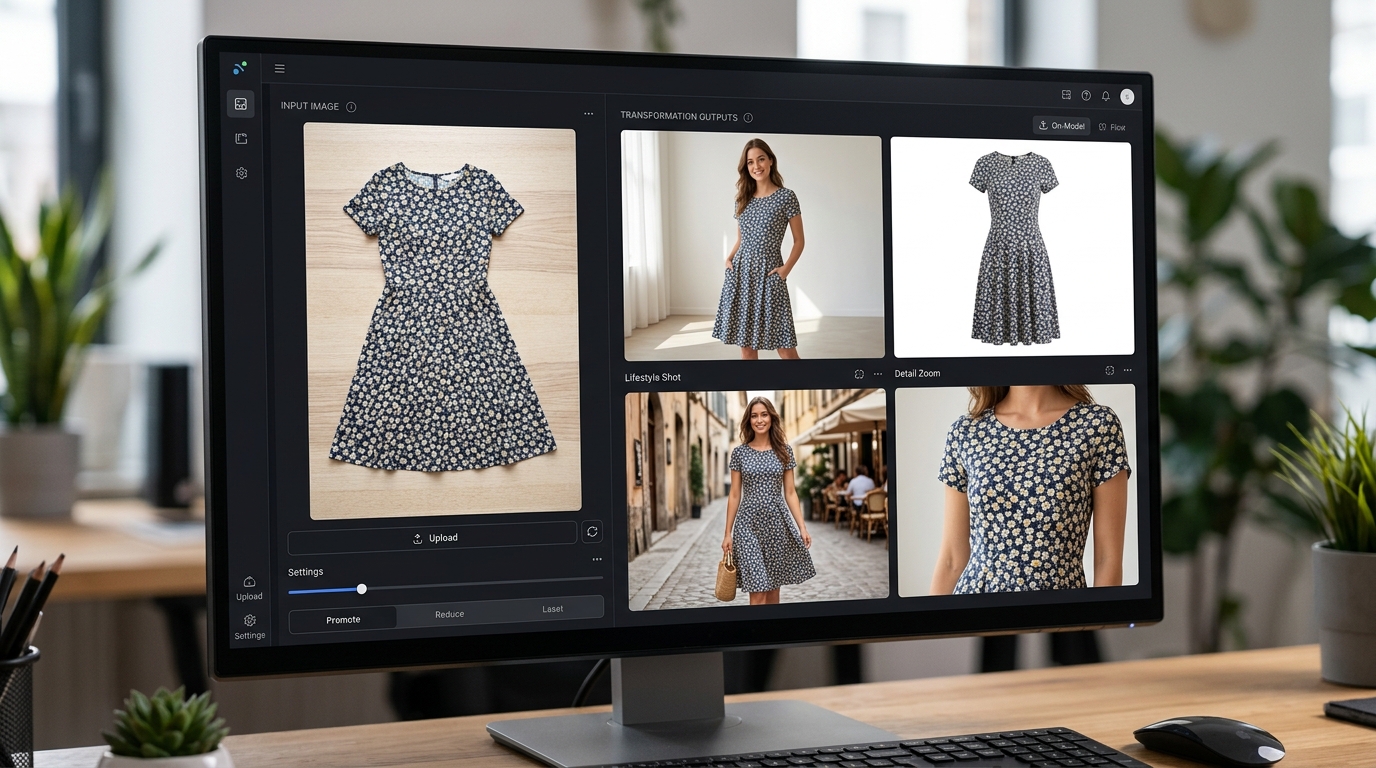
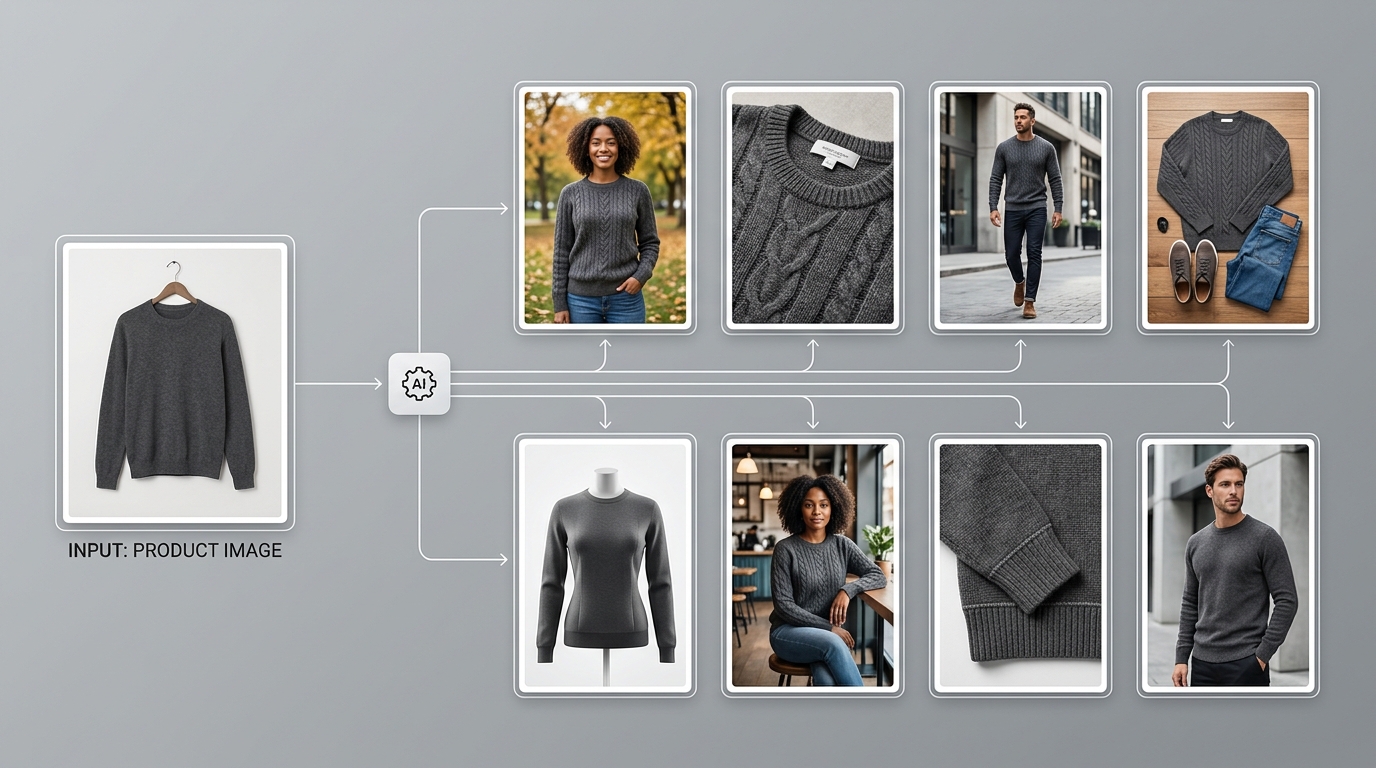
The traditional studio photography process is linear and labor-intensive. It requires separate setups, and often entirely separate shoots, to capture each required image type. This model is slow, expensive, and notoriously difficult to scale, especially across a large and diverse product catalog. AI-powered visual content platforms completely invert this outdated model. Instead of physically capturing every single variation, a brand provides a single high-quality input image—such as a simple flat lay or a basic shot on a mannequin—and the system intelligently generates the entire required set of assets.
This process works by using sophisticated computer vision to deconstruct the source image into its core components—analyzing fabric properties, texture, seams, silhouette, and color—and then re-rendering it in entirely new contexts. An advanced AI engine can perform tasks that were once the exclusive domain of a post-production team:
- Generate Hyper-Realistic On-Model Images: The AI can place the garment onto a diverse range of AI-generated models, allowing brands to select models that perfectly match their brand's style and target demographics without castings or photoshoots. This also enables localization by using models that resonate with specific regional markets.
- Create Flawless Ghost Mannequin Effects: The system can automatically generate the "hollow" 3D view from a standard on-model or mannequin shot, saving hours of painstaking manual retouching in Photoshop. This ensures a consistent look for all products across a category.
- Produce High-Fidelity Detail Shots: From the information contained in the main source file, the AI can synthesize high-resolution close-ups of the fabric and hardware that are indistinguishable from a dedicated macro shot, ensuring customers can inspect the quality of every item.
- Adapt for Infinite Lifestyle Contexts: The generated on-model image can be placed into any number of virtual backgrounds and settings, creating endless lifestyle variations for different markets, seasons, or campaigns without a single physical location shoot. A summer dress can be shown on a beach in one version and in a cityscape in another, all from the same initial input.
Explore the benefits of using AI for fashion product image production at scale
For brands managing catalogs with hundreds or thousands of SKUs, an AI-driven workflow is transformative. It elevates visual content creation from a chronic creative bottleneck into a streamlined, scalable, and predictable supply chain. The primary benefits are dramatic improvements in speed, cost, and consistency, which together provide a significant competitive advantage.
By abstracting away the complex logistics of traditional photoshoots, teams are freed up to focus on higher-level creative direction and strategy. The key advantages of this modern approach include:
- Unprecedented Scalability: Finally, brands can generate a complete, high-quality image set for every single product in their catalog, not just the A-list bestsellers. This ensures a consistent and premium brand experience across the entire online store, eliminating the quality drop-off often seen in the long tail of a product line. Every customer sees every product in its best possible light.
- Accelerated Speed to Market: This is a critical factor in the fast-moving fashion industry. AI can reduce image production and post-production timelines from weeks or even months down to just days. This agility is crucial for capitalizing on trends and getting new products online and selling faster than competitors, maximizing the sales window for seasonal items.
- Significant Cost Reduction: The economic impact is substantial. Brands can dramatically lower the cost-per-image by virtually eliminating the need for repeated photoshoots, model bookings, studio rentals, and extensive retouching hours. This frees up budget to be reinvested in other growth areas like marketing or product development.
- Ironclad Global Consistency: Ensure every product image, across every sales channel and international market, perfectly adheres to established brand guidelines for lighting, posing, styling, and overall mood. An AI system can apply these creative rules automatically and flawlessly at any scale, preventing the brand dilution that can occur with multiple freelance photographers or regional teams.
Final thoughts on building a modern visual content strategy
A robust and strategic visual content plan is not a luxury in the modern fashion e-commerce landscape; it is a fundamental necessity for survival and growth. By understanding and diligently implementing the full range of essential product image types, brands can build profound customer trust, significantly reduce costly returns, and create a compelling, high-converting shopping experience. The integration of AI into the production workflow transforms this from an expensive, slow, and manual process into a scalable, highly efficient system, allowing even the largest and most diverse catalogs to have a complete and consistent set of high-performing visual assets for every channel.
Your frequently asked questions answered
What is the most important type of product photography for fashion?
The most important image is the clean, on-model hero shot against a neutral background. This image serves as the primary product default photo (PDP) and clearly shows the garment's fit, drape, and overall look. According to a 2023 Baymard Institute study, users spend the most time viewing this type of image to evaluate a product.
How many product photos should a fashion item have?
A fashion item should have a minimum of 5-8 photos. This should include front, back, and side on-model views, a detail shot of the fabric or a unique feature, a lifestyle shot showing the product in context, and often a video. This variety helps answer customer questions visually and builds purchase confidence.
Can AI replace traditional fashion product photography?
AI is not a total replacement for photography but a powerful production tool. It excels at scaling and adapting a small number of source images (like a single flat lay or on-model shot) into the complete set of assets needed for a global catalog. This hybrid approach—human creativity plus AI scale—is becoming the new standard for efficient visual content production.
What are the 5 types of product photography?
The five core types of fashion product photography are: 1. On-Model Photography (hero shots on a person), 2. Flat Lay (garments laid flat), 3. Ghost Mannequin (hollow-form effect), 4. Detail Shots (close-ups of texture and features), and 5. Lifestyle Photography (product in a real-world context).
How can I ensure brand consistency with AI-generated images?
Brand consistency is maintained by using AI platforms that allow for detailed style guides. You can define specific models, poses, backgrounds, lighting, and brand aesthetics. The AI then applies these rules to every image it generates, ensuring that your entire catalog—from hero shots to social media assets—has a cohesive and on-brand look, a task that is difficult and costly to manage with traditional photoshoots alone.