
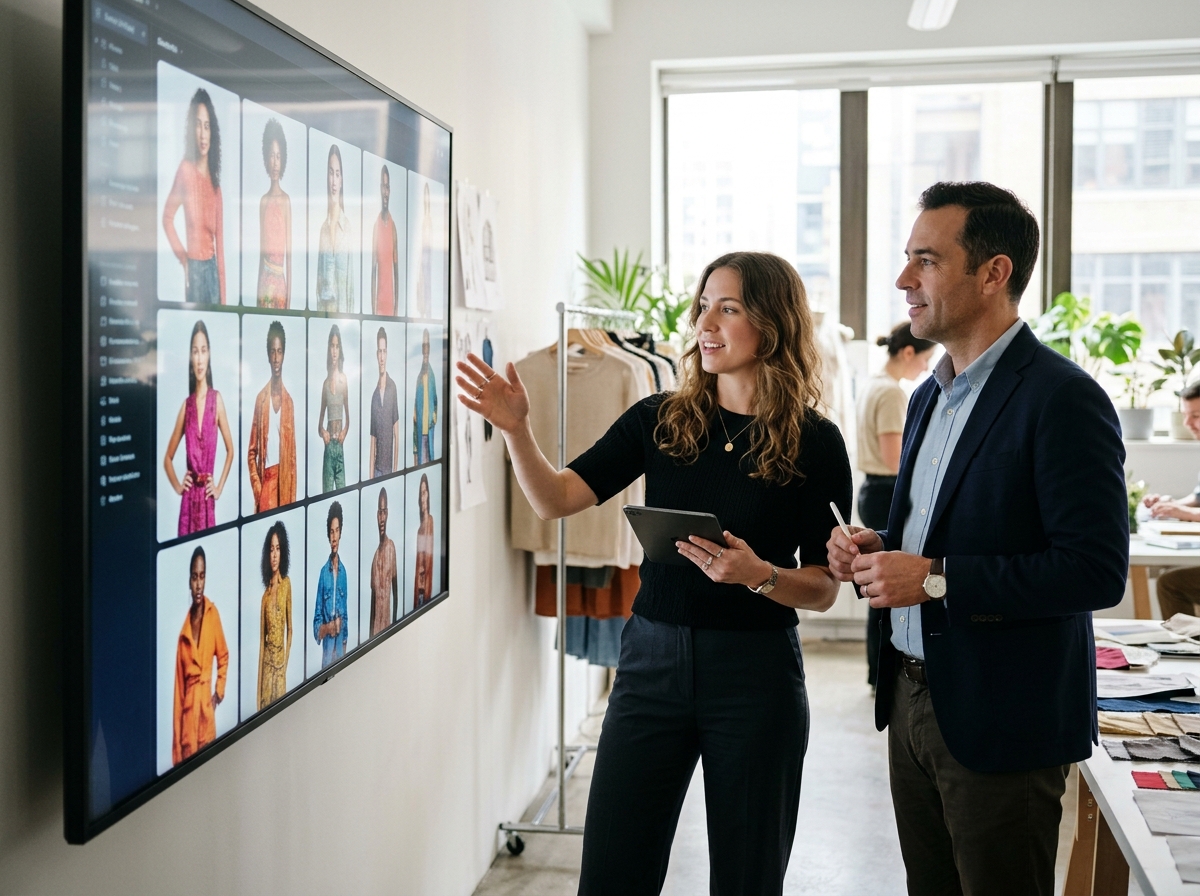
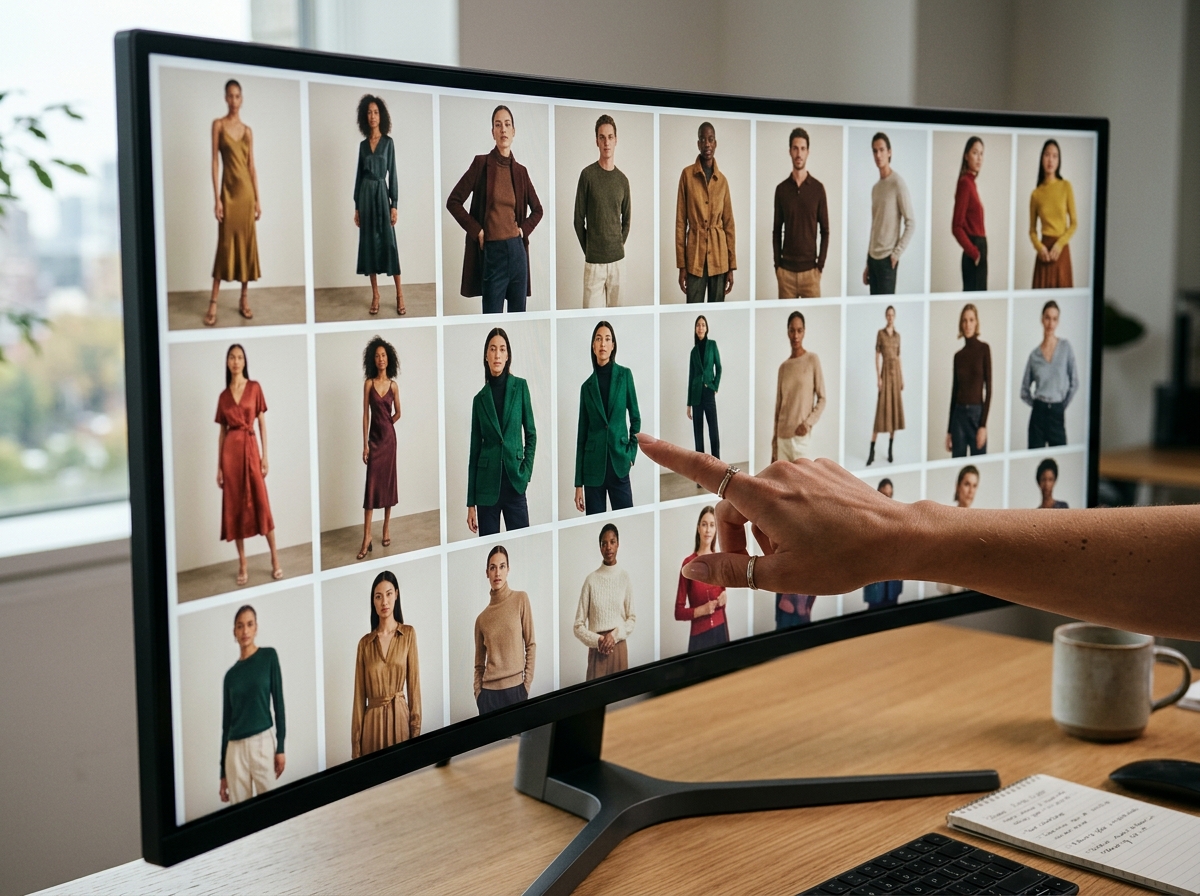
This article details how fashion brands can overcome production bottlenecks for new collection launches using an AI-driven workflow. It is for ecommerce, catalog, and operations teams looking to accelerate time-to-market while maintaining visual consistency and quality.
- Identify the core challenges of traditional photography workflows.
- Understand the steps in an efficient, AI-powered image production process.
- Learn how a visual content engine ensures brand consistency at scale.
- Explore how FlixStock streamlines image creation from a single product photo.
Fashion brands face a recurring, high-stakes challenge: getting all product images ready for a new collection launch. Traditional photoshoots, with their logistical complexities and high costs, often create delays that can compromise a collection's debut and its sales potential. The pressure to produce a vast array of visual assets—from on-model PDP shots to marketplace-compliant images—frequently results in inconsistent visuals or a reliance on less-engaging flat lays, especially for long-tail SKUs.
Why is traditional product image production a bottleneck for new collections?
Traditional photoshoots are fundamentally a linear and resource-intensive process. Coordinating models, photographers, stylists, studios, and post-production teams for hundreds or thousands of SKUs is a major operational hurdle. According to McKinsey, 92% of large fashion companies admit to struggling with timely decisions and deadlines, leading to slow time-to-market. Each step is dependent on the one before it, meaning a delay in sample delivery or studio availability can have a cascading effect, pushing back the entire launch schedule. This creates a stressful environment where teams are constantly playing catch-up, and the risk of errors increases.
Furthermore, this model scales poorly. Doubling the number of SKUs in a collection often means doubling the photoshoot budget and timeline. This lack of scalability forces brands into difficult compromises, such as shooting only "hero" items on-model while relegating the rest of the collection to less compelling formats. This creates an inconsistent customer experience and can negatively impact conversion rates for a significant portion of the product catalog. The inability to scale efficiently also hampers a brand's ability to react to market trends or test new product variations, as the cost and time of new photography are prohibitive.
What are the key challenges in getting images ready for a launch?
Beyond the timeline, fashion and retail teams grapple with several interconnected challenges when preparing for a launch. Maintaining visual consistency across an entire collection is chief among them. When shoots are spread across different days, locations, or even teams, variations in lighting, model posing, and styling are inevitable. This can disrupt the cohesive brand aesthetic that is crucial for a successful collection story. A consistent look and feel helps build brand recognition and trust with consumers, and inconsistencies can make a brand appear unprofessional.
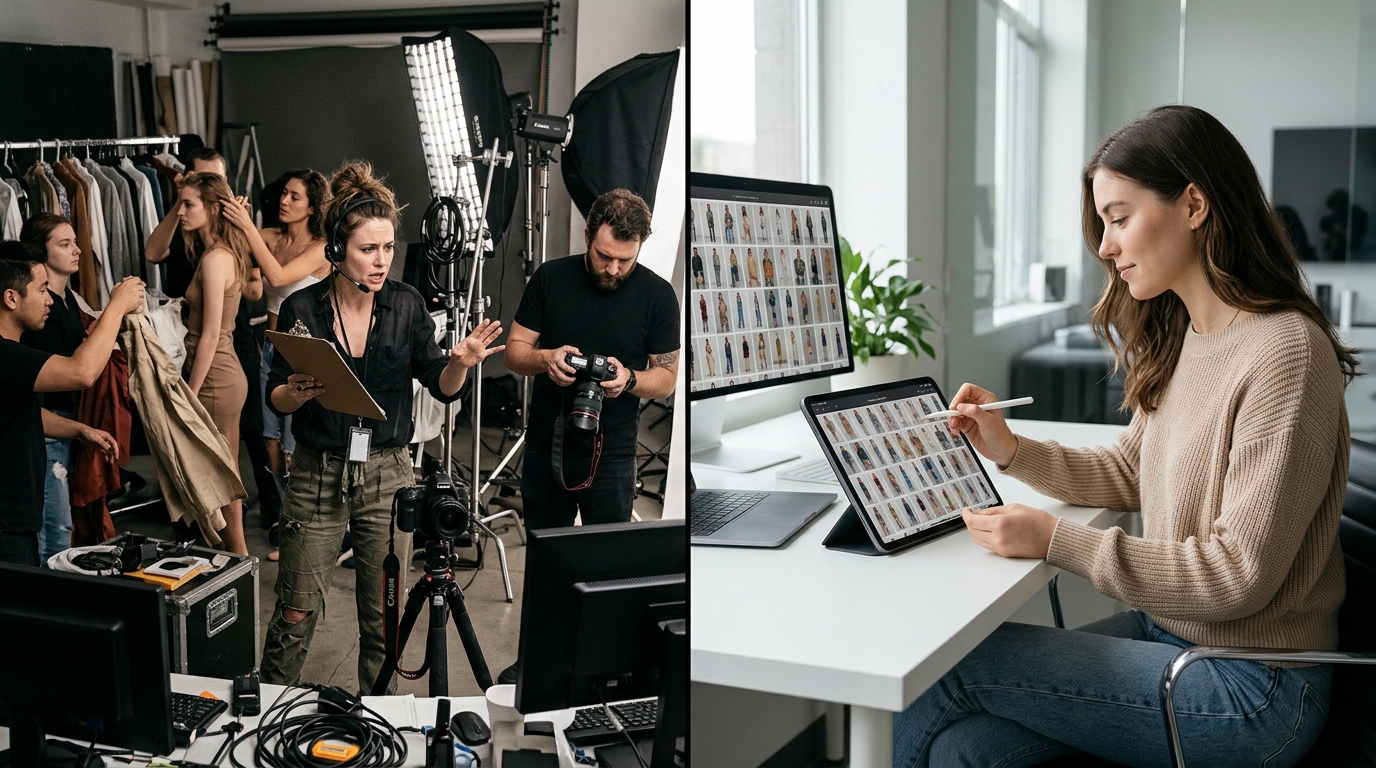
Another major hurdle is asset variety. A single product often requires a dozen or more unique images to service different channels: high-resolution on-model shots for the PDP, ghost mannequin views, detailed fabric close-ups, and specific formats for marketplaces like Amazon or Zalando. Producing this full suite of assets for every SKU via traditional means is often cost-prohibitive and logistically impractical, leaving teams to manually edit or forego certain asset types altogether. This can lead to missed opportunities on channels that require specific image types, or a suboptimal customer experience on the brand's own website.
How do AI-driven visual content engines streamline image production?
AI-driven visual content engines fundamentally change the production paradigm from a linear, manual process to a parallel, automated one. Instead of capturing every single variation in-camera, brands can use a single source image—a simple packshot or even a design file—to generate a complete set of visual assets. The platform reads the garment's attributes and programmatically applies brand-defined models, poses, and backgrounds. This allows for an incredible level of control and consistency that is difficult to achieve with traditional methods.
This approach decouples image creation from the physical constraints of a photoshoot. A brand can generate on-model images for its entire collection simultaneously, ensuring perfect consistency in lighting, style, and model presentation. It also allows for unparalleled agility. If a new marketplace requires a different background color or aspect ratio, the assets can be regenerated in minutes without needing a reshoot. This transforms the visual supply chain from a rigid, costly operation into a flexible and responsive system, capable of adapting to the ever-changing demands of the digital marketplace.
| Step | Traditional Photoshoot | AI-Powered Workflow |
|---|---|---|
| 1. Pre-Production | Book models, studio, photographers, stylists (2-4 weeks) | Define digital brand guidelines (one-time setup) |
| 2. Photoshoot | Capture images for all SKUs (1-2 weeks) | Capture one source image per SKU (1-2 days) |
| 3. Post-Production | Retouching, color correction, formatting (2-3 weeks) | AI generation of all required assets (24-48 hours) |
| 4. Final Delivery | Final assets delivered (Total: 4-8 weeks) | Final assets delivered (Total: 2-3 days) |
Could an AI-powered workflow benefit your new collection launches?
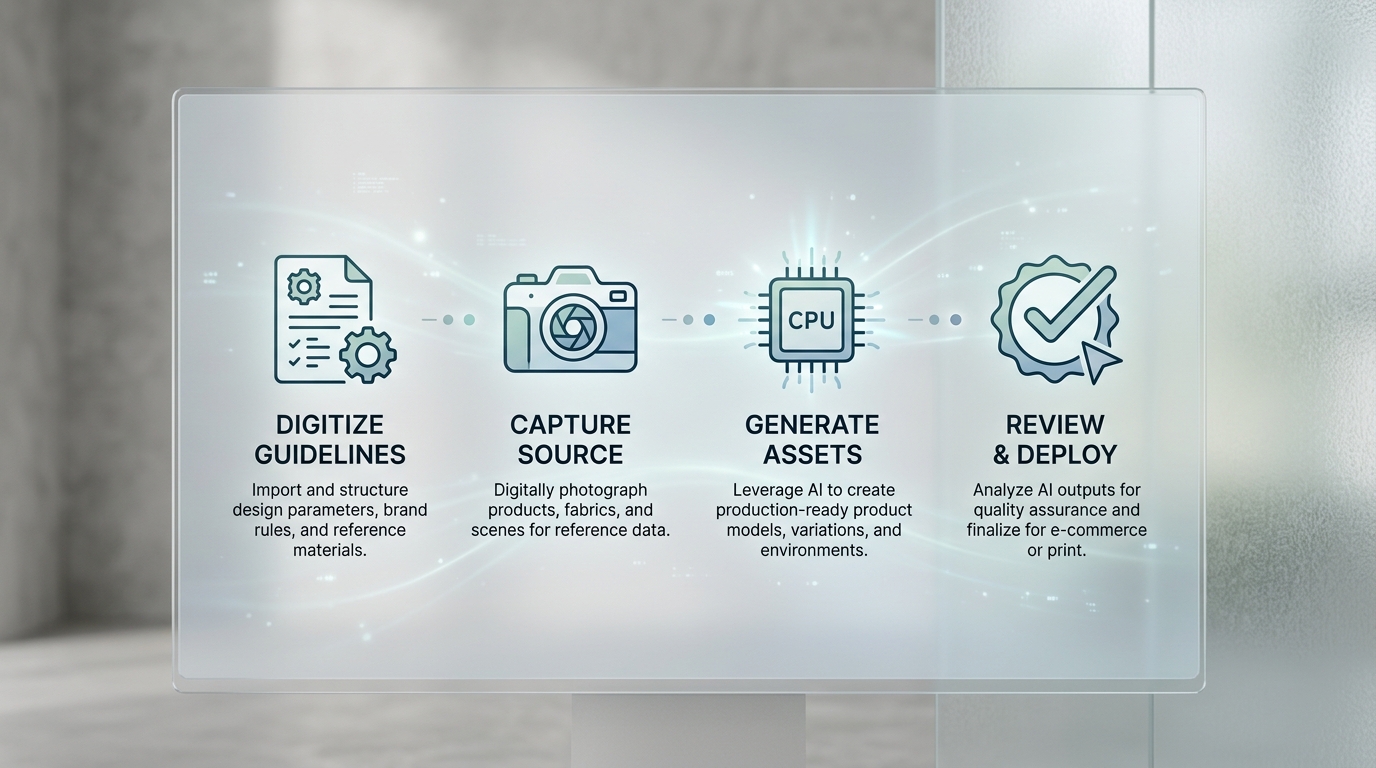
An efficient, AI-powered workflow focuses on creating a scalable system rather than managing individual shoots. The process can be broken down into four key stages:
- Digitize Brand Guidelines: The process begins by translating your brand’s visual identity into a set of digital rules. This includes selecting a consistent cast of AI models, defining standard poses, setting lighting and background specifications, and establishing styling rules. This becomes the foundation for all future image generation. This initial setup is a one-time investment that pays dividends in consistency and speed for all future collections.
- Capture a Single Source Image: For each garment in the new collection, capture a high-quality "digital twin." This is typically a flat-lay or ghost mannequin shot that clearly shows the product's design, fabric, and drape. This single input is all the system needs to generate every other visual. The quality of this source image is important, as it will be the basis for all generated assets.
- Generate All Required Assets: Upload the source images to the visual content engine. The platform then automatically generates the full range of required assets—on-model shots, different angles, colorways, and channel-specific formats—by applying the digitized brand guidelines. This step runs in parallel for the entire collection, allowing for the creation of thousands of images in a fraction of the time of a traditional shoot.
- Review and Deploy: The generated images undergo a quality assurance review (often a combination of AI and human checks) before being delivered directly to your PIM or DAM system, ready for immediate deployment across all ecommerce channels. This automated handoff eliminates manual file management and reduces the risk of errors, ensuring that the right assets are delivered to the right channels at the right time.
Where does FlixStock fit into this process?
FlixStock provides a complete visual content engine designed to solve the challenges of fashion image production at scale. By leveraging our platform, brands can transform their lengthy and expensive photography process into a streamlined, digital workflow. From a single product photo, FlixStock generates a comprehensive suite of on-model and packshot imagery that is consistent, on-brand, and ready for any channel, any market, and any season. This enables your team to launch new collections faster, cover every SKU with high-quality visuals, and adapt to market needs without the cost and delay of endless reshoots. You can explore the possibilities with our interactive demo at https://zalando-demo.flixstock.com/.
Conclusion: Launching at the Speed of Fashion
The demands of modern fashion retail require a visual content strategy that is as agile and scalable as the business itself. Traditional product photography, while valuable for hero campaigns, is no longer a viable solution for producing the sheer volume of assets needed for a new collection launch. By embracing an AI-driven workflow, fashion brands can break free from production bottlenecks, ensuring every product is represented with compelling, consistent imagery from day one. This not only accelerates time-to-market but also empowers teams to build a stronger, more cohesive brand story across every customer touchpoint. The future of fashion is not just about designing beautiful clothes, but also about presenting them to the world with speed and precision.