


This article breaks down how strategic product imagery directly reduces high return rates for fashion e-commerce brands. It is for catalog, content, and e-commerce leads who manage large, diverse product assortments and face the operational costs of returns. You will learn the key visual strategies that build customer trust and how a visual content engine delivers them at scale.
- Understand the primary visual drivers of fashion returns.
- Learn to set accurate customer expectations through imagery.
- Discover visual strategies to reduce fit, color, and fabric-related returns.
- See how to produce return-reducing visual content at scale.
High return rates in fashion e-commerce are not just a cost center; they are a direct measure of unmet customer expectations. More often than not, the root cause is a disconnect between what the customer sees on the product detail page (PDP) and what they unbox at home. Addressing this gap with accurate, consistent, and detailed product photography is the most direct lever brands can pull to reduce returns, protect margins, and build lasting customer trust.
Understanding the Scale of the Returns Problem in Fashion E-commerce
The fashion industry contends with the highest return rates in e-commerce, frequently ranging from 20% to 40%, a figure that has significant financial and operational implications. According to a 2024 report by Cahoot, apparel alone sees an average return rate of 26%. Each return initiates a costly reverse logistics process that includes shipping, inspection, restocking, and potential markdowns for items that are out of season or show signs of wear. This "shadow inventory" of returned goods can represent a significant portion of a retailer's stock, tying up capital and incurring carrying costs. Beyond the direct financial impact, high return rates signal a poor customer experience, eroding the trust that is essential for repeat purchases and long-term loyalty. The cumulative effect is a drain on profitability and a constant operational strain on warehousing and customer service teams.
Moreover, the environmental cost of returns is substantial. The additional shipping cycles, packaging waste, and potential for returned items to end up in landfills contribute to the fashion industry's carbon footprint. For brands focused on sustainability, a high return rate is not just a business problem but a contradiction of their brand values. Therefore, addressing the root causes of returns is a multi-faceted challenge that impacts the bottom line, customer relationships, and corporate responsibility. The scale of this issue necessitates a strategic approach, moving beyond reactive measures to proactively manage customer expectations from the very first visual touchpoint.
Pinpointing How Misleading Imagery Fuels Returns
When product photos are inaccurate, they create a trust deficit. This happens in several ways: inconsistent color representation from one image to the next, lighting that obscures fabric texture, or styling that hides the true fit of a garment. For example, a sweater that appears to be a vibrant cherry red online might arrive as a muted brick color, leading to immediate disappointment. Customers who receive a product that feels cheaper, fits poorly, or looks like a different color than the one they ordered feel misled. This experience not only guarantees a return but also makes them hesitant to purchase from the brand again, contributing to customer churn. The practice of "bracketing"—ordering multiple sizes or colors of the same item with the intent to return most of them—is a direct consequence of this uncertainty. Customers bracket because they don’t trust the images to tell them the full story, forcing them to use their living rooms as a fitting room, at the retailer's expense.
This erosion of trust has long-term consequences. A customer who has a negative experience with a product's visual accuracy is less likely to engage with the brand's marketing, more likely to leave a negative review, and may even share their disappointment on social media, amplifying the damage. In a competitive market, where customer acquisition costs are high, retaining customer trust is paramount, and it starts with honest and accurate visual communication. Every inaccurate image is a potential broken promise to the customer, and the cost of that broken promise is far greater than the cost of a single return.
Exploring the Role of Accurate Photos in Setting Expectations
Accurate product photos are the foundation of a trustworthy PDP. They serve as the primary tool for communicating the value, quality, and fit of a garment. To be effective, accuracy must be comprehensive. This means not just capturing the product from multiple angles but ensuring color fidelity across all images, providing close-up shots that reveal fabric texture and details like stitching and hardware, and showing the garment on a variety of body types to provide a more inclusive and realistic preview. When customers can clearly see how a product will look and feel, their purchase decisions are more informed, and the likelihood of a return due to unmet expectations drops significantly. This proactive approach to visual communication is a key differentiator for brands that successfully manage their return rates.
Furthermore, detailed imagery can also serve as a form of customer education. By showcasing the unique features of a garment, such as a particular type of fabric weave or a specialized stitching technique, brands can highlight the quality and craftsmanship of their products. This not only justifies the price point but also deepens the customer's appreciation for the item, making them more likely to value and keep it. It transforms the PDP from a simple sales page into a rich, informative experience that builds brand equity and customer confidence with every click.
Implementing Key Visual Strategies to Reduce Returns
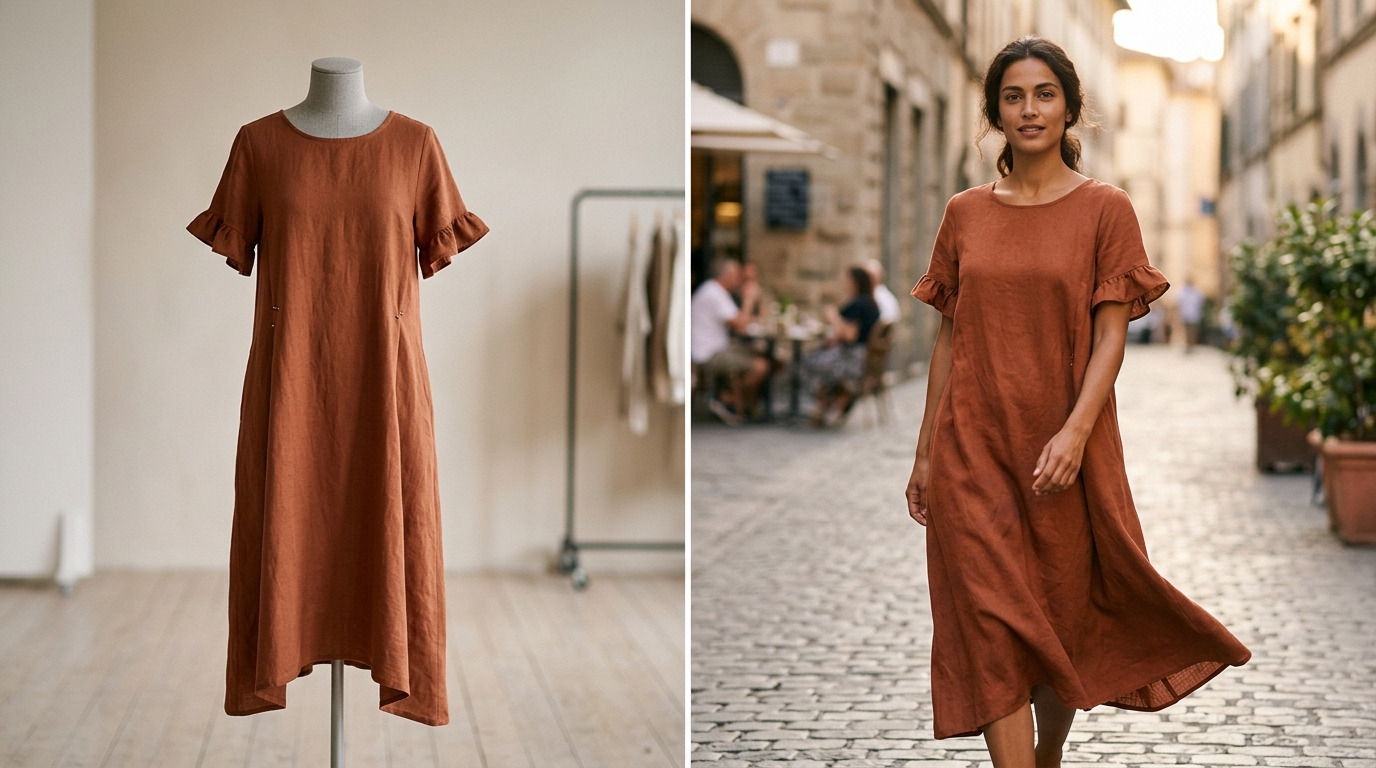
To directly combat the leading causes of returns, brands can implement several key visual strategies. Showing products on models of diverse body types, and including the model's height and the size they are wearing, provides critical fit context that a simple size chart cannot. Videos that demonstrate how a garment moves and drapes can convey information that static images cannot, helping customers to understand the flow and feel of the fabric. For color accuracy, it’s essential to use consistent lighting and color calibration during photoshoots and post-production to ensure the digital representation matches the physical product. Finally, providing a 360-degree view of the product allows customers to inspect it from every angle, leaving no room for surprises and building confidence in their purchase decision.
Implementing these strategies requires a commitment to a "what you see is what you get" philosophy. It may mean investing in better photography equipment, more diverse models, or new technologies like 3D imaging, but the return on this investment, in the form of lower return rates and higher customer satisfaction, is substantial. It is a shift from marketing a product to accurately representing it, a nuance that today's savvy online shoppers appreciate and reward with their loyalty. These visual elements should be considered essential data points for the customer, not just decorative assets.
| Visual Tactic | Impact on Returns | Implementation Notes |
|---|---|---|
| On-Model Imagery (Diverse Body Types) | Reduces fit-related returns | Show models with varying heights and sizes; list their measurements and the size worn. |
| Product Video | Clarifies drape, movement, and fit | Short, high-resolution clips showing a model walking or turning are highly effective. |
| High-Fidelity Detail Shots | Reduces texture and quality-related returns | Zoom-in on fabric weave, stitching, buttons, and zippers to show craftsmanship. |
| Consistent Color Accuracy | Reduces color-mismatch returns | Use calibrated monitors and consistent lighting across all shoots and post-production. |
| 360° Product View | Eliminates ambiguity about shape and details | Interactive viewers allow customers to rotate the product image themselves. |
Leveraging a Visual Content Engine for Scalable Solutions
Implementing these visual strategies across a catalog of thousands of SKUs presents a significant operational challenge for most brands. Traditional photoshoots are expensive, time-consuming, and difficult to scale, especially when catering to multiple markets with different model and styling preferences. This is where a visual content engine like FlixStock becomes essential. By leveraging a single source garment photo, FlixStock can generate a complete set of on-model images, ghost mannequin shots, and product videos with consistent styling, lighting, and color accuracy across all assets. This allows brands to produce high-quality, return-reducing visual content for their entire product catalog at a scale and speed that traditional methods cannot match. The system ensures every PDP provides a comprehensive and trustworthy representation of the product, directly addressing the root causes of fashion returns and helping to standardize visual excellence across all customer touchpoints.
This technology not only solves the problem of scale but also introduces a level of agility that is impossible with traditional methods. A brand can, for instance, generate new model images for a specific marketing campaign or a new international market in a matter of hours, not weeks. This ability to create contextually relevant, high-fidelity imagery on-demand is a powerful tool for both reducing returns and driving conversions, turning a reactive cost center into a proactive driver of customer satisfaction and profitability. The future of fashion e-commerce lies not just in selling products, but in selling them with a level of visual accuracy that makes the online shopping experience as confident and reliable as shopping in person.

Answering Your Questions About Fashion Returns
What is the average return rate for online clothing?
The average return rate for online clothing typically ranges from 20% to 40%, making it one of the highest among all e-commerce categories. This is largely due to issues with fit, color, and quality perception, which are directly influenced by product imagery. According to Pixelz, apparel returns can be as high as 26%.
How can product images reduce returns?
Product images reduce returns by setting accurate customer expectations. High-quality photos from multiple angles, on diverse body types, and with zoom capabilities help customers make informed decisions about fit, texture, and color, minimizing the gap between the online representation and the physical product. This builds trust and reduces the likelihood of a return.
What is 'bracket buying' in fashion e-commerce?
Bracket buying is the practice of ordering the same item in multiple sizes or colors with the intention of keeping only one and returning the rest. This behavior is often driven by a lack of confidence in the product imagery and sizing information provided on the PDP. It is a costly side effect of customer uncertainty.
How does visual consistency affect customer trust?
Visual consistency across all product images—in terms of lighting, color, and model presentation—builds a cohesive and professional brand identity. When customers see that what’s presented online consistently matches what arrives at their door, it builds trust and reduces their perceived risk of making a purchase, leading to higher conversion rates and fewer returns.
What are the most important types of product photos for reducing returns?
The most important photos for reducing returns are on-model shots showing fit on different body types, close-up detail shots of fabric and hardware, and images from multiple angles (front, back, side). Product videos are also increasingly critical for demonstrating drape and movement, providing a dynamic view that static images can't capture.