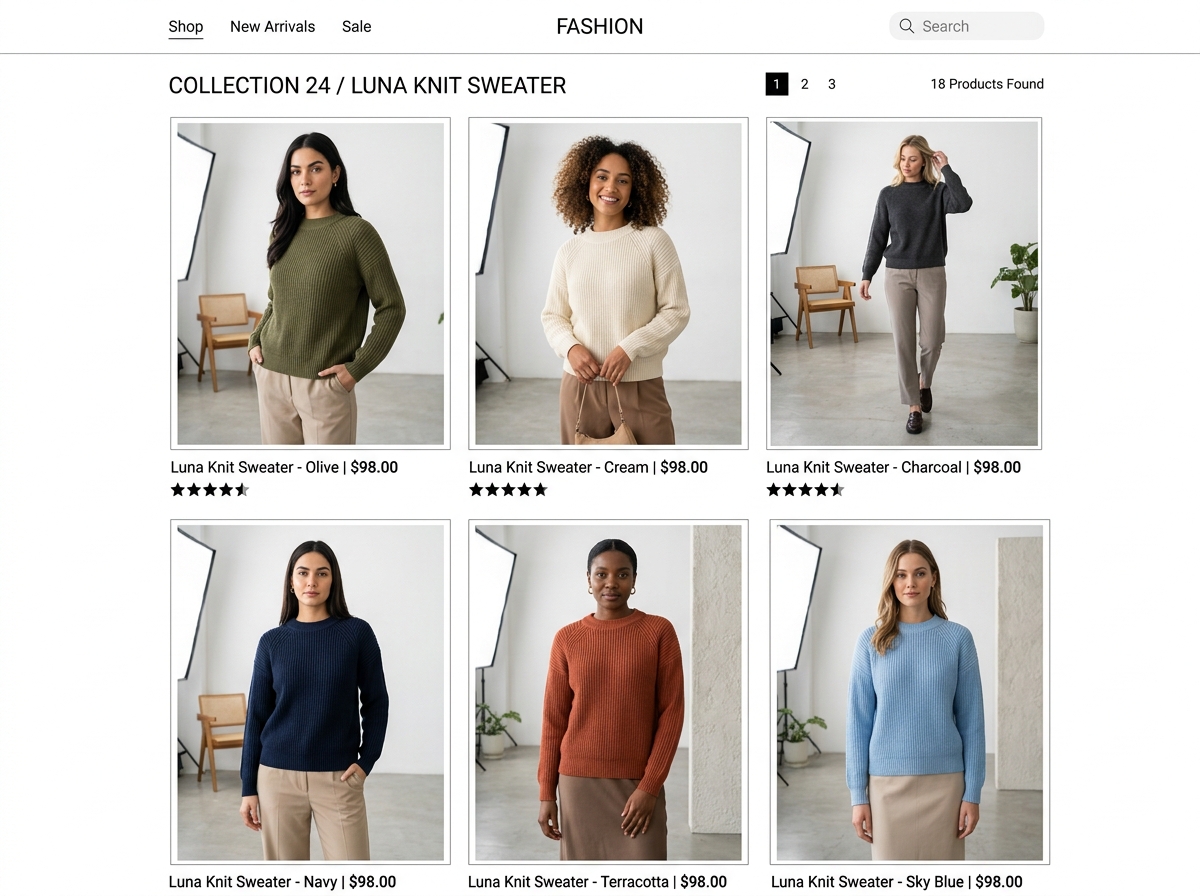
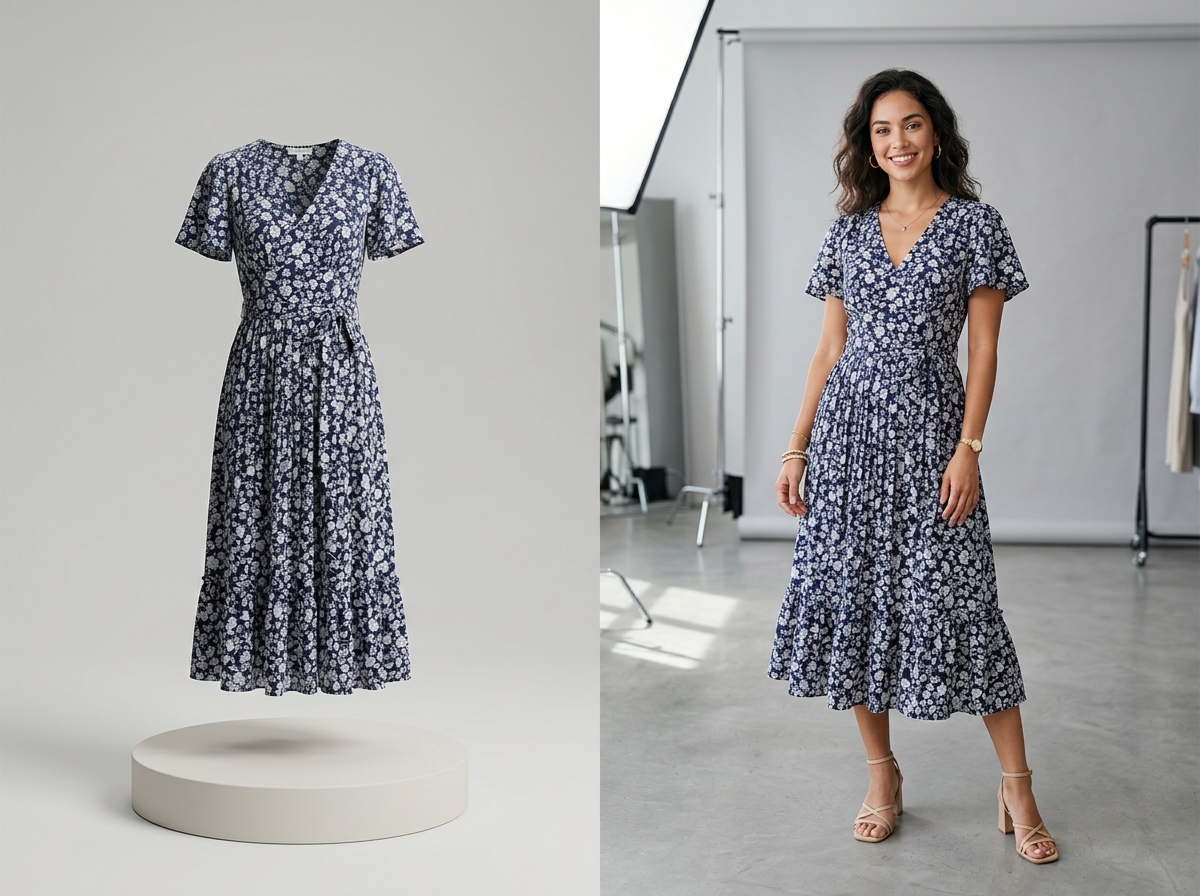
Summary
- AI visual content engines transform flat lay and ghost mannequin images into photorealistic on-model visuals without physical photoshoots.
- This process allows catalog managers to scale high-quality imagery across thousands of SKUs cost-effectively.
- FlixStock enables brands to maintain consistent styling, lighting, and brand aesthetic across markets and channels.
To convert flat lay or ghost mannequin images to on-model visuals with AI, you upload your existing product photos to a visual content engine, select desired models and poses, and the AI generates photorealistic on-model images that maintain garment details and brand consistency. For catalog managers handling thousands of long-tail SKUs, traditional photoshoots are too expensive and time-consuming, leading to inconsistent catalog quality. An AI-driven workflow eliminates the need for physical photoshoots, making it scalable and cost-effective to upgrade your entire catalog.
Why converting flat lay and ghost mannequin to on-model matters for your catalog
Converting flat lay and ghost mannequin images to on-model visuals is essential for improving product presentation and driving catalog performance. Shoppers struggle to visualize fit and drape from a flat garment. High-quality on-model imagery provides context, helping customers understand how an item looks when worn. Upgrading your long-tail SKUs ensures that your entire catalog maintains a premium feel, preventing missed opportunities for customer engagement.
The AI-powered workflow for transforming existing product images at scale
The AI-powered workflow for transforming existing product images at scale relies on a visual content engine that processes inputs like flat lays or sample shots. You begin by uploading your source images. The system reads the garment type, fabric, fit, and color. You then select from a library of models and poses. The engine applies these selections, generating production-ready files that can be delivered directly to your PIM or marketplaces. This streamlined process removes the logistical bottlenecks of traditional studio photography.
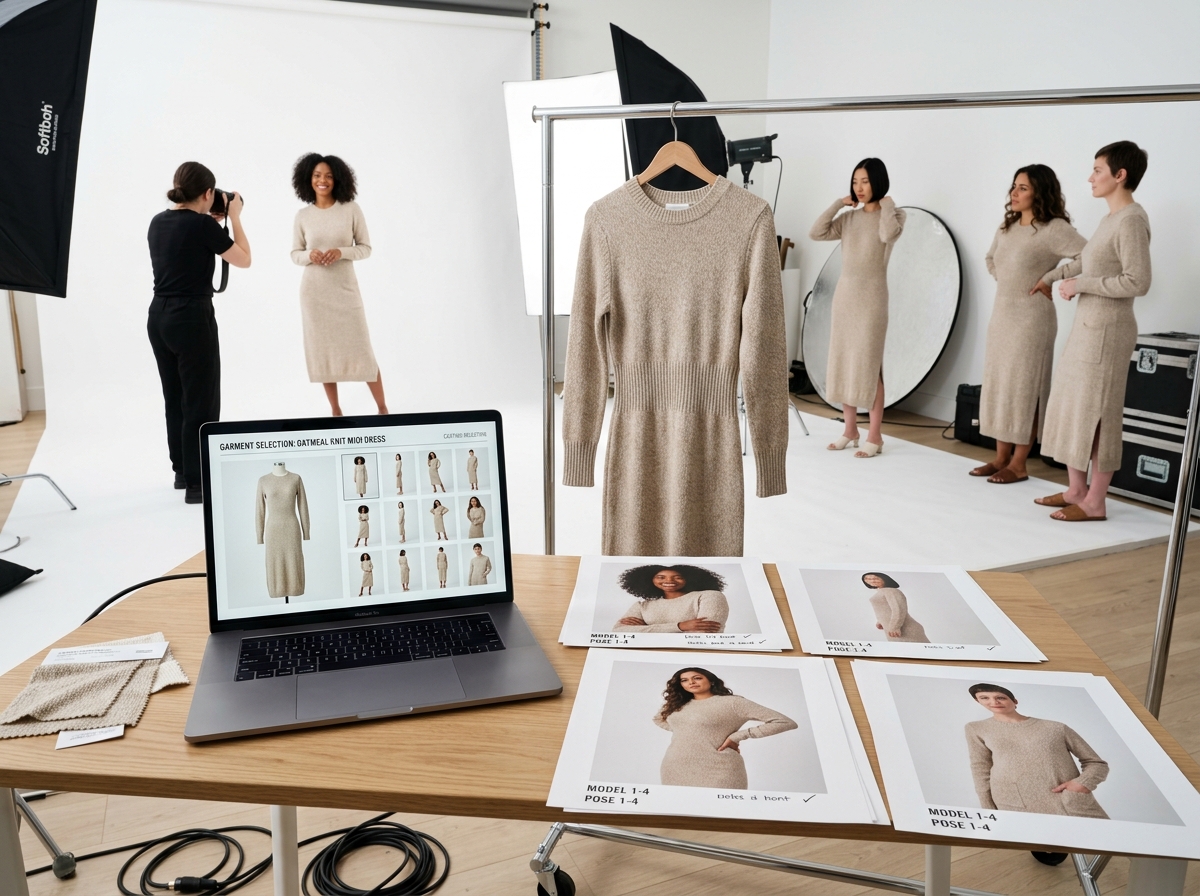
Ensuring consistency and brand aesthetic across thousands of SKUs with AI models
Ensuring consistency and brand aesthetic across thousands of SKUs with AI models requires a system built for catalog volume, not just one-off generation. FlixStock applies your specific brand guidelines, lighting preferences, and styling rules to every generated image. Whether you need front, back, or side views, the AI maintains the exact look and feel required for your brand. Human and AI quality control steps ensure that the final assets meet the standards required for PDPs, social media, and marketplaces.
How to prepare your existing flat lay or ghost mannequin images for AI conversion
Preparing your existing flat lay or ghost mannequin images for AI conversion involves ensuring your source files capture accurate garment details. Provide clear, well-lit photos where the fabric texture, colors, and construction are visible. If using ghost mannequins, ensure the styling reflects how the garment should drape. The AI uses these inputs to reconstruct the item on a model, so the quality of your output is directly tied to the clarity of your input.
The impact of high-quality on-model visuals on customer engagement and conversion rates
The impact of high-quality on-model visuals on customer engagement and conversion rates is significant, as shoppers are more likely to interact with products they can visualize wearing. Consistent, premium imagery builds trust and helps customers make informed purchasing decisions, reducing the likelihood of returns. By upgrading your flat lays, you provide a better shopping experience that translates into measurable performance improvements across your channels.