
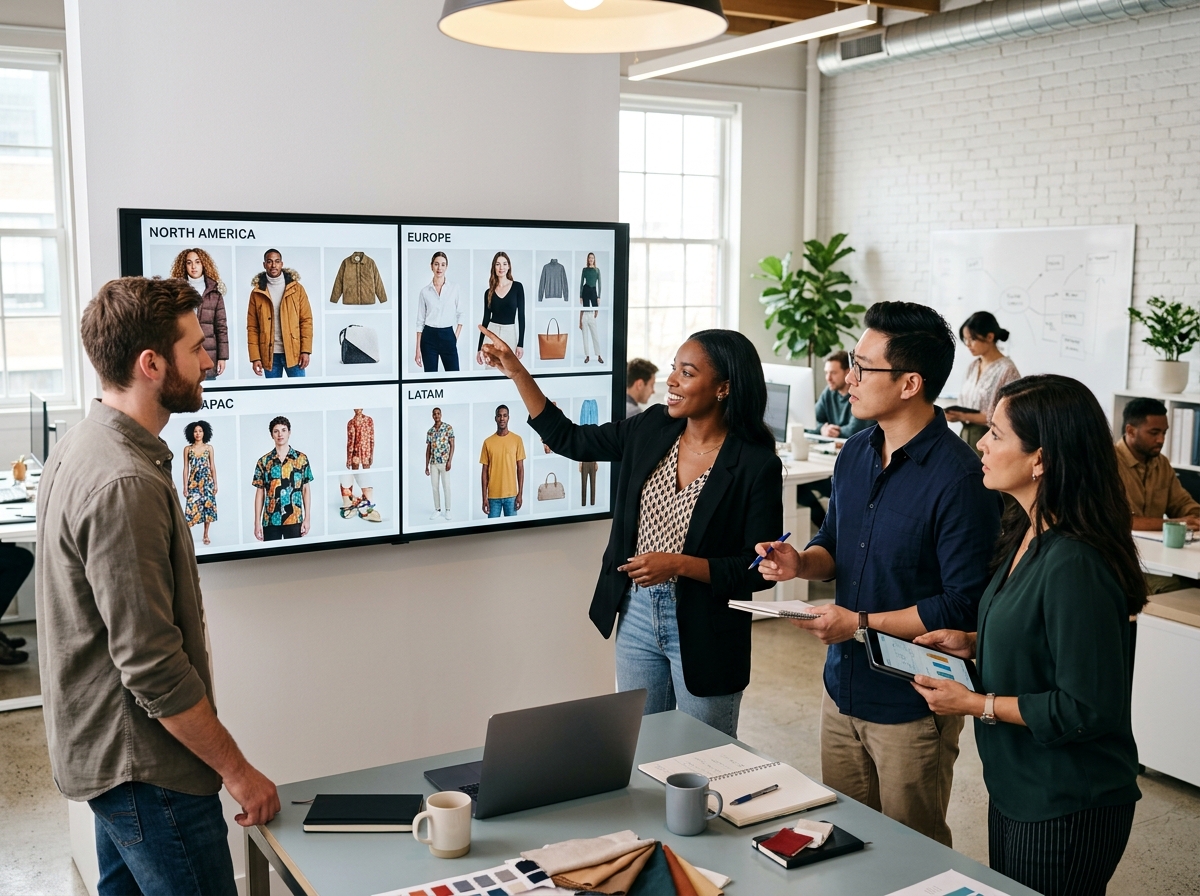
This article provides a strategic framework for fashion brands to localize product imagery for international markets. It is for ecommerce leads, catalog managers, and creative teams seeking to adapt visuals for local preferences efficiently. After reading, you will be able to implement a scalable localization process that maintains brand consistency and improves conversion rates.
- Understand the key visual elements that require localization.
- Learn how AI can generate culturally relevant model and background variations.
- Address the challenge of maintaining visual consistency across global catalogs.
- Implement a scalable strategy for fashion image localization.
Fashion brands expanding globally face a critical challenge: a single set of product images rarely connects with every international audience. The traditional solution—market-specific photoshoots—is slow, expensive, and creates visual inconsistencies. The result is often a compromised customer experience where shoppers see models, styles, and settings that feel foreign, hurting trust and conversion. A more effective approach uses a centralized visual content engine to adapt a single source image for every market's cultural context, ensuring both relevance and brand consistency.
Why is localizing fashion product images crucial for global market success?
Localizing product images is critical because visual information is the primary driver of purchase decisions in fashion ecommerce. More than 85% of online apparel shoppers place greater importance on visual information than on text descriptions, according to a study by Intent Lab (2022). When a customer in Tokyo sees a winter coat modeled in a setting that looks like Miami, a disconnect occurs. This friction reduces trust and makes it harder for the shopper to visualize wearing the product themselves. Effective localization closes this gap, making the product feel familiar and personally relevant.
The financial impact of cross-border commerce is too large to ignore. The global cross-border e-commerce market is projected to reach USD 1.74 Trillion in 2026, with apparel as the leading category (Coherent Market Insights, 2026). Brands that successfully localize their content see tangible results, including 10-15% higher conversion rates and 20% higher customer satisfaction, as reported by Shopify (2022). By presenting products in a local context, brands can capture a larger share of this growing market.
Which key elements of a fashion product image need localization?
Effective localization goes beyond simple translation. It involves adapting several core visual elements to align with the cultural and environmental context of each target market. Getting these details right is the difference between an image that feels authentic and one that looks out of place.
- Models: The appearance of the model—including ethnicity, age, and body type—should reflect the target demographic of the region. A model that resonates in one market may not in another.
- Styling: How a garment is styled can vary dramatically based on climate, local trends, and cultural norms of modesty. A dress might be paired with sandals in one region and a jacket and boots in another.
- Backgrounds and Scenery: The environment in which the product is shown should be recognizable and aspirational to the local shopper. This includes architectural styles, interior design, and even the type of natural lighting.
- Color Palettes: Colors carry different cultural meanings. What is seen as celebratory in one culture might be associated with mourning in another. Backgrounds and props should use a color palette that evokes the right emotional response.
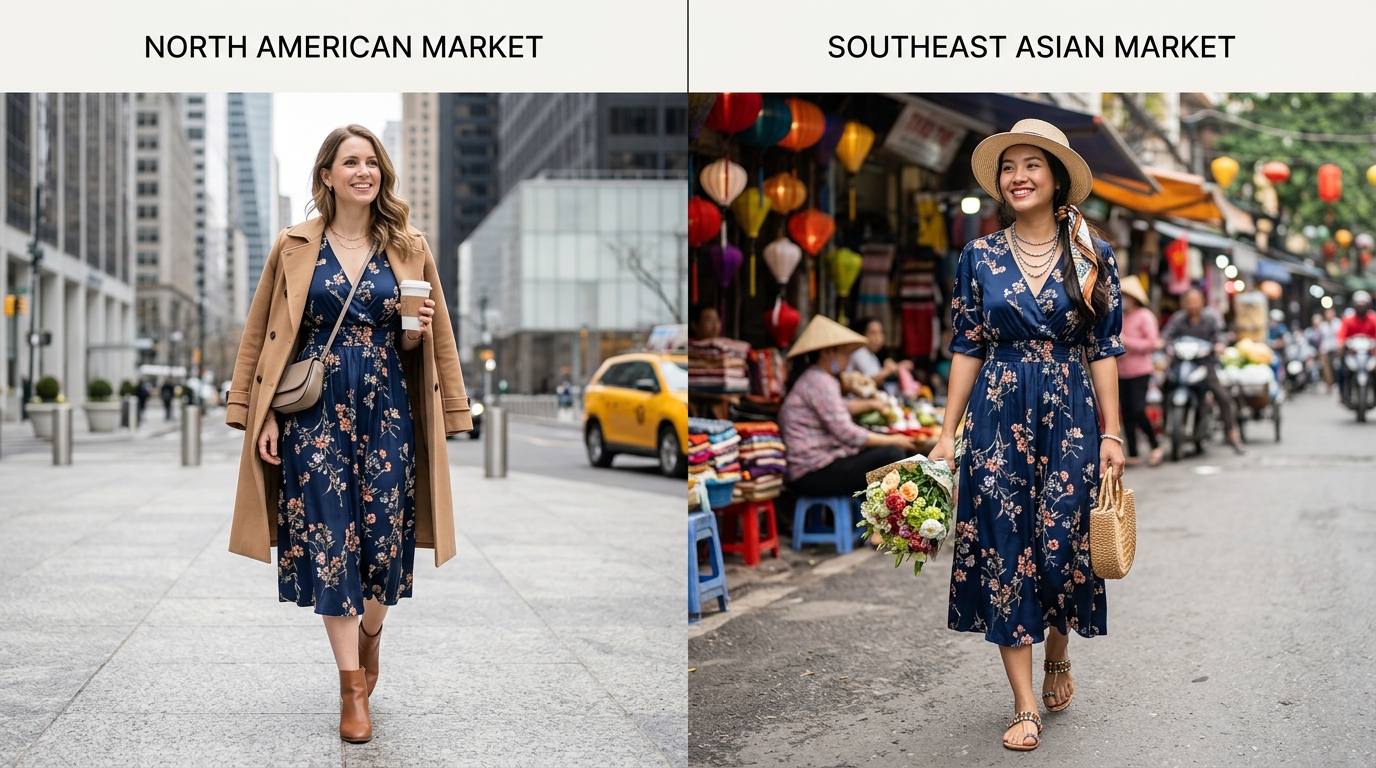
How can AI help adapt fashion visuals for different cultures and regions?
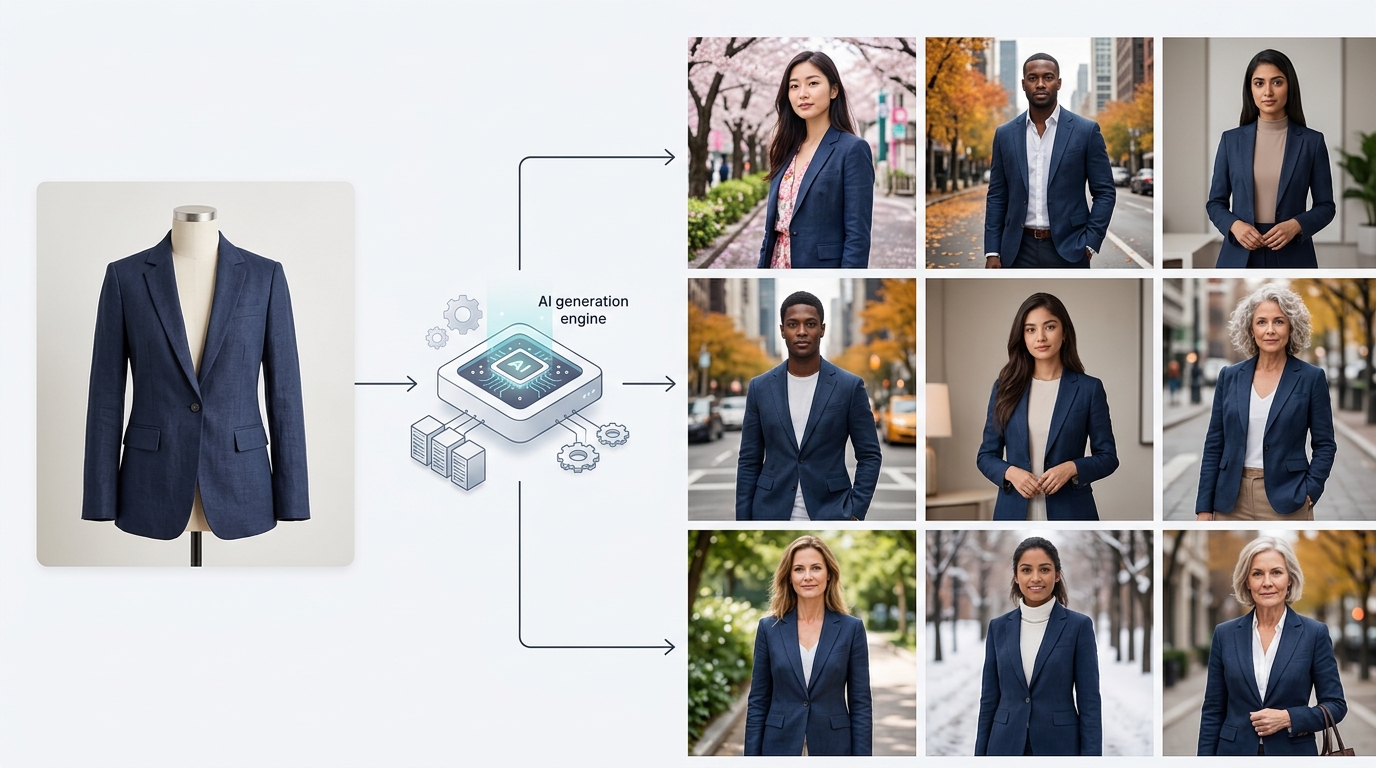
Artificial intelligence provides a scalable solution to the complexities of image localization. Instead of conducting dozens of resource-intensive photoshoots, AI-powered visual content platforms allow brands to generate countless variations from a single source image. This technology analyzes the original product photo, isolates the garment, and then re-renders it on different models, in different poses, and against different backgrounds without losing product accuracy.
This process, often called generative AI, enables brands to:
- Swap Models Instantly: Generate on-model images featuring models of any ethnicity or body type that aligns with a target market.
- Change Backgrounds Programmatically: Place the product in any scene imaginable, from a bustling Parisian street to a minimalist Tokyo apartment.
- Adapt Styling at Scale: Test different stylistic combinations (e.g., with or without accessories) to see what resonates in each region.
This approach drastically reduces the cost and time required for localization, making it possible to create highly tailored visual experiences for every market in a brand's portfolio.
Are there challenges in maintaining visual consistency across localized catalogs?
While localization is crucial, it introduces a significant risk: brand dilution. When multiple teams or agencies create localized assets independently, the result is often a fragmented and inconsistent global catalog. The lighting, camera angles, model poses, and overall art direction can vary wildly, weakening the brand's identity. Customers may not recognize the brand as the same one they follow on social media or see in global campaigns.
Maintaining consistency requires a centralized process. The goal is to make the product look locally relevant without making the brand look different. This means establishing strict brand guidelines for all generated content and using a single platform to create all variations. The lighting simulation, color science, and post-production effects should be standardized to ensure that a product sold in Seoul looks like it belongs to the same collection as one sold in Berlin.
Can a scalable strategy for global fashion image localization be implemented?
Implementing a scalable localization strategy requires a shift from a traditional, siloed photoshoot model to a centralized, technology-driven workflow. Here is a five-step approach that leading fashion brands are adopting.
| Step | Action | Key Objective |
|---|---|---|
| 1. Analyze Market Data | Identify top international markets by traffic, sales, and growth potential. Prioritize 2-3 markets for an initial localization pilot. | Focus resources on markets with the highest potential return on investment. |
| 2. Create Localization Playbooks | For each target market, develop a visual playbook that defines model archetypes, preferred styling, common backgrounds, and cultural nuances. | Provide clear, actionable guidance for anyone creating visual assets for that market. |
| 3. Centralize Your Source Imagery | Establish a single source of truth for all product imagery—typically high-quality packshots or on-model photos against a neutral background. | Ensure all localized variations originate from the same high-quality, brand-approved asset. |
| 4. Leverage a Visual Content Platform | Use an AI-powered platform like FlixStock to generate all localized variations from your centralized source images, guided by your market playbooks. | Automate the production of on-brand, market-specific assets at scale. |
| 5. Measure and Iterate | Use A/B testing to compare the performance of localized images against your standard images in each target market. Track metrics like conversion rate, add-to-cart rate, and returns. | Use data to refine your localization playbooks and inform future production. |