

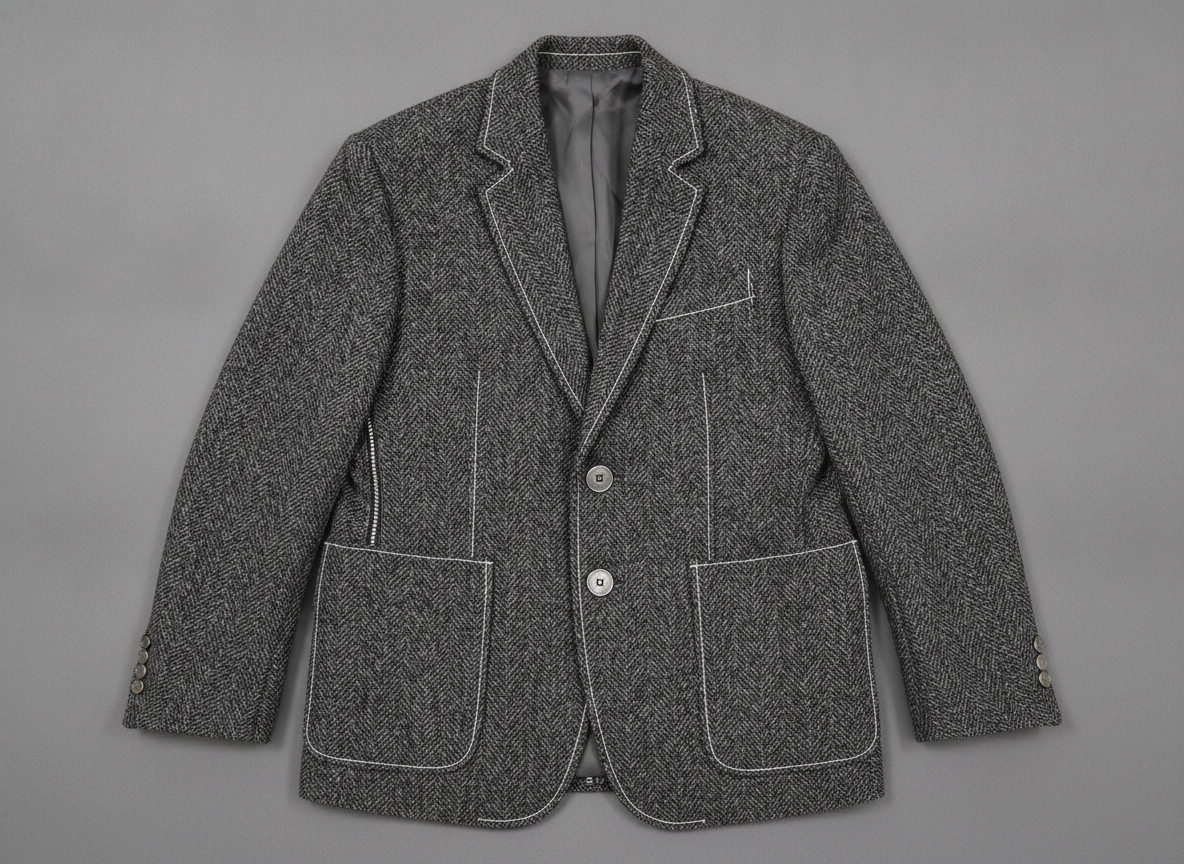
Brands want more creative variations, but every variation creates another opportunity for AI to alter the physical product. Your catalog team will learn how to lock garment details across different models, seasons, and locations without reshooting. This framework ensures on-model product imagery remains strictly faithful to the physical SKU at scale.
- Why description-based prompting fails to hold catalog identity
- The exact attributes that must remain locked versus what can vary
- A VLM-based QA framework for evaluating garment fidelity
- See how FlixStock scales one garment photo into a market-ready PDP matrix
How do you create hundreds of AI fashion variations without changing the garment? Generating AI fashion imagery is fast, but keeping the exact physical product consistent across different models, poses, seasons, and locations is a systemic operational challenge. According to Baymard Institute (2024), product page image quality is among the top three factors in purchase hesitation for fashion shoppers. If the garment drifts, the sale is lost.
Why one source photo usually fails across multiple variants
In a standard production workflow, a brand might want 27 visual variants from a single garment: three different models, shot in three distinct locations, styled for three separate seasons. The arithmetic is illustrative, but the operational strain is real. General-purpose AI tends to make this worse rather than better because text-to-image tools build each image from scratch. They lack persistent memory of the physical product.
When images are produced in isolation, the catalog fragments. Graswald AI (2026) notes that without a locked profile, logos warp, prints break, and seams and drape stop behaving like real fabric. In an industry where the difference between a ruched sleeve and a gathered one dictates a return, that is an unacceptable risk. The output reads as a pile of unrelated one-offs, not a cohesive eCommerce grid.
Understanding identity versus description
The core structural reason garment consistency fails is a misunderstanding of how AI interprets prompts. Description is not identity. Specifying "a woman in her late twenties with olive skin" describes a broad category containing millions of distinct faces. Each generation is free to pick a different one. The same principle applies to the garment itself.
According to Astria (2026), the fix is categorical rather than incremental. The likeness of both the model and the garment must exist as a stored reference that gets pointed at, not a description that gets re-interpreted. When casting and garment geometry are entangled in one long text prompt, changing the pose or the seasonal location inevitably perturbs the product.
Four variables that must remain locked on the grid
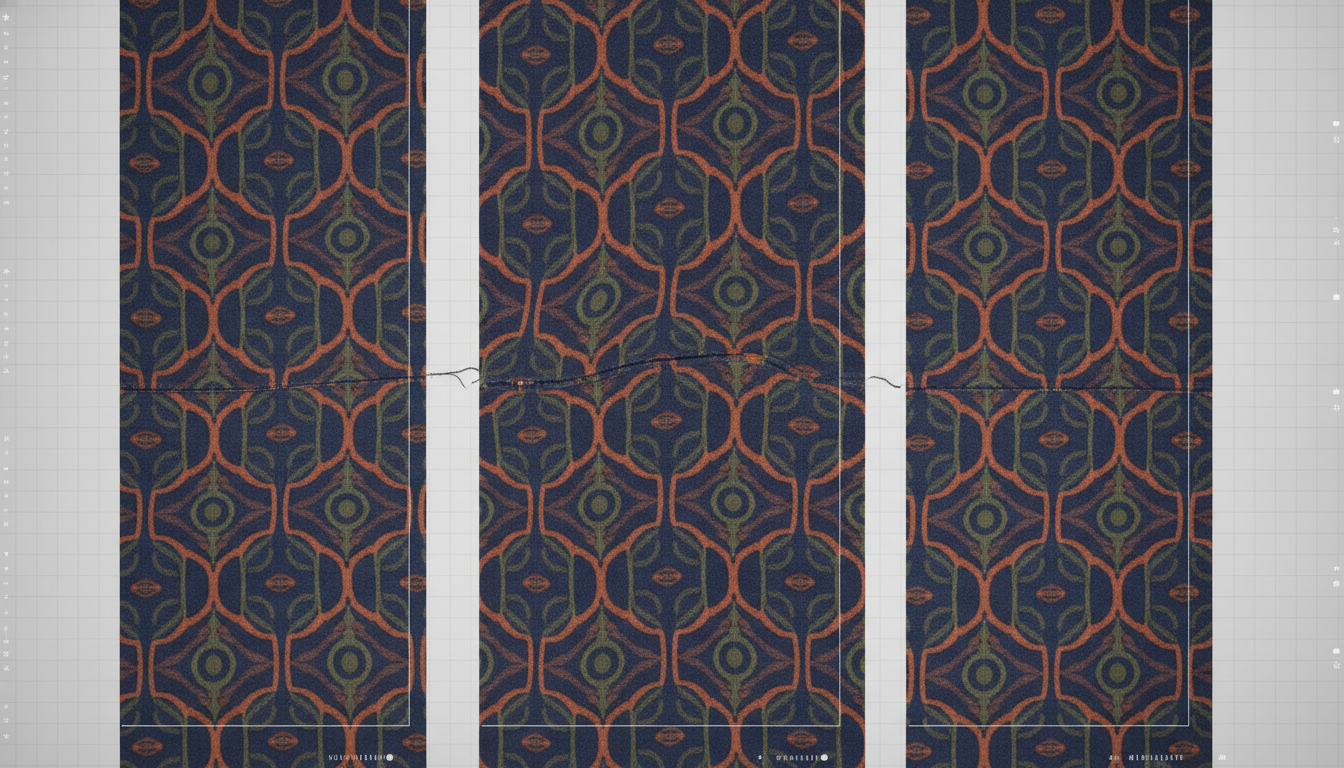
To safely scale AI fashion variations, merchandising teams must rigorously separate what is locked from what is fluid. You want to vary the model, pose, location, lighting, and seasonal styling to fit the market. But the product itself cannot shift.
The following elements must remain strictly locked across every generation:
- Garment silhouette and overall proportions
- Fabric texture, weight, and drape
- Seams, stitching, and panel alignment
- Hardware (buttons, zippers, eyelets)
- Logos, prints, and pattern scale
DesignerBox (2026) outlines that consistency in on-model product imagery means holding variables steady across the entire drop. The framing, camera distance, and baseline lighting must be calibrated as a brand standard so the PDP grid reads as a deliberate system rather than a technical limitation.
Comparing AI Fashion Consistency Workflows
| Workflow | Model Consistency | Garment Fidelity | Scaling Cost |
|---|---|---|---|
| Prompt-Based | Low (Drifts) | Poor (Hallucinates seams) | High (Manual retries) |
| Locked Profile | High (Anchored) | Perfect (Geometry preserved) | Low (Automated matrix) |
Building a garment-fidelity QA process
Even with locked references, a rigorous QA framework is required before any AI-generated image reaches the PDP. Recent research published by Springer Nature (2026) operationalized DeLong’s visual theory into a VLM-based framework for evaluating AI garment consistency. The study revealed that AI models are naturally biased toward surface properties (texture and color) and struggle with structural properties (shape and line).
Your team should run every output against the real product photo using this five-point checklist:
- Garment Fidelity: Does the product still look exactly like the physical sample? Count the hardware. Verify the seam lines against the flat lay.
- Model Consistency: Can the campaign maintain a single, recognizable model identity across different poses and crops?
- Styling Consistency: Does the seasonal styling change without unintentionally altering the neckline or sleeve length of the core garment?
- Scene Consistency: Does the location support the intended seasonal campaign without casting distracting, unnatural shadows on the product?
- Cross-Asset Consistency: Do 100 generated outputs still belong to the same brand standard when viewed together on a contact sheet?

Scaling one photo into a catalog matrix with FlixStock
Scaling from 10 variations to thousands of SKUs requires moving away from manual prompting and toward automated orchestration. FlixStock solves this by treating the source garment as a mathematically locked asset. By separating the product geometry from the model and the environment, FlixStock enables scalable garment-to-model visual generation.
Instead of regenerating the entire image and hoping the seams remain intact, FlixStock’s pipeline applies market-specific styling, model swaps, and seasonal locations while strictly preserving the source product. This allows catalog managers to generate localized PDP imagery without the prohibitive economics of global reshoots.
What to measure when rolling out AI variations
The success of consistent AI fashion variations is measured at the product page. When variations are deployed, catalog teams should monitor the return rate specifically attributed to "item not as described." A spike in this metric indicates a failure in garment fidelity.
Additionally, measure the cost-per-variant and time-to-market compared to traditional studio photography. When the garment is perfectly preserved, the ability to rapidly test a winter styling variant in a Northern Hemisphere market against a summer variant in the Southern Hemisphere becomes a measurable driver of conversion, rather than a logistical bottleneck.