
This guide helps e-commerce and catalog managers choose between ghost mannequin and on-model photography. It breaks down the benefits, costs, and ideal use cases for each to help you build a scalable and effective visual strategy for your fashion products.
- Understand the core differences in workflow and output.
- Identify which method best suits your brand and product type.
- Compare the cost and scalability of each photography style.
- Learn how AI can automate and enhance both imagery types.
Deciding between ghost mannequin and on-model photography is a critical choice for any fashion e-commerce brand. The right visual approach not only showcases your products effectively but also aligns with your brand identity, budget, and production capacity. While on-model photos add a human element and context, ghost mannequin images offer a clean, consistent look focused purely on the garment.
What is Ghost Mannequin Photography and Why Is It Used?
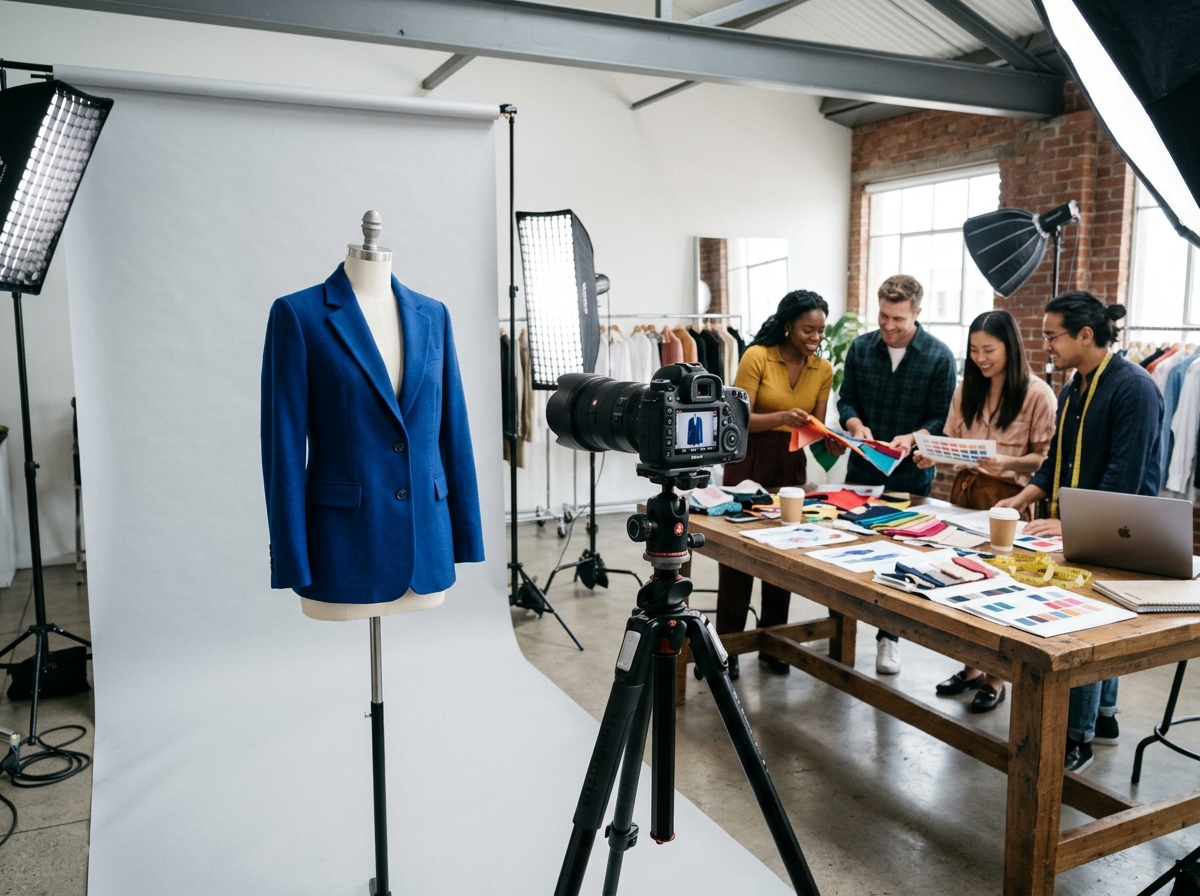
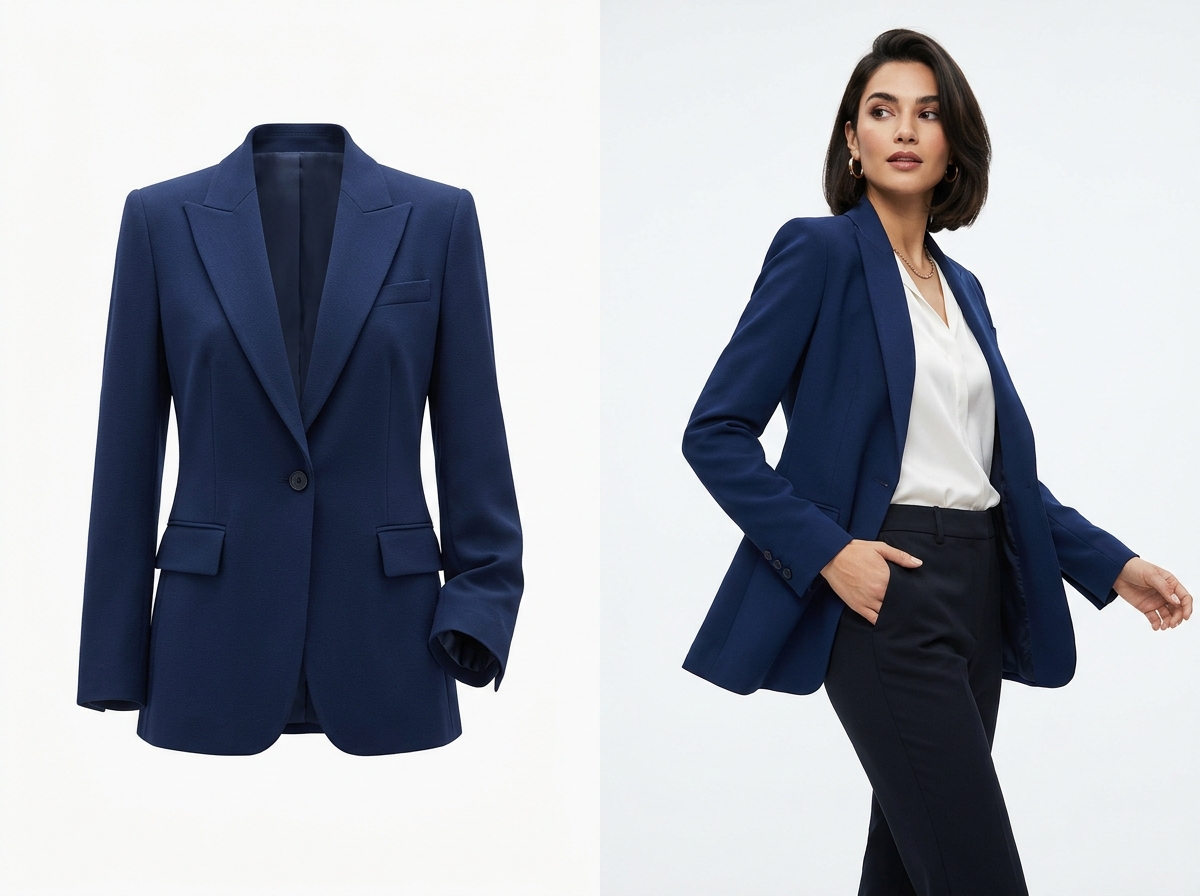
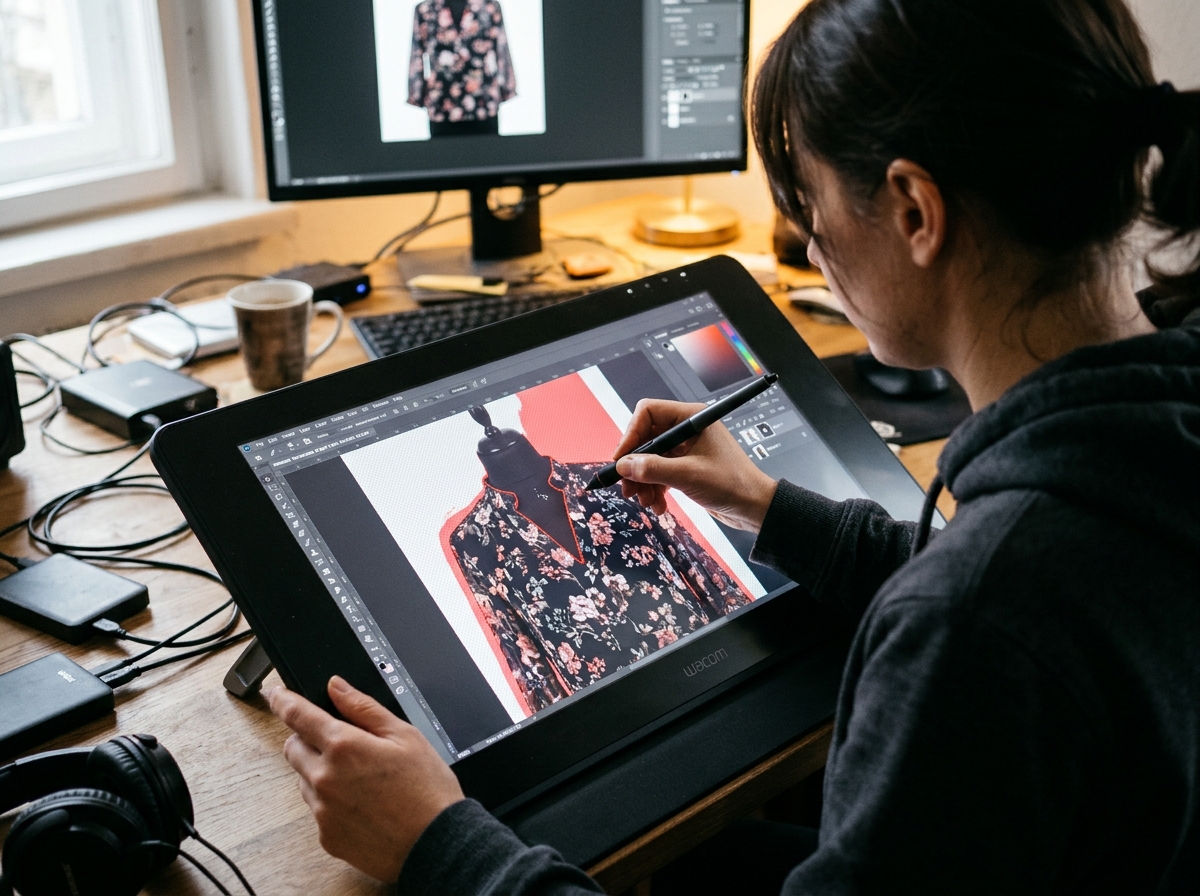
Ghost mannequin photography, also known as invisible or 3D mannequin photography, is a technique where a product is shot on a mannequin that is later removed in post-production. The result is a lifelike image that shows the garment's shape, fit, and drape as if worn by an invisible person. This method combines multiple shots, including the interior of the neckline or cuffs, to create a complete and unobstructed view of the product.
The primary purpose of a ghost mannequin is to provide a clean, consistent, and distraction-free presentation of apparel. By removing the model, you focus the customer's attention entirely on the product's details, such as fabric texture, stitching, and internal structure. This consistency is crucial for creating a uniform look across a product catalog or an entire e-commerce site, which strengthens brand identity and improves the shopping experience. According to a study on consumer behavior, visual consistency in product presentation can significantly increase brand recognition and trust.
Exploring On-Model Photography and Its Benefits
On-model photography captures clothing and accessories as they are worn by live models. This approach is fundamental to fashion marketing because it helps customers visualize how products will look on a real person. It showcases not just the garment but also its movement, fit on different body types, and potential styling combinations. This human element is powerful; it creates an emotional connection and allows shoppers to project themselves into the brand's lifestyle.
Using models provides context and narrative. A model's pose, expression, and environment can convey a brand's aesthetic—be it luxury, athletic, or casual. For many direct-to-consumer brands, on-model imagery is the cornerstone of their social media, lookbooks, and campaign content. It answers a crucial question for shoppers: "How would this look on me?" This relatability can reduce purchase hesitation and, in turn, lower return rates, as customers make more informed decisions about fit and style.
Ghost Mannequin vs. On-Model: Key Differences and Considerations
The choice between these two methods hinges on several factors: brand identity, product type, budget, and scalability. While both aim to sell products, they do so in fundamentally different ways. Ghost mannequin photography prioritizes product clarity and catalog consistency, whereas on-model photography emphasizes brand storytelling and emotional connection.
| Consideration | Ghost Mannequin Photography | On-Model Photography |
|---|---|---|
| Primary Goal | Product detail and catalog consistency | Brand storytelling and emotional connection |
| Workflow | Standardized studio setup, intensive post-production | Requires models, stylists, and creative direction |
| Cost | Lower recurring costs; no model or crew fees | Higher production costs (models, hair, makeup, stylist) |
| Scalability | Highly scalable and repeatable for large catalogs | More complex to scale consistently across thousands of SKUs |
| Best For | Product detail pages (PDPs), category pages, marketplaces | Homepage banners, lookbooks, social media, ad campaigns |
Deciding on Ghost Mannequin Imagery for Fashion Products
Ghost mannequin is the ideal choice when your primary goal is to create a clean, uniform, and scalable product catalog. It excels in scenarios where the garment itself is the hero. If you sell on marketplaces like Amazon or Zalando, which have strict guidelines favoring distraction-free, product-focused images, ghost mannequin is often the required standard.
This method is also highly effective for products where fit and form are key selling points, such as structured blazers, tailored trousers, or form-fitting dresses. By showing the garment's shape without the subjectivity of a model's body type, you provide an objective view that helps customers evaluate the item's construction. Furthermore, from a production standpoint, it is far more efficient for processing a large volume of SKUs. The process can be standardized and partly automated, making it a cost-effective solution for building a comprehensive and consistent visual library.
When is On-Model Imagery the Right Choice for Fashion Products?
On-model imagery is indispensable when your brand's narrative and aspirational qualities are central to your marketing strategy. It's the right choice for hero images on your homepage, in email campaigns, and across social media platforms where you are not just selling a product, but a lifestyle. If your brand targets a specific demographic, using models who reflect that audience helps build a strong sense of community and belonging.
This approach is also crucial for clothing where movement and drape are essential characteristics, such as flowing skirts, athletic wear, or oversized coats. Seeing the fabric in motion provides information that a static ghost mannequin image cannot. While production is more complex and expensive, the investment often pays off in higher engagement and conversion rates for key marketing assets. Many brands adopt a hybrid approach: using on-model shots for high-impact marketing and ghost mannequin images for the standard PDP views.

How FlixStock Automates and Scales Your Visual Content
Balancing the consistency of ghost mannequin with the appeal of on-model photography is a significant operational challenge, especially at scale. FlixStock’s visual content engine addresses this by transforming a single product input—like a flat lay or basic studio shot—into a complete set of on-brand assets. Our platform can generate both hyper-realistic ghost mannequin images and on-model photos without requiring a physical mannequin or a live model for every shot.
This AI-powered workflow allows catalog managers to produce thousands of consistent, high-quality images that meet the specific requirements of any channel, from PDPs to marketplaces and social media. By removing the logistical hurdles of traditional photoshoots, FlixStock enables brands to scale their visual content quickly and cost-effectively, ensuring every product is showcased perfectly across every customer touchpoint. This approach provides the best of both worlds: the clean consistency of ghost mannequin and the relatable context of on-model photography, all from a single source of truth.