
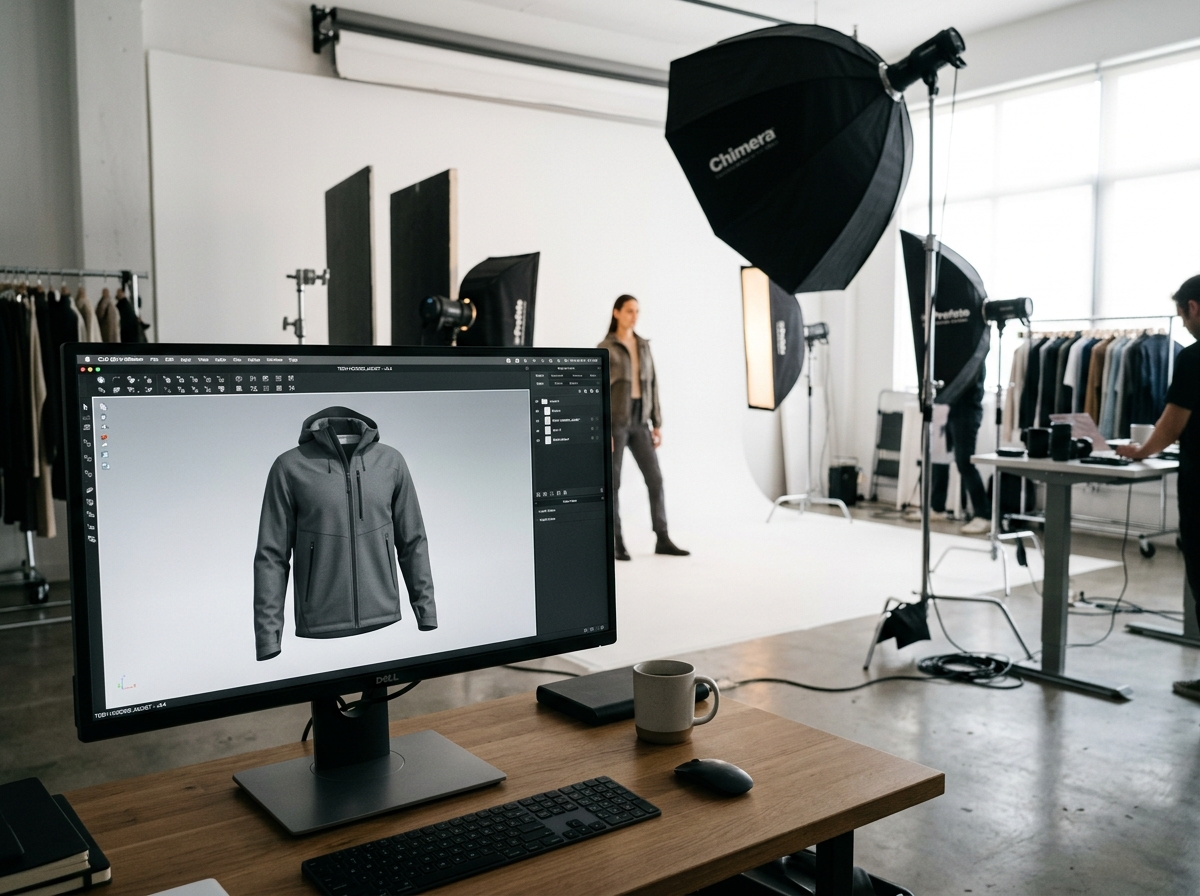
Summary: Fashion brands struggle with the cost and slow turnaround of traditional ghost mannequin photography. AI tools now allow studios to create high-quality, hollow-apparel images from simple flat lays or standard photos without physical mannequins. This automates post-production, cuts costs, and scales catalog imagery instantly.
Fashion brands and catalog managers constantly look for ways to scale product imagery without blowing up their studio budgets. Traditional ghost mannequin photography—which requires dressing a physical mannequin, shooting multiple angles, and meticulously editing out the neck and joints—is slow and expensive. Knowing how to create ghost mannequin images with AI changes this dynamic entirely, allowing studios to generate hollow-apparel assets directly from a single flat lay or on-model photo in seconds.
Many brands initially try flat lays, but they lack the depth needed to convert shoppers. AI provides that depth instantly.
By leveraging neural networks trained on millions of fashion assets, these systems understand precisely how different fabrics should drape on a body.
This means whether you are selling structured jackets or flowing summer dresses, the digital results are indistinguishable from high-end studio photography.
E-commerce managers who previously struggled with long delays now enjoy same-day turnarounds, keeping up with fast-fashion cycles.
What are ghost mannequin images and why are they important?
Ghost mannequin images (or invisible mannequin images) display a garment as if an invisible person is wearing it. This technique gives clothing a 3D, hollow appearance, allowing shoppers to see the fit, drape, and interior details like the inner collar or brand label. E-commerce platforms and fashion brands need them because they provide a distraction-free, detailed view of the product that flat lays simply cannot match, leading to better customer understanding and higher conversion rates.
Why is traditional ghost mannequin photography so difficult?
Traditional production is a logistical bottleneck. It requires specialized photographers, physical styling on segmented mannequins, and extensive Photoshop work. Editors must manually combine an exterior shot with an interior neck-joint shot, carefully cutting out the plastic mannequin pieces. This manual editing is time-consuming, expensive, and prone to inconsistencies across a large catalog with thousands of SKUs. When brands need to move fast, this traditional visual supply chain slows everything down.
Furthermore, maintaining styling consistency across a 10,000 SKU catalog is nearly impossible with human retouchers, but trivial for AI.
Marketplaces like Amazon and Zalando have strict image guidelines. A slight shadow or missing neck can trigger a listing rejection. AI systems are pre-calibrated to output marketplace-compliant imagery automatically.
This reduces the dreaded 're-shoot' cycle to zero, preserving marketing timelines.
Ultimately, studio teams can reallocate their budgets from mundane post-production tasks toward high-impact creative campaigns.
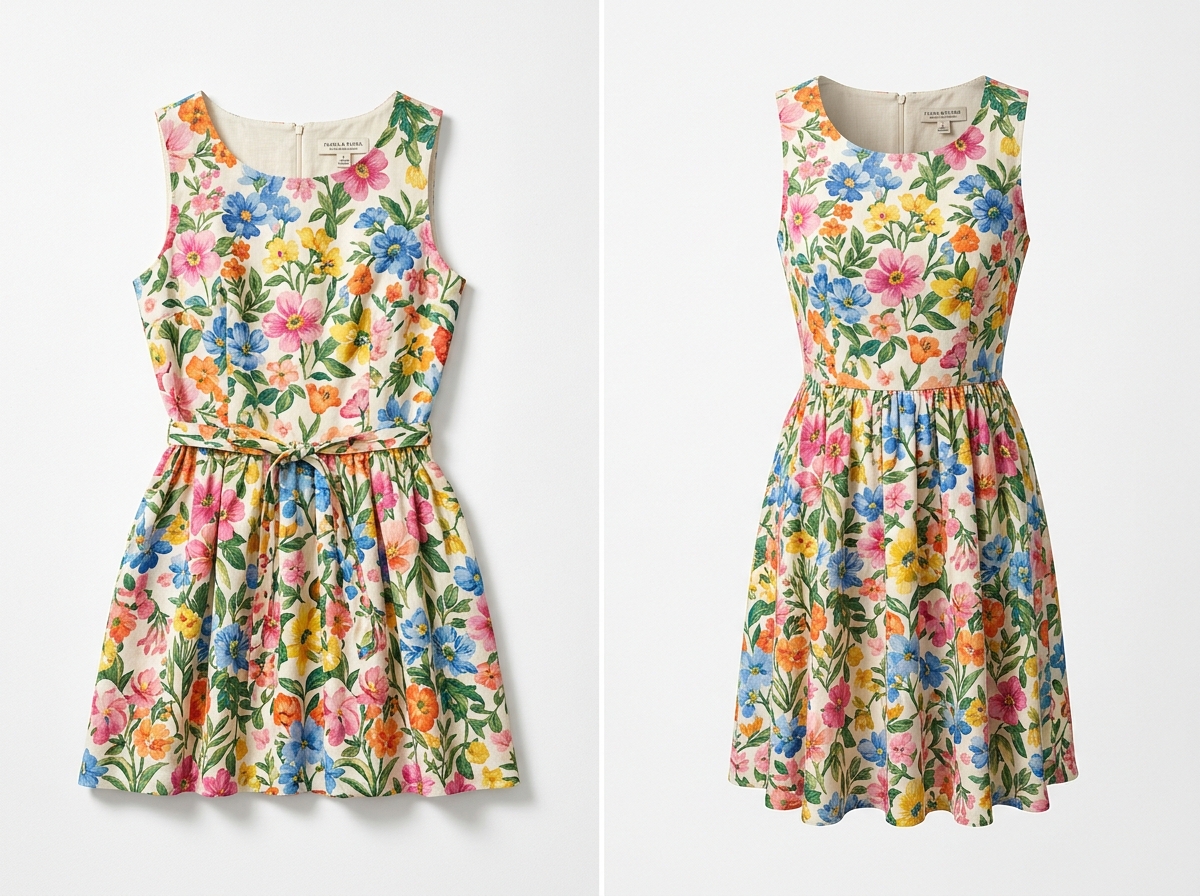
How do AI algorithms generate ghost mannequins from single inputs?
AI creates ghost mannequin images by analyzing a single 2D input—such as a flat lay or a standard product shot—and understanding the garment's cut, fabric, and volume. The neural networks reconstruct the missing structural data, such as the interior neck and back collar, and apply realistic lighting and drape to simulate a 3D form. Instead of requiring multiple composite shots, the AI engine instantly generates a flawless, hollow garment image ready for e-commerce channels.
Comparing Traditional and AI Ghost Mannequin Methods
| Feature | Traditional Photography | AI Ghost Mannequin |
|---|---|---|
| Speed | Days to weeks | Instant generation |
| Cost | High (Studio, Stylist, Editor) | Fractional (Software cost only) |
| Scalability | Limited by physical constraints | Infinite and simultaneous |
Key benefits of upgrading to AI-driven ghost mannequin production
Using AI for ghost mannequin production delivers massive improvements in speed, consistency, and cost. Benefits include:
- Elimination of Photoshoots: No need to book studios, stylists, or specialized mannequins for every new SKU.
- Instant Scalability: Process thousands of garments across different categories simultaneously.
- Catalog Consistency: Ensures every product has uniform lighting, positioning, and hollow-neck rendering, maintaining strict brand guidelines.
- Cost Reduction: Drastically cuts down post-production and manual retouching expenses.
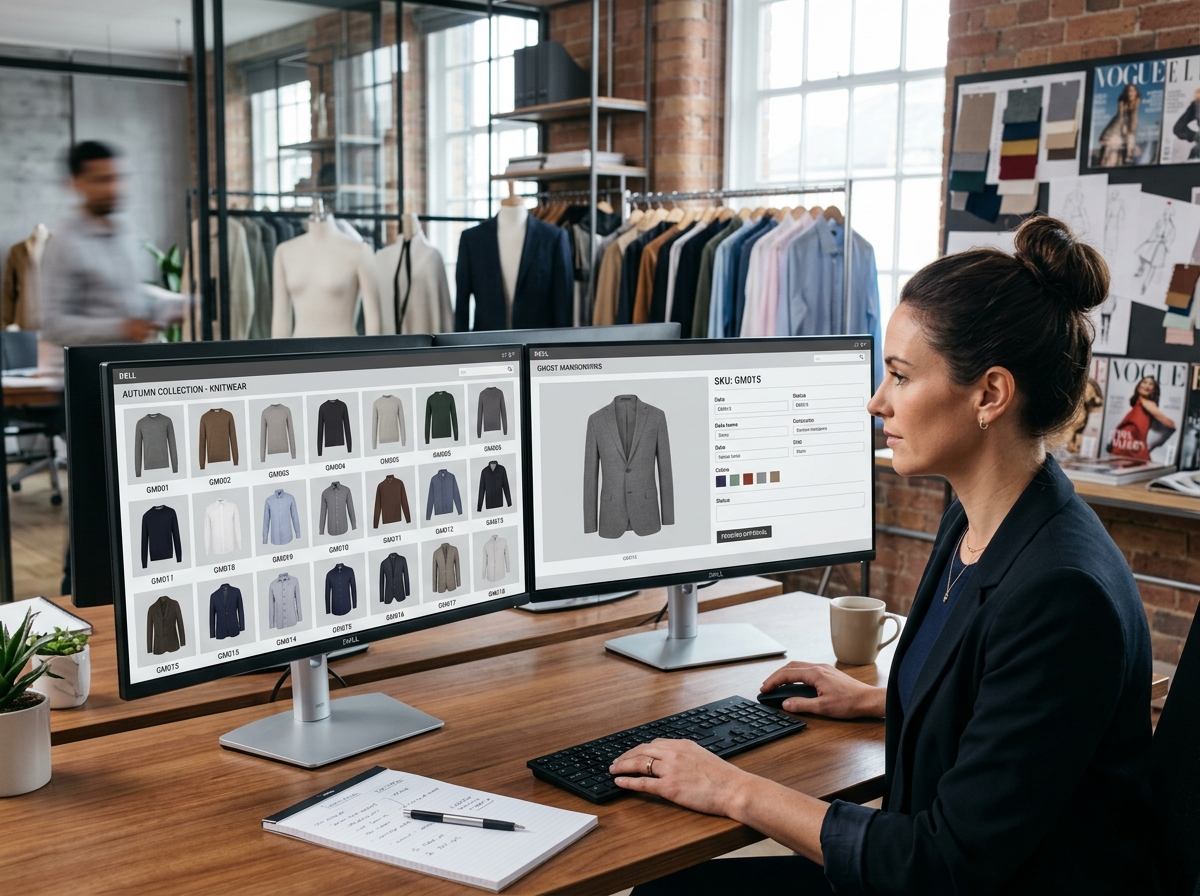
Steps to seamlessly integrate AI ghost mannequins into your daily workflow
Integrating AI ghost mannequin tools into your workflow is straightforward. Fashion brands can upload their existing flat lays, tech packs, or raw supplier images into an AI visual content engine. The system processes the batch based on predefined channel specifications—whether for Shopify, Amazon, or internal PIM systems. Once generated, the assets go through a quick quality check before being pushed directly to the digital storefront, completely bypassing traditional post-production delays.
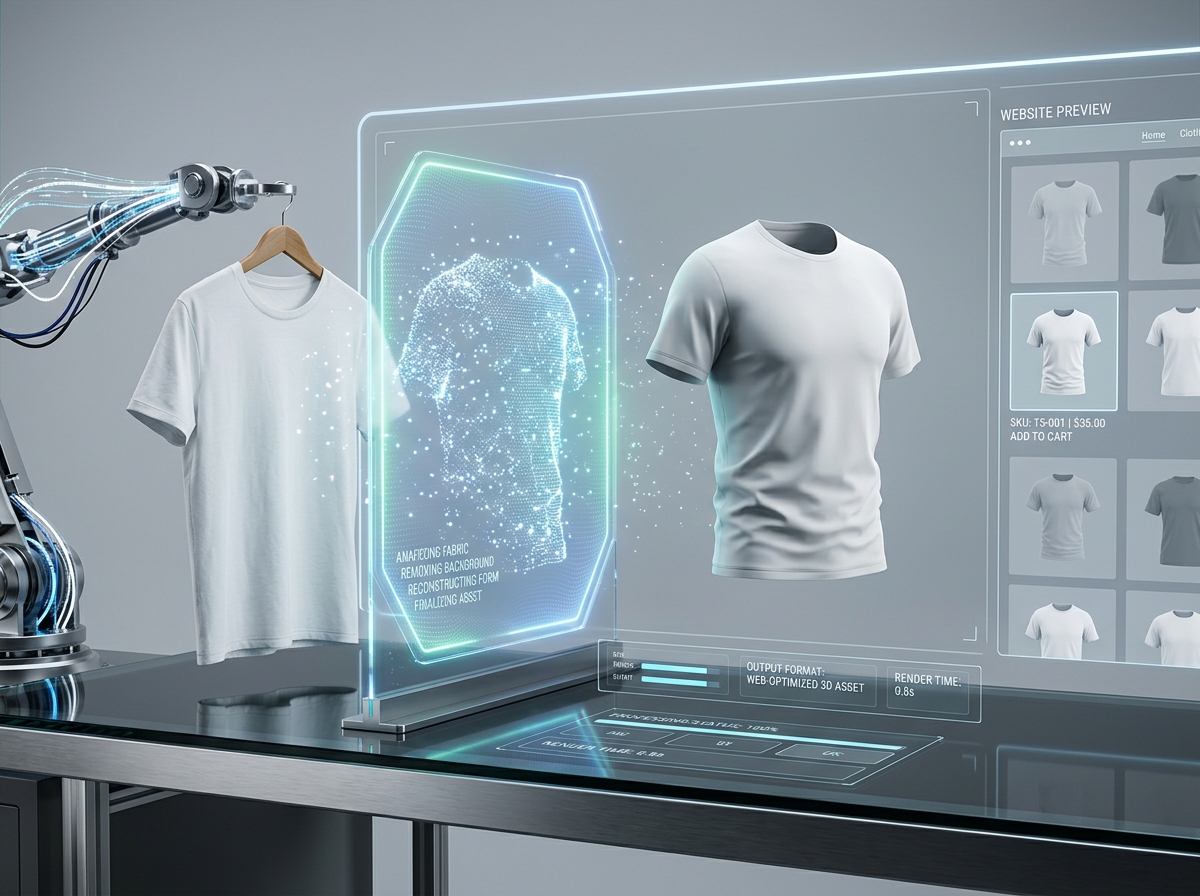
Modern fashion retailers have to manage an ever-expanding array of sales channels, each demanding specific visual formats. Moving away from manual editing ensures you can meet these demands effortlessly. A single asset can be adapted instantly, preventing stock-outs online simply due to missing imagery.
Moreover, AI solutions often provide APIs that connect directly to your PIM. When new inventory arrives, the flat lays are uploaded, processed into ghost mannequins, and syndicated across your network before the physical items even reach the warehouse shelves.
For D2C brands, this speed-to-market is a critical competitive advantage. Instead of waiting three weeks for a studio to return retouched files, new collections can launch the next day.
Another overlooked aspect is the environmental footprint. Traditional shoots require flying models, shipping samples back and forth, and maintaining large, energy-intensive studio spaces. Virtual production eliminates these carbon-heavy logistics, allowing fashion brands to present a greener operational model.
The technology is constantly evolving. Early iterations of AI ghost mannequins sometimes struggled with intricate lace or highly reflective fabrics like vinyl and leather. Today's models have overcome these hurdles, accurately reconstructing the complex light bounces and shadows inside a leather jacket collar or a sheer mesh top.
In addition, these engines allow for localized styling. Suppose a brand wants to show the same ghost mannequin jacket with different lighting moods for their European vs. Asian markets. The AI can adjust the environment globally with a single click.
Brands that adopt AI ghost mannequin production report average cost savings of 70% per SKU compared to legacy processes. Beyond cost, the predictable quality means marketing teams never have to apologize for a poorly lit product page again.
This shift from manual to automated visual content is similar to the transition from physical servers to cloud computing. Once you make the leap, the agility and scalability become indispensable.
If you're still relying on plastic mannequins, fishing wire, and endless Photoshop pathing, you are giving your competitors a massive operational head start. The future of fashion cataloging is fully digital, instantaneous, and flawless.
Ultimately, the goal of any e-commerce image is to remove friction from the buying journey. When a shopper sees exactly how a garment fits and drapes without the distraction of a mannequin or mismatched model, they purchase with confidence. AI delivers this clarity at scale.
The tools are accessible today. You don't need a team of machine learning engineers to implement them. The best visual content engines are plug-and-play, integrating smoothly with the workflows you already use. It's time to automate your production and let your creative teams focus on what they do best: creating.
Conclusion
Mastering how to create ghost mannequin images with AI allows fashion brands to bypass the slowest, most expensive parts of traditional photography. By automating this process, studios can scale their visual content effortlessly while maintaining high quality. Ready to streamline your visual supply chain? Explore how a comprehensive visual content engine can transform your catalog production.