

In this article:
- How to maintain garment color consistency across different e-commerce channels
- Establishing master color references for your apparel catalog
- The role of color calibration in automated image production workflows
- Meeting strict marketplace color specifications without manual bottlenecking
Fashion retailers struggle with high return rates caused by discrepancies between the color of the garment as shown on a PDP and the physical product received by the customer. To successfully master how to maintain garment color consistency across different e-commerce channels, studio leads and e-commerce managers must move beyond reactive retouching and build standardized, color-managed pipelines from capture to distribution.
When product images are distributed across multiple marketplaces, each enforcing distinct display standards and compression algorithms, maintaining true fabric color perception becomes critical to protecting brand equity and customer trust. Let's examine the essential technical steps and workflow frameworks required to achieve absolute color accuracy at scale.
Why color variation occurs between digital displays and physical garments
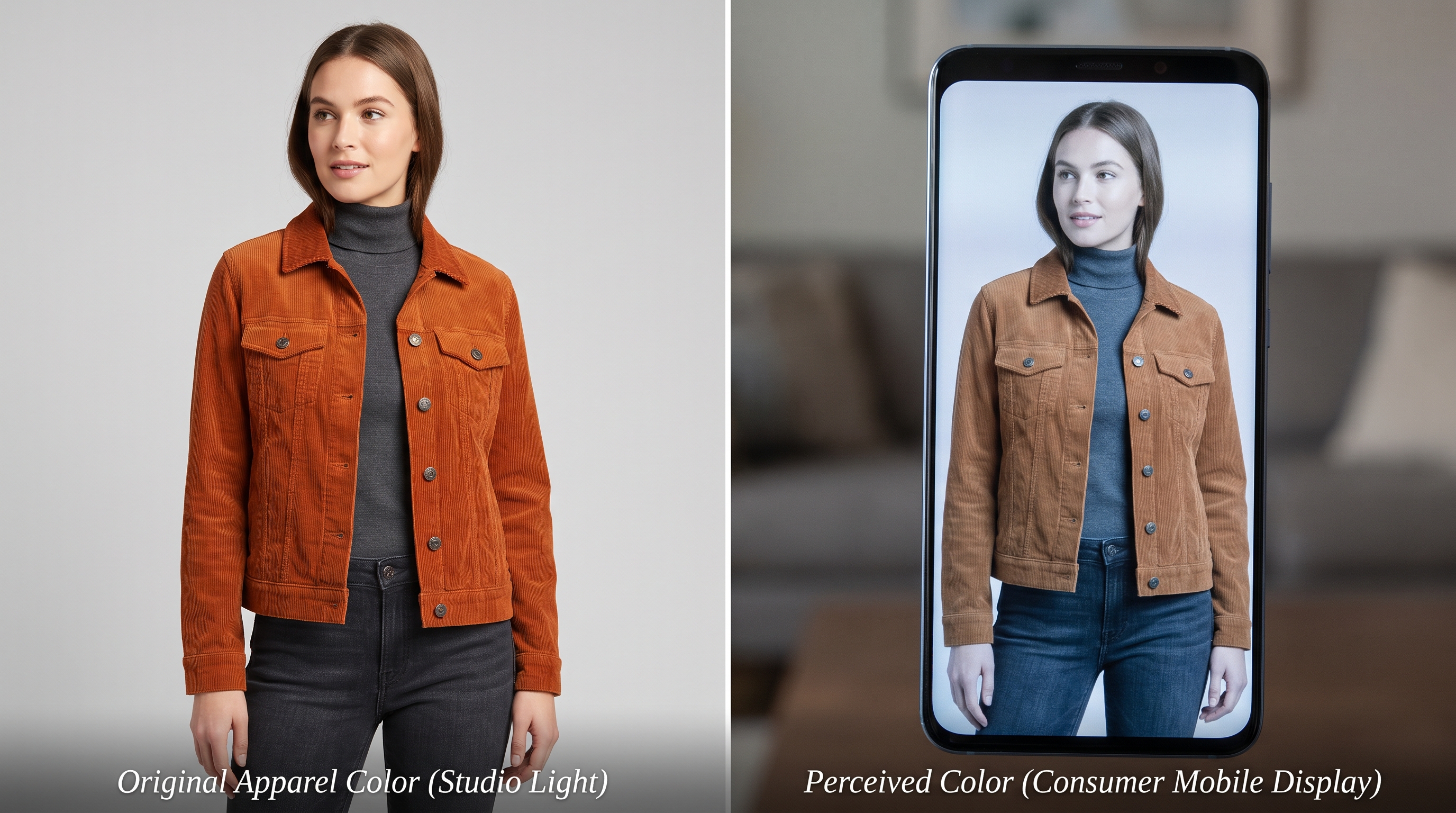
Color variation stems from a fundamental mismatch between physical fabric reflectance and emissive digital screen technologies. Different devices render color profiles using varying gamma curves and color gamuts, causing identical RGB values to appear warm on one monitor and cool on another. Furthermore, consumer viewing environments—ranging from direct sunlight on mobile screens to dimmed indoor lighting—further distort color perception.
Addressing why do product photos look different on different screens requires understanding that color accuracy is not just a display issue; it begins with the initial capture setup. Uncalibrated studio strobes, ambient room lighting, and improper white balance settings introduce color casts before the digital file ever reaches post-production.
How to establish master color references for your apparel catalog
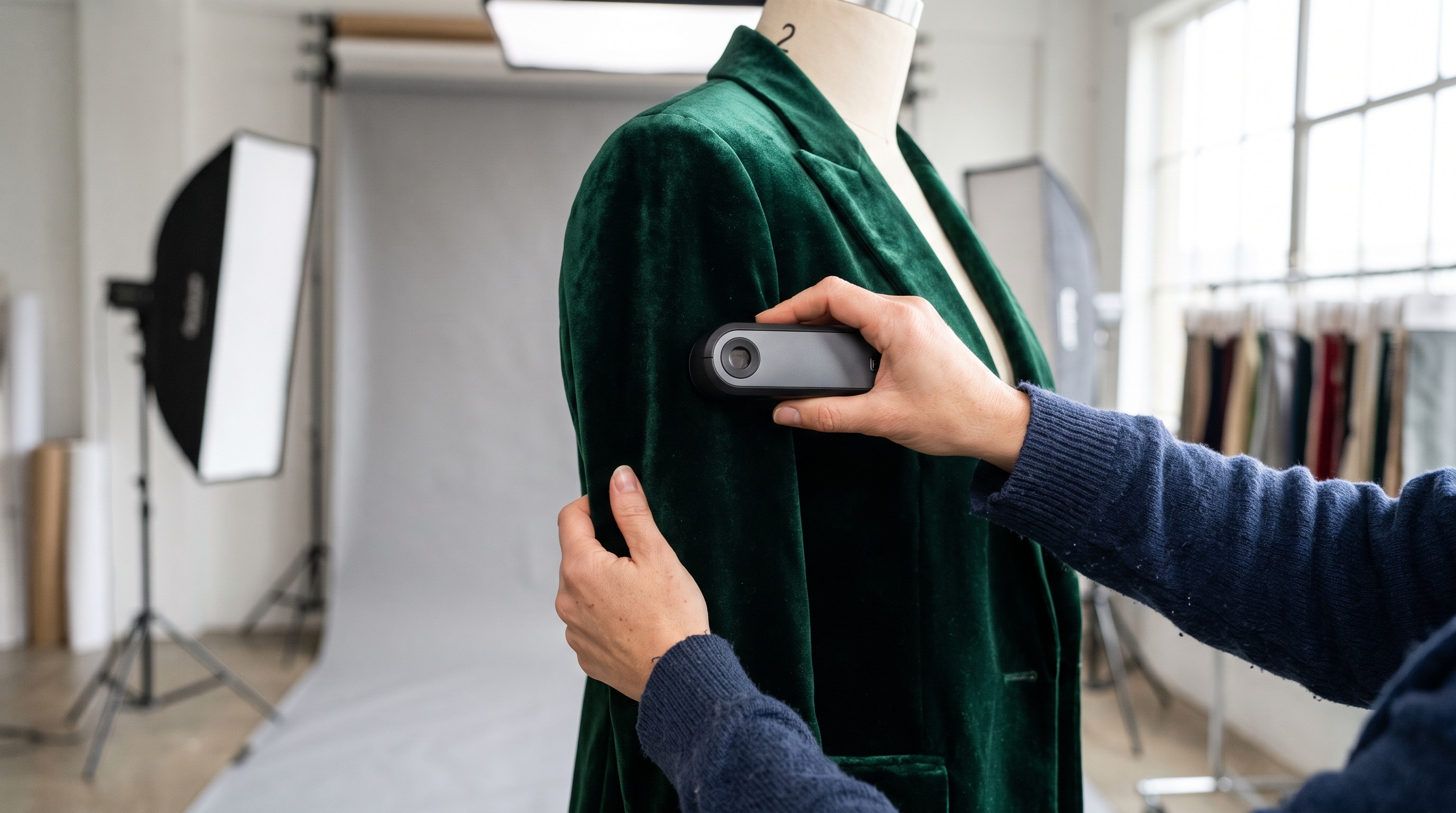
Establishing a single source of truth for every garment SKU is the foundation of scalable color management. Studios must use physical color reference charts, such as spectrophotometer-measured targets, alongside every initial fabric sample shoot. This master reference acts as the benchmark for all subsequent digital assets.
To ensure accurate color representation in fashion ecommerce, teams must link digital color profiles directly to the physical tech pack data. When color calibration for online stores is tied to standardized metadata, automated systems can reference the master hue across seasonal colorways without relying on subjective human eyeballing.
Role of color calibration in automated image production
Automated visual engines rely heavily on strict color calibration protocols to process thousands of SKUs simultaneously without drifting from the original fabric hue. Traditional retouching treats color correction as a manual, per-image bottleneck. In contrast, modern automated pipelines integrate hardware calibration targets and profile-locked rendering engines.
By standardizing digital color profiles at the ingestion stage, production teams can generate consistent variants across ghost mannequin shots, on-model views, and fabric close-ups. For deeper insights into scaling production without losing fidelity, refer to our guide on how to achieve fashion catalog image consistency with ai.
Ensuring consistent color output across different marketplace requirements
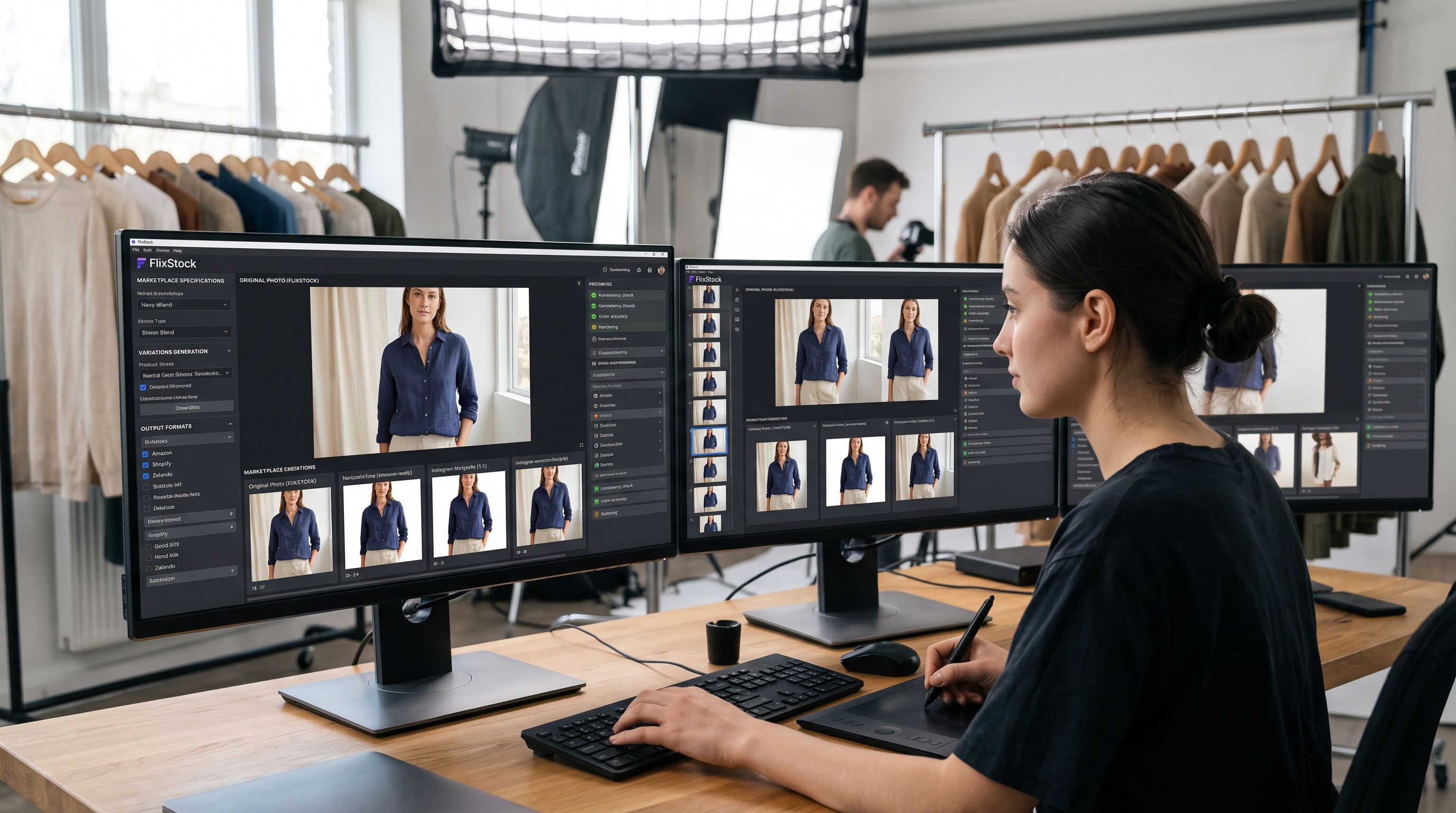
Different retail channels impose strict image specifications, color space requirements (such as sRGB vs. Adobe RGB), and compression limits that can inadvertently shift garment tones. Retailers must adapt product images for marketplaces with AI without compromising color integrity.
A centralized asset management workflow automatically transforms master catalog images into channel-compliant formats while locking down color parameters. This eliminates the risk of marketplace rejection and prevents costly customer returns caused by color mismatch.
Here is a comparison of traditional manual retouching versus automated color-managed workflows for high-volume apparel catalogs:
| Workflow Aspect | Traditional Manual Retouching | Automated Color-Managed Pipeline |
|---|---|---|
| Throughput | Limited by manual artist hours per SKU | Scales to thousands of SKUs instantly |
| Color Accuracy | Subjective human adjustment and drift | Precise Delta-E threshold enforcement |
| Multi-Channel Output | Inconsistent exports per marketplace | Automated sRGB compliance across all channels |
| Return Rate Impact | High risk of color mismatch returns | Drastically reduced returns through true-to-life color |
Automating apparel color accuracy at scale with AI visual engines
Modern fashion e-commerce demands high-speed asset production across seasonal launches. Relying on manual color grading creates severe operational bottlenecks. Automated AI visual engines process fabric physics, lighting interactions, and color profiles simultaneously to deliver production-ready assets.
- Ingest physical fabric sample metadata and master color target swatches.
- Apply calibrated digital color profiles across all on-model and packshot generations.
- Enforce strict Delta-E tolerance limits across batch outputs.
- Export channel-ready variations tailored to specific marketplace color profiles.