

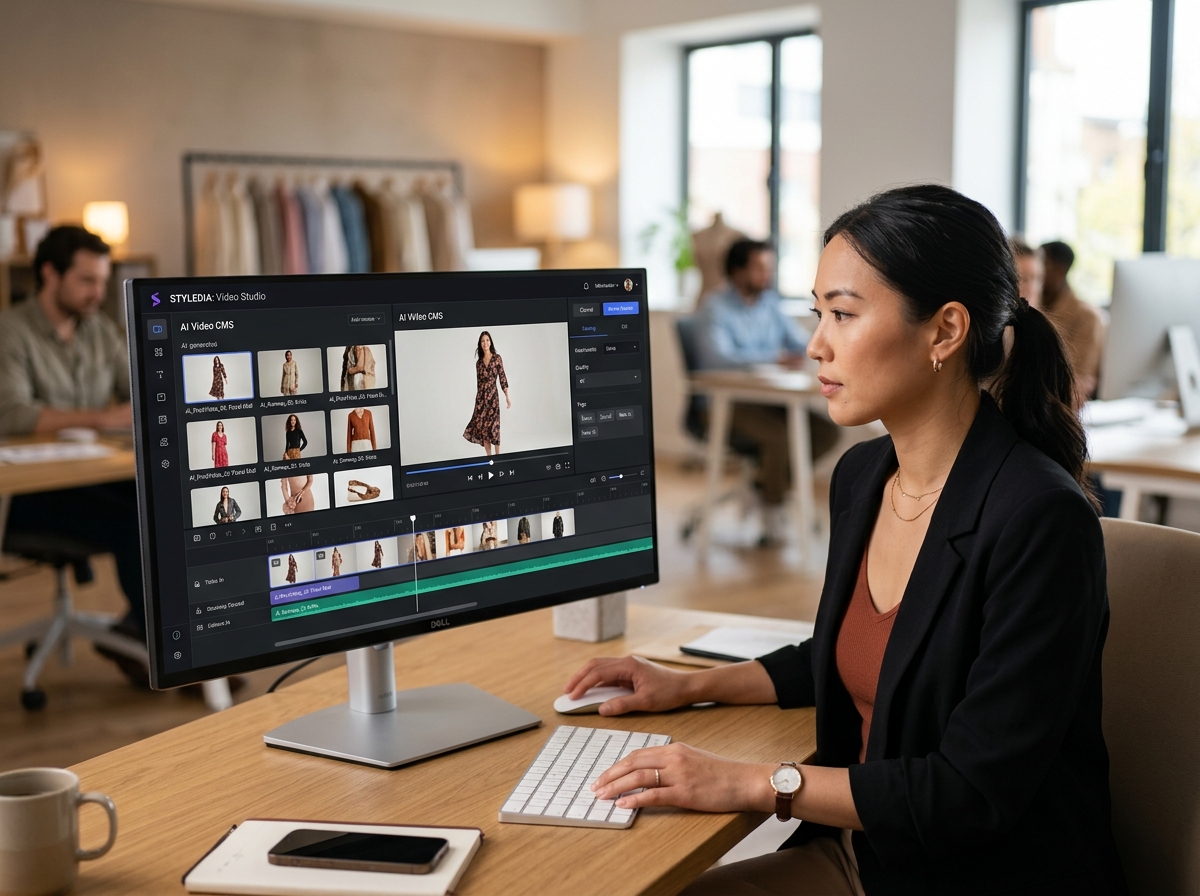
This article explores how AI is enabling fashion brands to move beyond static imagery and create dynamic, informative product videos at scale. It's for ecommerce leaders and merchandising teams looking to enhance their product pages (PDPs) to better communicate garment fit, movement, and texture, ultimately helping shoppers make more confident purchasing decisions.
- Understand the limitations of static imagery for fashion products.
- Discover practical use cases for AI-generated video on your PDPs.
- Follow a step-by-step workflow for creating and publishing AI product videos.
- See how to implement this technology with a scalable solution.
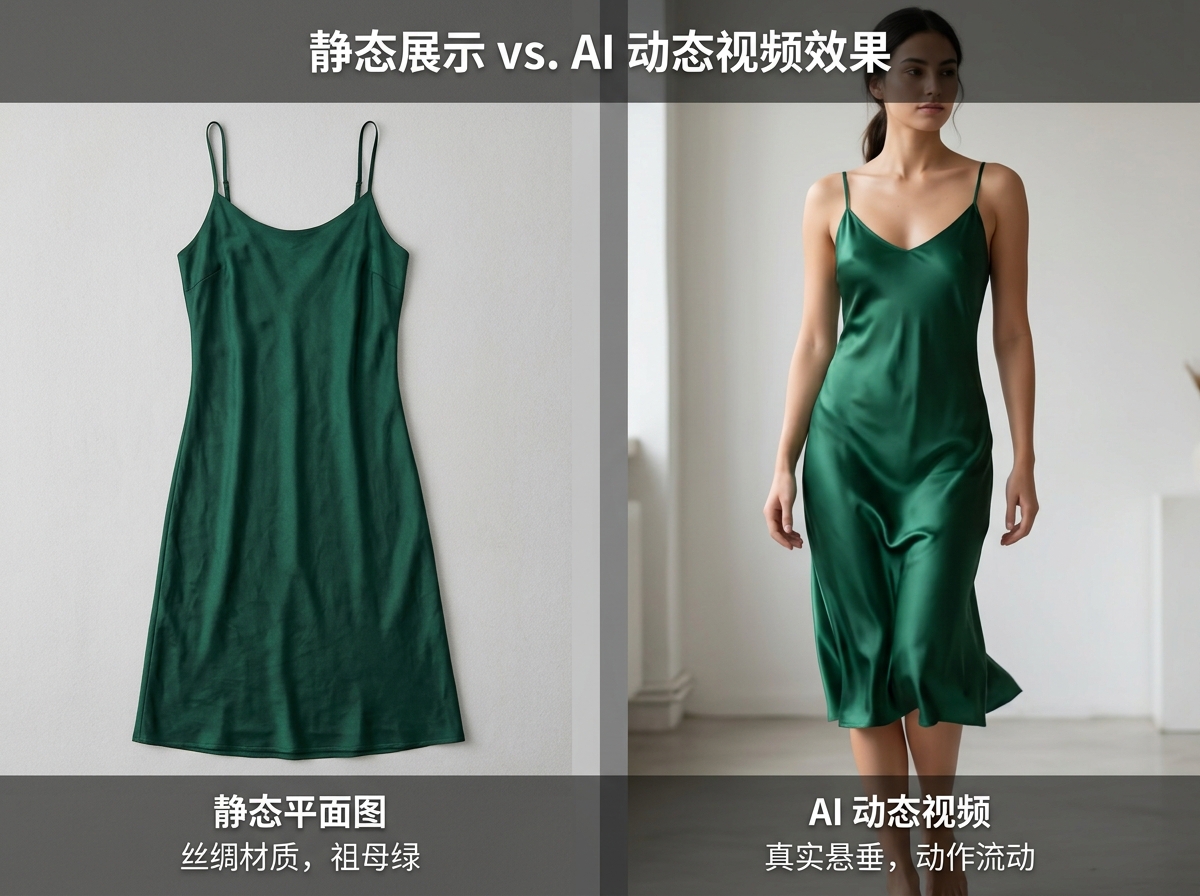
Can a static product photo truly convey the flow of a silk dress or the fit of a pair of jeans? For fashion ecommerce, this is a critical challenge. Shoppers need to understand how a garment moves and drapes to make a purchase decision, a detail that flat images often fail to communicate. AI product video generation is the technology that bridges this gap, turning existing on-model product photography into dynamic, compelling video assets without the need for expensive and time-consuming traditional video shoots. This technological shift allows brands to enrich their product pages at an unprecedented scale, offering a more immersive and informative shopping experience that directly addresses consumer needs for visual confirmation of fabric, fit, and form.
Why are static product images falling short in fashion?
While high-quality photography is essential, it presents an incomplete picture. According to Baymard Institute (2024), the quality and range of product imagery are among the top factors influencing a shopper's hesitation to purchase online. For apparel, this is amplified. Customers can't touch the fabric or try on the clothes, so visual information must do all the work. Static images struggle to show the texture of a knit sweater, the drape of a viscose skirt, or how a jacket fits across the shoulders when in motion. This limitation creates a confidence gap for the shopper, leading to higher rates of cart abandonment and returns due to poor fit or unexpected fabric behavior. The reliance on static imagery forces customers to guess about the very qualities that define a garment's appeal. To combat this, leading brands are now adopting a more dynamic approach to their product presentation, recognizing that movement is not a luxury but a core product attribute that needs to be communicated. This shift is not just about aesthetics; it's about providing the necessary data for a confident purchase. The modern consumer expects a rich media experience, and static images alone are no longer sufficient to meet these expectations. The future of fashion ecommerce lies in the ability to create a virtual showroom experience, and that starts with dynamic, informative video content on every product page. The technology to achieve this is now more accessible than ever, and brands that fail to adapt risk being left behind in a competitive market.
How does AI revolutionize product video creation for catalogs?
AI product video technology works by taking one or more high-resolution static product images and animating them based on learned patterns of fabric and garment movement. An AI model, trained on vast datasets of fashion videos, can realistically simulate how a specific garment would move. This process is not only fast but also highly scalable, allowing brands to create videos for hundreds or thousands of SKUs in a fraction of the time and cost of a traditional video shoot. The impact on conversion is significant; as Forbes notes, using video on a landing page can increase conversions by up to 80% (2017) by providing shoppers with richer information. This efficiency transforms the economics of content production, making it feasible for the first time to have video for every product, not just bestsellers. The technology effectively democratizes video content, previously the preserve of high-budget marketing campaigns, and makes it a standard feature of the everyday product page. This shift allows for a more consistent and engaging customer experience across the entire product catalog, which in turn can lead to increased brand loyalty and customer satisfaction. The ability to generate video content on demand also allows for greater agility in marketing and merchandising, as brands can quickly create new assets to respond to changing trends or promotional opportunities.
Exploring practical use cases for AI video on a product page?
AI-generated videos are not about creating cinematic brand films; they are functional, informative assets designed to improve the PDP experience. Their primary goal is to answer shopper questions about the product itself. According to Wyzowl's 2023 report, 74% of people are more likely to buy a product after watching a video about it. For fashion, this can be achieved through several key use cases:
- Garment Movement & Drape: Showcasing how a dress flows or a shirt hangs, providing a much better sense of the fabric's weight and feel.
- Fit & Silhouette: Demonstrating how a garment fits on the body during movement, such as walking or turning.
- Detail & Fabric Close-ups: Animating close-up shots to highlight texture, embroidery, or unique fabric characteristics.
- Styling Transitions: Showing how a single item can be styled in multiple ways by transitioning between different looks.
- 360° Views: Creating a seamless video that shows the product from all angles.
A Step-by-Step Workflow for Generating AI Product Videos
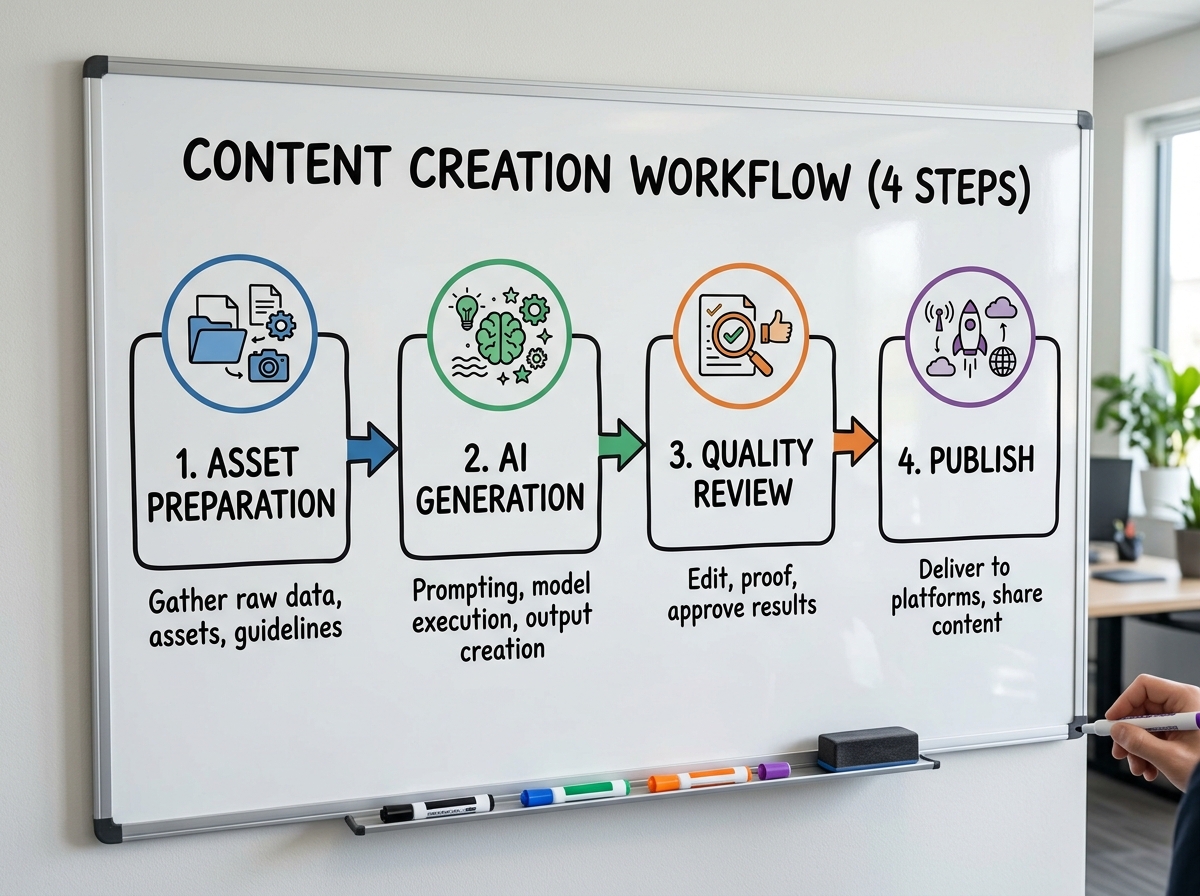
Integrating AI video into your content pipeline is a systematic process. Success depends on a well-defined workflow that ensures quality and consistency across your catalog. The fact that 92% of marketers (Wyzowl, 2023) see video as an important part of their strategy underscores the need for an efficient production process. A robust workflow not only guarantees high-quality output but also ensures that the video assets are aligned with brand standards and are produced in a timely manner. The process can be broken down into four key stages, each with its own set of considerations and best practices. Adhering to a structured workflow will help you avoid common pitfalls and maximize the return on your investment in AI video technology. This is not just about implementing a new tool; it's about integrating a new capability into your core content strategy. A well-managed workflow will ensure that this powerful technology is used to its full potential, delivering measurable results and a significant competitive advantage.
- Source Asset Preparation: Start with high-resolution, professionally shot product photos on a clean background. Ensure images are color-corrected and consistent. The quality of the input directly determines the quality of the output video. Garbage in, garbage out is a fundamental principle here.
- AI Video Generation: Use a platform to upload your source images and define the desired motion. This can range from subtle fabric sway to a full turn. Art direction at this stage is key to achieving a realistic and appealing result. This is where the creative input of your team can truly shine.
- Review and Corrections: Critically review the generated video for fidelity. Check that colors, textures, and garment construction remain true to the physical product. Make adjustments to motion paths as needed. This human-in-the-loop step is crucial for maintaining brand standards and ensuring an authentic representation of your products.
- Format Selection & Publishing: Export the video in a web-optimized format (like MP4 or WebM) and upload it to your ecommerce platform, placing it prominently in the PDP image gallery. Ensure the video is compressed for fast loading times without sacrificing visual quality. A slow-loading video can be worse than no video at all.
Introducing FlixStock for Scalable AI Product Video
FlixStock provides an AI-powered content creation platform designed for fashion ecommerce. It allows brands to turn static product photography into a suite of assets, including on-model imagery and dynamic product videos, at scale. For ad teams, those same clips can feed AI fashion video ads or conversion-focused campaigns. The platform is built to handle large catalogs, ensuring that every PDP can be enhanced with rich, informative video content that accurately represents the product. As noted by Deloitte (2022), personalized and relevant video content significantly improves customer engagement, a principle that extends directly to showing product details on a PDP. The platform's ability to generate a high volume of assets from a single product image makes it a powerful tool for brands looking to compete in a visually driven market. The FlixStock platform is not just a tool, but a complete solution that integrates seamlessly into existing workflows, providing a scalable and cost-effective way to produce high-quality video content. By leveraging the power of AI, FlixStock is helping brands to create more engaging and effective product pages, driving sales and reducing returns. You can explore a demo at zalando-demo.flixstock.com.
Common Mistakes to Avoid with AI-Generated Fashion Videos
While AI video generation is powerful, it requires careful direction to be effective. The goal is to inform, not to distract or misrepresent. Avoid these common pitfalls:
- Impossible Garment Movement: The motion should be natural for the fabric type. A heavy wool coat should not ripple like silk. This erodes trust.
- Altering Product Details: Ensure the AI does not inadvertently change logos, prints, or garment construction — the same garment consistency rules that apply to still imagery apply to video. Fidelity is key to avoiding returns.
- Distracting Environments: For PDP video, the focus should be the product. Avoid busy or irrelevant AI-generated backgrounds that pull focus from the garment.
- Cinematic vs. Informative: Save the artistic, story-driven video for social media. PDP videos must be clear, well-lit, and focused on product attributes to aid in the purchase decision.
Static vs. AI-Generated Video: A Comparison
| Feature | Static Imagery | AI-Generated Video |
|---|---|---|
| Fit & Drape | Inferred by shopper | Clearly demonstrated |
| Fabric Texture | Limited to zoom | Shown with light and movement |
| Production Speed | Fast | Very Fast (at scale) |
| Cost per SKU | Low | Very Low (at scale) |
| Shopper Confidence | Moderate | High |