
This article explains how AI tools solve the biggest bottlenecks in fashion image post-production. It is for ecommerce, catalog, and studio teams who need to reduce image turnaround times and get products live faster without sacrificing quality.
- Identify the most time-consuming stages in your current workflow.
- Understand where AI delivers the most significant time savings.
- Evaluate how to integrate AI into your existing post-production process.
- See how FlixStock enables an AI-powered visual content workflow.
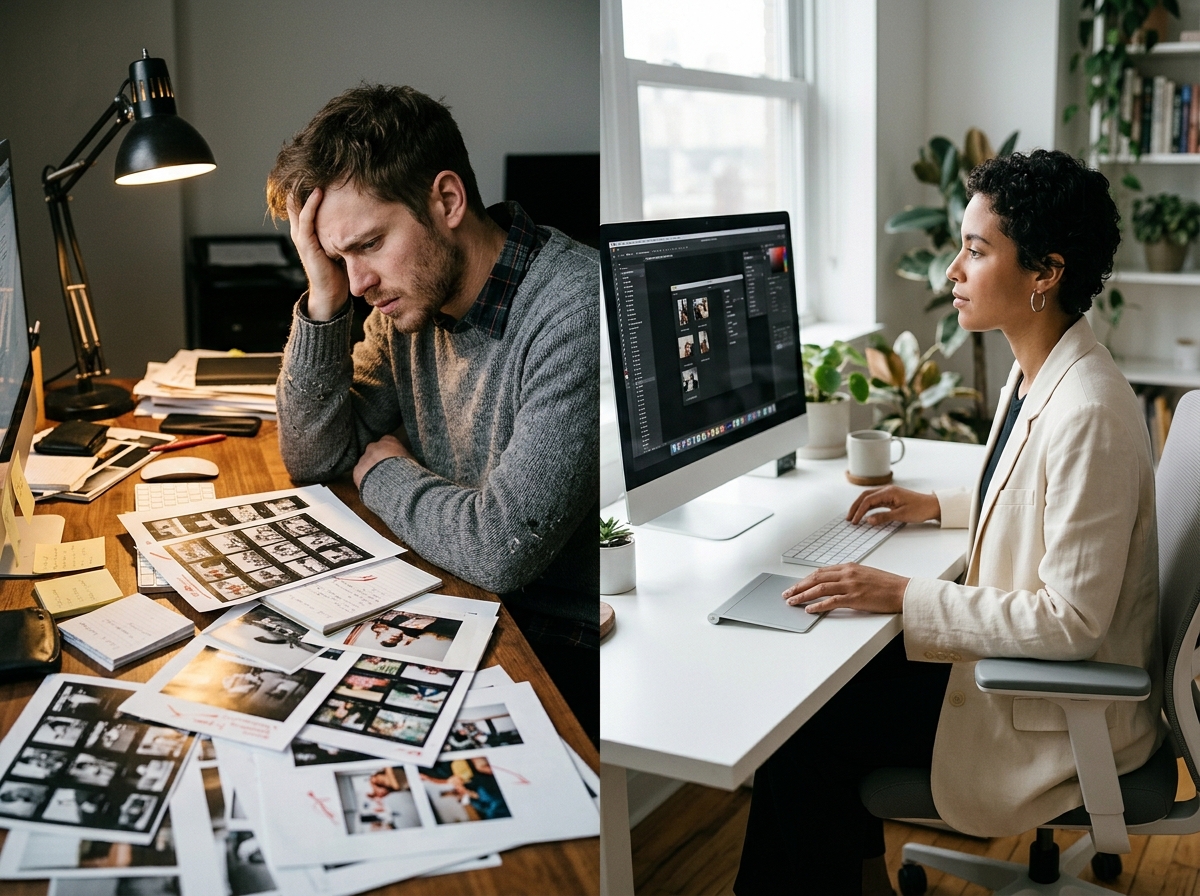
Fashion brands and retailers often face a critical delay: the gap between a photoshoot and getting images live on site. Slow, manual post-production workflows for thousands of product images directly impact time-to-market, leading to missed sales and opportunities. The core challenge lies in scaling quality and consistency without adding significant time or cost to the process.
Understanding the Typical Fashion Image Post-Production Workflow
A traditional fashion image workflow involves a series of manual, sequential steps that turn raw photoshoot files into market-ready assets. While tools have evolved, the core process has remained largely unchanged for years and typically involves several distinct stages, each handled by specialists.
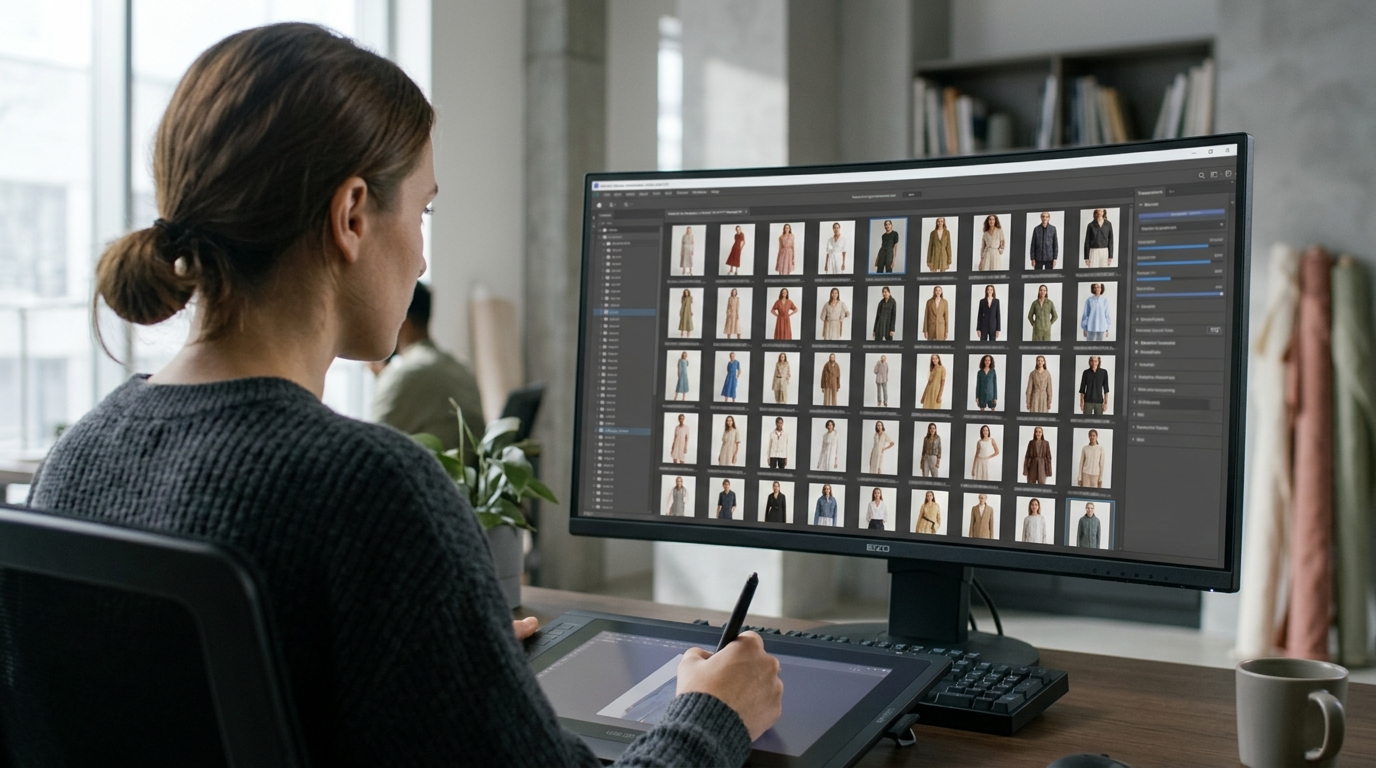
- Culling and Selection: A photographer or editor sifts through hundreds or thousands of images from a shoot to select the best shots for each product and pose.
- Basic Adjustments: Editors apply initial raw adjustments for exposure, white balance, and color calibration to ensure a consistent starting point.
- Retouching: This is an intensive, frame-by-frame process. Retouchers manually remove dust, scratches, and fabric imperfections, correct skin blemishes, and ensure product accuracy.
- Color Correction and Grading: Colorists adjust hues, saturation, and luminance to match product samples precisely and ensure the entire set of images looks cohesive.
- Background Removal or Editing: Technicians manually trace products to remove the background, place them on a clean canvas (like pure white #FFFFFF), or create composite images.
- Formatting and Cropping: Finally, the images are cropped and exported to meet the specific aspect ratio, resolution, and file type requirements for different channels like the brand's website, mobile app, and various marketplaces.
Each step requires a skilled operator, and for large catalogs, this linear process can take days or even weeks to complete, creating a significant bottleneck before a new collection can launch.
Where are the biggest bottlenecks in traditional fashion image post-production?
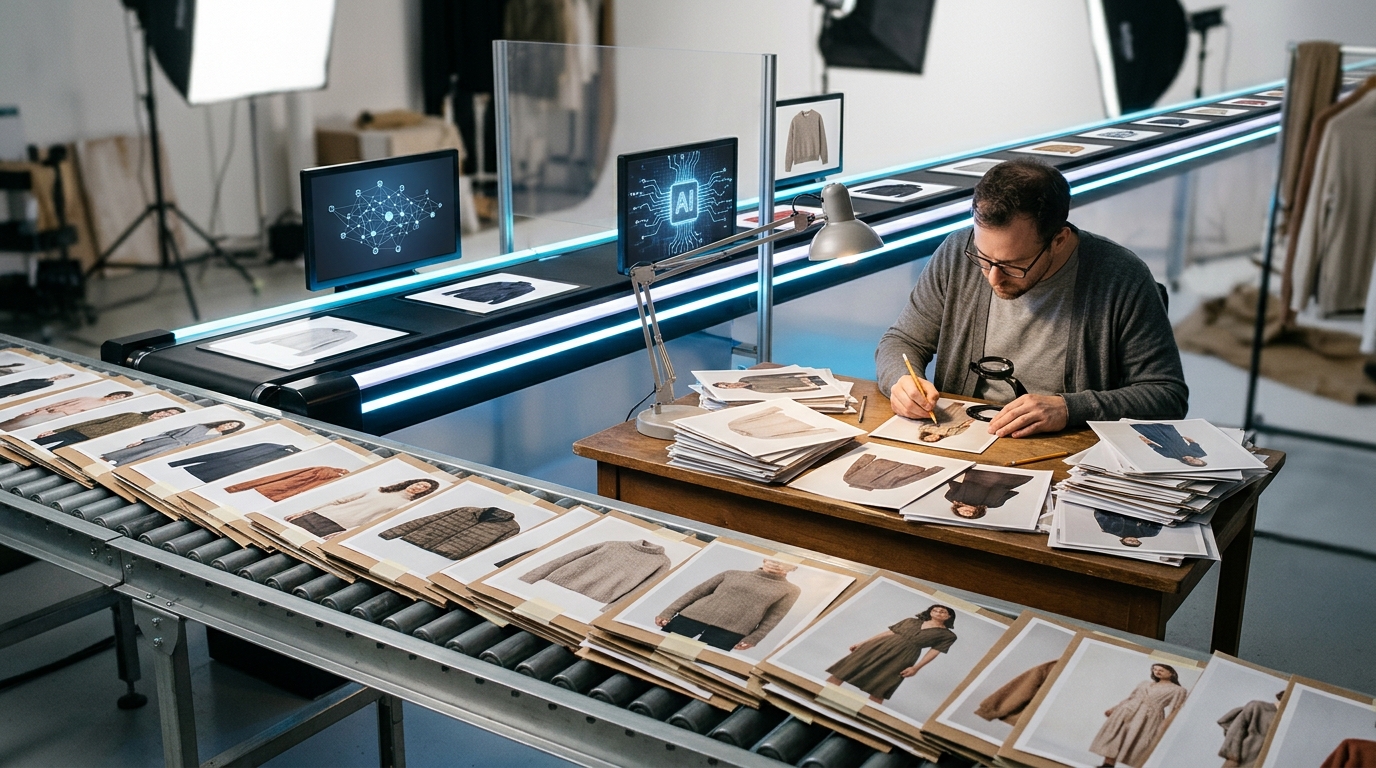
The primary bottlenecks in fashion post-production are repetitive, manual tasks that do not scale easily. As SKU counts increase, these chokepoints absorb more time and resources, directly delaying revenue.
- High-Volume Retouching: Manually cleaning up hundreds of images with minor variations is incredibly time-consuming. Tasks like removing pins, smoothing wrinkles, or fixing stray threads on every single image do not require creative decisions, but they demand significant labor hours.
- Consistent Background Removal: Manually masking complex items like clothing on models or products with fine details (like lace or fur) is tedious. Achieving perfect consistency across thousands of images is a major challenge and a common source of delays and quality issues.
- Colorway Management: Creating dozens of accurate color variations for a single product requires meticulous, repetitive adjustments. Ensuring that a "navy blue" looks identical across every style and shot is a manual process prone to error.
- Channel-Specific Formatting: Each sales channel—from a brand’s Shopify store to Amazon, and Zalando—has unique image specifications. Manually cropping, resizing, and re-exporting every approved image for every channel creates a final, frustrating delay before launch. The fashion industry's need to get products to market quickly is often at odds with these manual processes, as noted in industry analysis by publications like McKinsey (2019).
How does AI integrate into each stage of the post-production workflow to save time?
AI-powered tools are not about replacing editors but augmenting their capabilities by automating the most repetitive and least creative parts of the workflow. This allows teams to focus on creative quality and final approvals, rather than manual labor.
| Traditional Stage | AI-Powered Enhancement | Time-Saving Benefit |
|---|---|---|
| Culling & Selection | AI models analyze images for focus, composition, and model expression to suggest the best shots automatically. | Reduces hours of manual sorting to minutes of review. |
| Retouching | AI algorithms can automatically identify and remove common imperfections like dust, scratches, and minor fabric flaws in batches. | Eliminates a significant portion of manual, frame-by-frame cleanup. |
| Background Removal | AI-powered tools can detect and mask subjects with high accuracy in seconds, handling complex edges and hair with minimal human input. | Turns a task that took minutes per image into one that takes seconds. |
| Color Correction | AI can analyze a reference image and apply a consistent color grade across hundreds of photos, ensuring perfect consistency. | Drastically reduces time spent on manual color matching. |
By integrating these tools, teams can move from a linear, hands-on process for every image to a system of batch processing and review, transforming the speed and scale of their output.
What measurable benefits does AI offer for fashion image post-production speed?
Adopting an AI-powered workflow offers more than just incremental improvements; it creates a step-change in operational efficiency. The benefits are measurable and directly impact a brand's bottom line.
The primary benefit is a dramatic reduction in turnaround time. As AI Labster notes, tasks like rough cut assembly in video (analogous to image selection) can be reduced from hours to minutes. Similarly, AI-powered rotoscoping (background removal) can cut a full day of work down to 1-2 hours. This acceleration means products get listed faster, capitalizing on trends at their peak. It also reduces the cost per image, as fewer manual hours are required to produce a finished asset. This allows brands to create more visual variety for their product pages without a linear increase in budget.
Why should fashion brands implement an AI-powered post-production workflow?
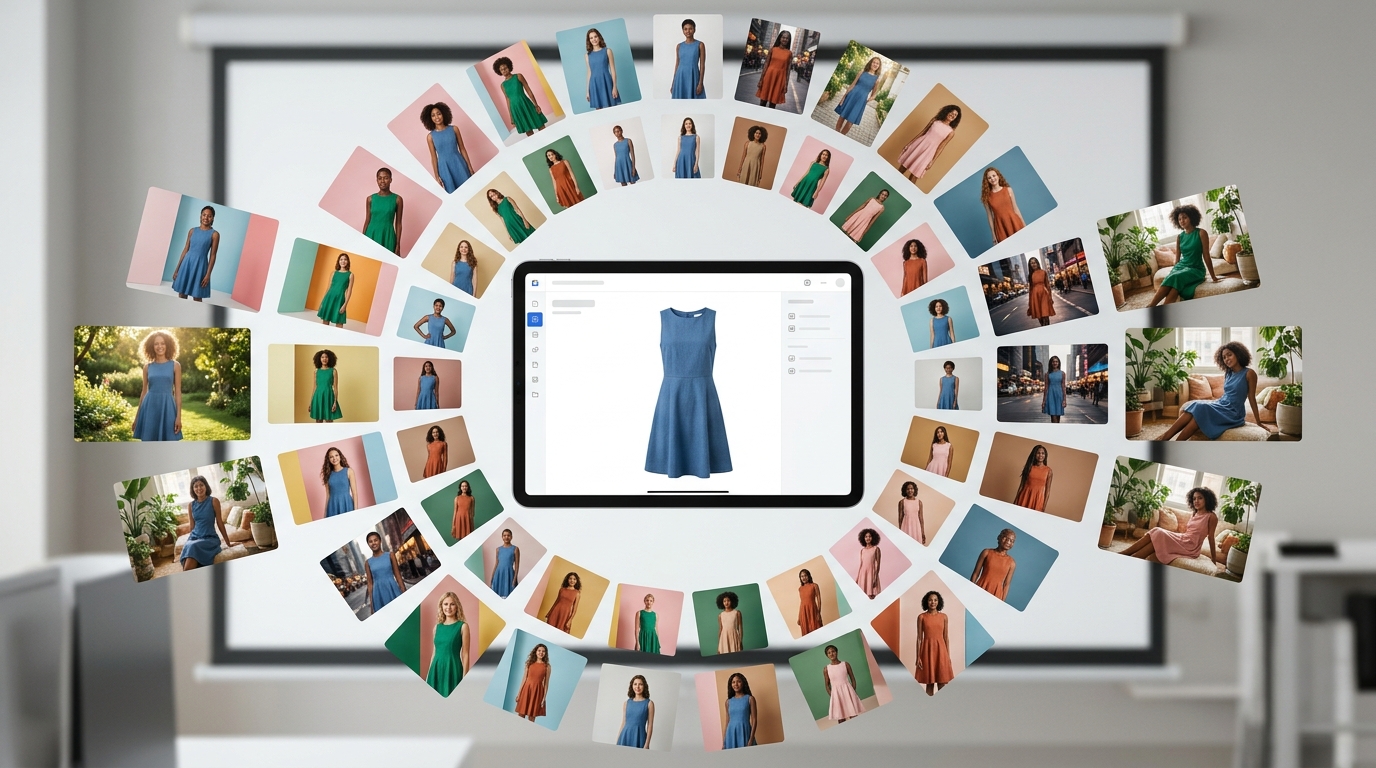
For fashion brands, the most effective path to leveraging AI is through an end-to-end visual content platform. FlixStock, for instance, replaces the disjointed, multi-step manual process with a single, integrated engine. Brands upload one source image or tech pack, and the system generates a complete set of production-ready assets.
Instead of manually retouching, removing backgrounds, and swapping models, the platform handles it programmatically. This approach ensures brand guidelines for lighting, model poses, and styling are applied consistently across thousands of SKUs. The result is a visual supply chain that moves at the speed of digital commerce, not the speed of manual editing. It solves the core problem of scaling high-quality, on-brand imagery without the traditional bottlenecks, allowing teams to focus on creative strategy, not repetitive tasks.