
This guide provides a deep dive into Amazon's specific image requirements for fashion products, covering technical specifications, content guidelines, and alternate shot expectations. It outlines a modern, efficient workflow for producing a complete set of compliant, high-quality imagery without relying on traditional photoshoots.
- Understand Amazon's main and alternate image requirements for apparel.
- Ensure every image meets technical specs for background, size, and format.
- Discover how to create all required shots without a physical photoshoot.
- Learn how AI-powered production maintains brand consistency at scale.
Meeting Amazon's rigorous fashion image standards is a critical and often underestimated challenge for brands and sellers. The path to a compliant, high-converting product detail page is paved with a detailed list of specific rules that can feel tailored for expensive, time-consuming photoshoots. This complexity multiplies exponentially with catalog size, where ensuring every single SKU meets the mark becomes a significant operational and financial burden. For many, this leads to incomplete listings, suppressed products, and missed revenue. However, achieving full compliance and visual consistency across an entire apparel catalog doesn't have to depend on these traditional, costly, and slow production methods.
What are Amazon's foundational image requirements for fashion products?
Amazon's primary objective is to create a seamless, consistent, and trustworthy shopping experience. In the fashion category, this vision translates into a set of strict guidelines for the main product image, which is the first, and most important, visual touchpoint a customer has with a product. The main image must represent the item accurately and professionally on a pure white background, completely free of any distractions that could detract from the product itself.
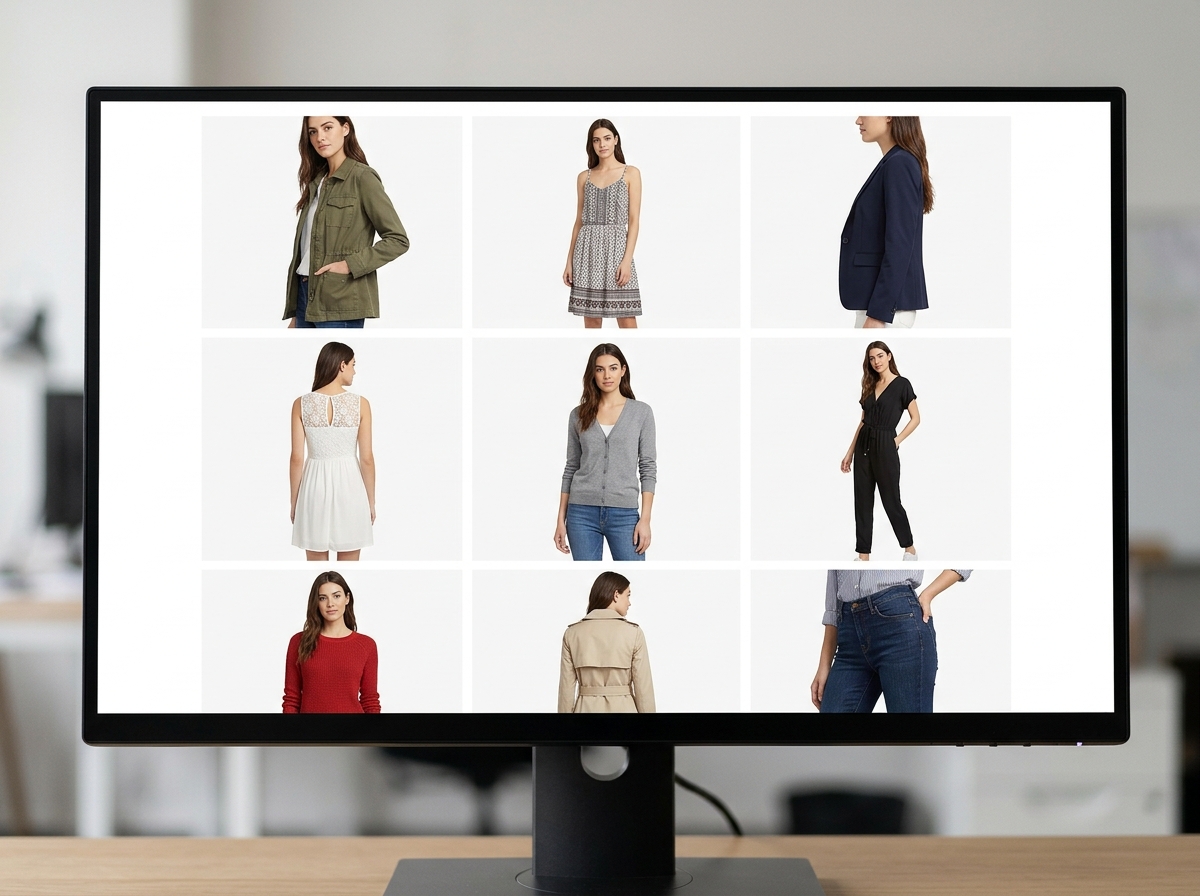
According to Amazon's official Seller Central documentation, all main images for clothing must be photographed on a human model. This rule is in place to help shoppers better understand the fit, drape, and real-world look of the garment. However, there are crucial exceptions for specific categories like children's swimwear, leotards, or undergarments, which must be displayed flat, without a model, for child safety reasons. The product itself must be the clear focus, occupying at least 85% of the total image frame and showing the entire garment without any part being cropped. Amazon explicitly prohibits distracting elements such as non-white backgrounds, visible mannequins, brand logos, watermarks, or any form of promotional text on main images. Adherence to these rules is not optional; it is fundamental to ensuring that the search result pages are clean, uniform, and focused solely on comparing the products.
These stringent requirements for the main image serve a dual purpose. First, they create a level playing field where products are judged on their own merit, rather than on the quality of their photography budget. Second, they condition customers to a consistent visual language, which reduces cognitive load and makes for a faster, more efficient shopping experience. For sellers, this means that creativity must be channeled into the product itself, and into the alternate images, rather than into the main hero shot.
Why does Amazon expect a variety of alternate shots?
While the main "hero" image is governed by the strictest rules, the alternate image slots provide the flexibility to tell a product's complete story and visually answer customer questions before they are even asked. Amazon allows for up to seven alternate images, and strategic use of these slots is one of the most effective levers for reducing costly returns and increasing conversion rates. Sellers should leverage these images to showcase details that a single front-on shot could never convey, such as the texture of the fabric, the quality of the stitching, and the context of use.
A comprehensive set of alternate images builds a strong case for the product. This includes:
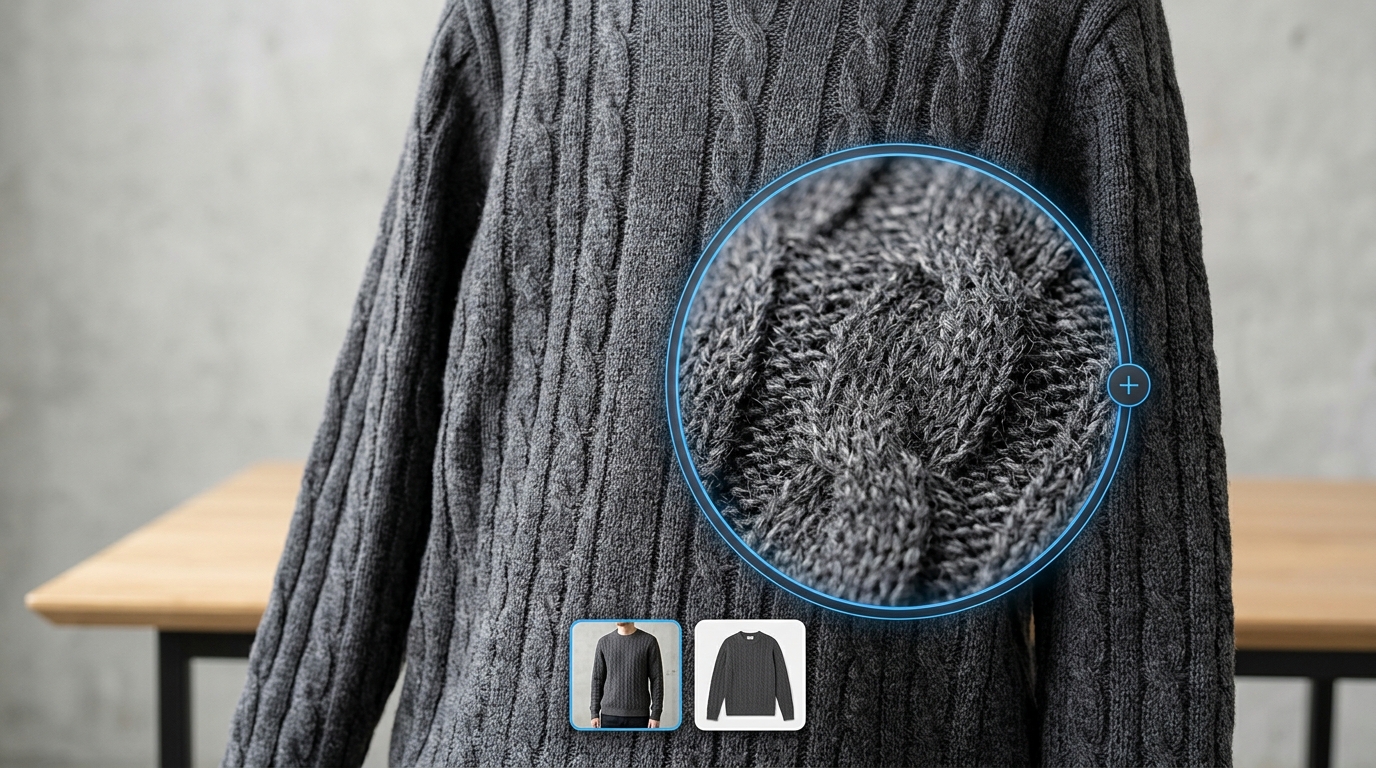
- Detailed Close-Ups: High-resolution shots focusing on fabric weave, stitching patterns, zippers, buttons, and other hardware. These images help convey the quality of the materials and construction, justifying price points and building trust.
- Alternate Angles and Views: Back and side views are no longer optional for serious apparel sellers. They are essential for showing the full 360-degree look of the garment, which is a primary consideration for anyone buying clothing online.
- Lifestyle or "In-Use" Shots: These images are powerful because they show the product in a relevant, aspirational environment, helping customers visualize themselves wearing the item. While lifestyle images have more creative freedom in terms of background and propping, they must remain professional, on-brand, and avoid any confusing or potentially offensive content.
- Fit and Scale References: Including images that help denote the scale of the product (e.g., a bag held by a person) or how a garment fits on different body types can be a powerful tool in managing customer expectations and reducing fit-related returns. According to a 2023 report from the National Retail Federation, online returns cost retailers over $200 billion, with apparel being a major contributor.
Effectively utilizing these alternate image image slots provides a more holistic and transparent product presentation. Each image should serve a distinct purpose, proactively addressing a potential question, concern, or point of hesitation a customer might have. This level of detail builds shopper confidence, leading to more informed and satisfactory purchase decisions. Think of each alternate image as a salesperson, highlighting a different feature or benefit of the product. When done correctly, a full set of alternate images can dramatically reduce the uncertainty that is inherent in online apparel shopping.
Are there ways for sellers to consistently meet Amazon's technical specifications?
Technical compliance is a non-negotiable gatekeeper for listing visibility and success on the Amazon marketplace. Images that fail to meet the platform's precise specifications can be rejected during the upload process, or worse, cause an active listing to be suppressed from search results, rendering it invisible to potential customers. The most critical technical requirements that demand rigorous attention are image size, background color, and file format.
First, images must be at least 1,000 pixels on their longest side. This is the minimum threshold required to enable the zoom feature, a functionality that customers rely on heavily for apparel to inspect details. For an optimal customer experience that truly showcases product quality, Amazon recommends images be 2,000 pixels or larger on the longest side. Second, the main image background must be pure, digital white, defined by the RGB color code 255, 255, 255 or the hex code #FFFFFF. This uniformity is a cornerstone of Amazon's marketplace aesthetic and is strictly enforced by their system. Finally, files should be submitted in TIFF, JPEG, GIF, or PNG format. JPEG is the most widely used and recommended format due to its efficient compression algorithm, which balances high quality with a manageable file size, contributing to faster page load times and a better user experience.
For brands managing large catalogs, manually checking each of these specifications for every single image is not just tedious, but also prone to human error. This is where automated solutions and clear production guidelines become essential. Using batch processing tools in software like Adobe Photoshop or dedicated image processing services can help to standardize image sizes, backgrounds, and file formats. Establishing a clear, documented standard operating procedure (SOP) for your image production team—whether in-house or outsourced—is another critical step. This SOP should include a checklist of all Amazon's technical requirements, and no image should be uploaded without first passing this check.
| Requirement | Specification | Applies To |
|---|---|---|
| Background | Pure White (RGB 255, 255, 255) | Main Image |
| Image Size | Min. 1,000px on longest side (2,000px+ recommended) | All Images |
| Product Occupancy | At least 85% of the frame | Main Image |
| Color Mode | sRGB or CMYK | All Images |
| File Format | JPEG, TIFF, PNG, or GIF | All Images |
Could you produce Amazon-ready fashion images without a photoshoot?
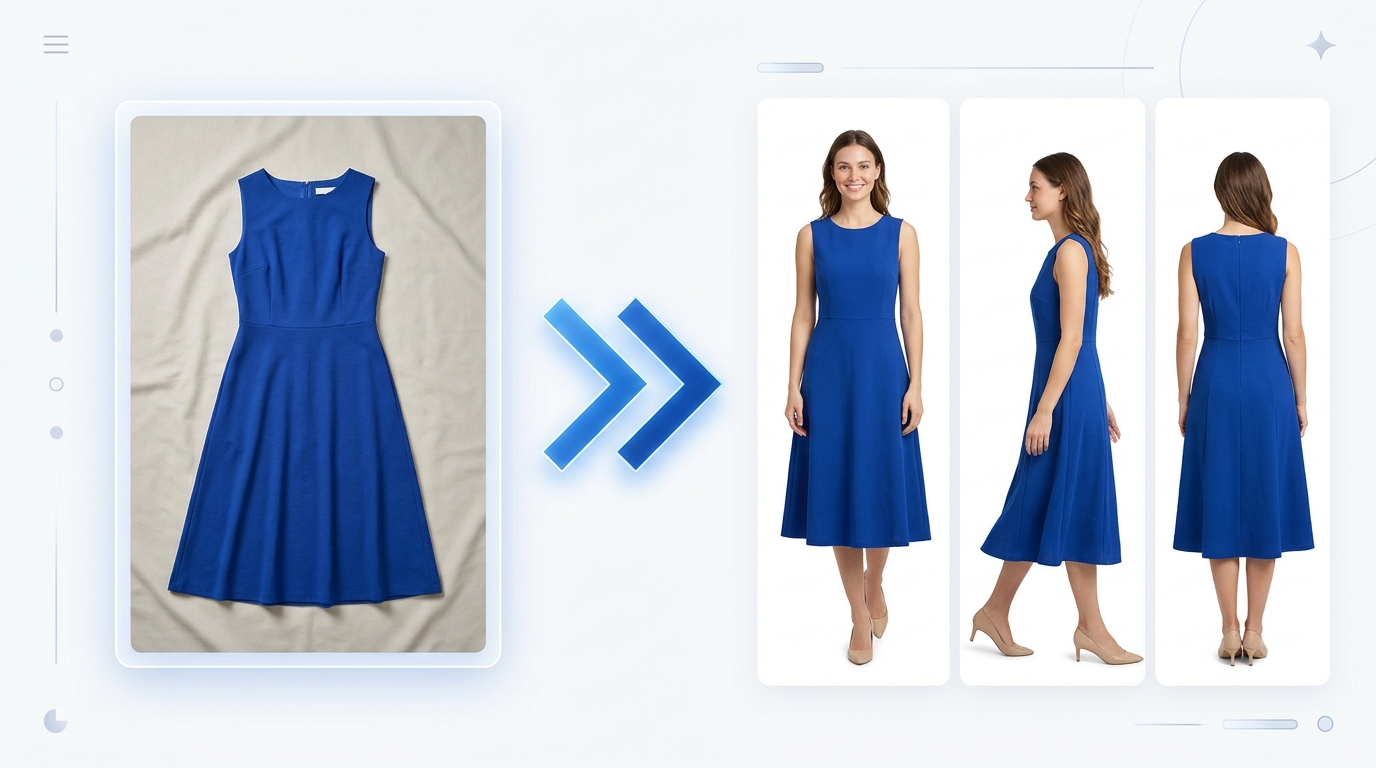
The long-held industry belief that high-quality, compliant fashion imagery requires a resource-intensive physical photoshoot—complete with models, stylists, photographers, and studio space—is rapidly becoming outdated. Modern AI-powered image production platforms can now generate a complete, diverse set of Amazon-ready assets from a single, basic product photo. This source image can often be one taken on a simple mannequin or even a flat lay shot, fundamentally changing the economics, speed, and scale of fashion content creation.
This transformative process involves digitally analyzing the source garment and then rendering it into a full range of on-model and lifestyle images that adhere to all of Amazon's stringent guidelines. Brands gain the ability to select from a diverse and inclusive range of AI-generated models, specify poses, and choose from various virtual settings to create imagery that is not only fully compliant but also perfectly aligned with their brand identity and target demographic. This innovative approach not only slashes the logistical complexity and high costs associated with traditional photoshoots but also dramatically accelerates the time-to-market for new collections and products, a critical advantage in the fast-paced fashion industry.
Imagine being able to take a single photo of a new dress and, within hours, have a complete set of images ready for Amazon: a main on-model shot with a pure white background, back and side views, close-ups of the fabric, and several lifestyle shots showing the dress in different settings. This level of speed and efficiency was previously unimaginable. It allows brands to list new products faster, react more quickly to market trends, and affordably create high-quality imagery for their entire catalog, not just their bestsellers. This democratization of high-quality product imagery is leveling the playing field, allowing smaller brands to compete visually with established giants.
Will AI ensure both consistency and compliance for Amazon fashion catalogs?
Maintaining a consistent and elevated visual identity across thousands of product listings is one of the most significant challenges for fashion brands, particularly those operating at scale on marketplaces. AI-powered production addresses this directly by programmatically applying a consistent set of predefined brand guidelines—such as specific model selections, uniform lighting conditions, consistent cropping, and on-brand styling—to every single product image. This ensures that a shopper browsing a brand's catalog sees a cohesive, professional, and trustworthy brand presentation, which is key to building loyalty and recognition.
Beyond aesthetics, compliance is embedded directly into the production workflow. Advanced AI platforms can be configured to programmatically enforce Amazon’s entire rulebook, automatically ensuring pure white backgrounds, correct image dimensions, appropriate model poses, and adherence to all other technical specs. This automated, rule-based approach minimizes the risk of human error and the subsequent rejection of images by Amazon's review team. As a direct result, products go live on the marketplace faster, stay compliant with ever-changing marketplace rules, and consistently maintain a high standard of visual quality. This frees up creative and merchandising teams to focus on higher-value strategic tasks rather than getting bogged down in repetitive and manual production work.
Furthermore, this technology allows for a level of personalization and localization that would be prohibitively expensive with traditional methods. A brand can use AI to generate different on-model images for different international marketplaces, using models that resonate with the local demographic. They can also create different lifestyle images to align with seasonal trends or marketing campaigns, all from the same source image. This ability to create a vast array of on-brand, compliant, and localized content at scale is a game-changer for any fashion brand looking to succeed on Amazon and beyond.